Thursday, June 10, 2010


Wednesday, April 07, 2010
Saturday, January 09, 2010
Monday, December 28, 2009
Saturday, December 19, 2009
Wednesday, December 16, 2009
Friday, December 04, 2009
Wednesday, November 25, 2009
Tuesday, November 24, 2009
Where in our lives does religion belong?
Religion is a dicey subject. Along with politics it is known to be one of the two big no no's when trying to keep dinner conversation peaceful and civil.
For most, the word religion means buildings (churches, temples, and mosques), beliefs, books (like the Bible, the Qur'an or the Baghavad Gita), the occasional person or two (like the Pope, or the Dalai Lama), and the rare and occasional saint among us (like Mother Theresa). As for the rest, folks tend to think of religion as personal or private. But can it be that easy? A very important piece often does not get the attention or reflection it deserves. What is the place of religion in the larger scheme of life and society?
For example, should religious people do good? Of course, we say. But even with this first simplest and obvious answer, tough questions already arise. What if an irresponsible couple next door constantly left two little ones unattended for long hours every night? What should Bill and Mary, the caring, prayerful, and faithful members of St. Katherine's do? A great many would say, "My gosh, they should not do anything!" That's the job of the city and city services.
Or supposing there was pending legislation, cleverly designed to block a group of believers from moving into my neighborhood, or having a place of worship here? Should conscientious religious people organize or lobby to prevent its passage? Or aren't religious people supposed to stay the heck out of politics? In dozens of situations like these everyday, the neat lines between religion and secular society is tricky.
But if religion is important, and to a vast many it is, then just how it functions in greater society and in day to day life must be important too. What are the rules? Unfortunately, they are not cut and dried, even in a country like the United States. But one thing we can know for sure, good outcomes have their best chance when energetic religious life and secular commitment to a safe and prosperous societies cooperate.
Last weekend, in one of the most dangerous places on earth, Buddhist believers did what no secular or political figures could. Following intense, and extremely volatile naval skirmishes with nuclear-armed North Korea, Buddhist monks from both North and South met together to honor their ancient founder, and perhaps to remind Koreans everywhere that their oneness is ancient, and their wars are young. In this case believers showed a better way by doing something that even could have global consequences.
On the other side, this past Monday, the vice president of Iraq offered a special, government bonus for newlyweds who were mixed Sunni-Shia couples. These special families to be were given $2,000 (to help start married life), a banquet with music, and even a hotel night for their honeymoon. Is that government meddling? Is that blurring the lines of church and state? Or is it a visionary political act to help dissolve forces that foster conflict, terrorism, and radicalization? This time it was the political side that gave the nudge toward a better, more peaceful society.
Where does religion belong in our lives? The answer is never cut and dried. There is no final, fixed formula. But our best chance every time is when the sacred and secular look upon the other as friend and partner.

Tags: New York | Culture | Iraq | North Korea | Sunni | Shia | buddhist
Sunday, November 15, 2009
Belief and Charity, Rough Times Ahead
We humans are both physical and spiritual. Ideally these should function happily in harmony. Often they don't. This war waged within is eloquently described by many religious greats through the ages, the apostle Paul in Romans 7:23 ("another law at work in my members ... making me a prisoner"), the Sakyamuni in verse 1 of The Dhammapada ("the wheel of the wagon follows the hoof") and others.
Some of us do "not too bad," hitting an OK balance with the two sides of life, but beyond the occasional "pretty good" individual, the spiritual and secular stay at pretty stark odds. Once we get past the single self, the larger social units pretty much spin out of control. It's very hard to get even a single whole family in order, and with each broader unit the problem exacerbates. By the time we get out to big groupings, like cities and states for example the likelihood of balance between the material and the spiritual is slim. For this reason, "church - state" relations always remain in a tumult. They constantly swing this way and that.
These days a fascinating and important series of issues have arisen in this relationship. The church and not-the-church have gotten themselves tangled up in the world of help. Caring for the poor, the needy, the downtrodden, the disaster stricken is a responsibility both for the state, and for the person of faith. But these often struggle in nature and motivation. One issue I've already treated in these pages is the problems created in the world of global disaster relief by aid organizations comprised of proselytizing believers.
Here's another one that looks very difficult. The Catholic church, and the city of Washington DC are facing what looks like a possible impasse. Tim Craig, Michelle Boorstein, and later Carol Morello did a fine job last Thursday and Friday making the issues clear, and as importantly capturing the heat, the tone, the ignorances and arrogances that are coming to participate in this thorny issue:
The Catholic Archdiocese of Washington said Wednesday that it will be unable to continue the social service programs it runs for the District if the city doesn't change a proposed same-sex marriage law.
D.C. Council members are hardening their opposition to the Catholic Archdiocese of Washington's efforts to change a proposed same-sex marriage law, setting up a political showdown between the city and one of its largest social service providers.
Progress is being made in planned legislation designed to protect gays and lesbians from discrimination. "Under the bill, headed for a council vote next month, religious organizations ... would have to obey city laws prohibiting discrimination against gay men and lesbians." But this puts the Catholic Church in a quandary, "Church officials say Catholic Charities would have to suspend its social services work for the city, rather than provide employee benefits to same-sex married couples or allow them to adopt."
Catholic Charities, serves 68,000 people in the city, including the one-third of Washington's homeless people who go to city-owned shelters managed by the church.
At issue is $18 million to $20 million in city funds for 20 to 25 programs run by Catholic Charities, but the church pointed out that it supplements funding for city programs with $10 million from its own coffers.
So, as we can see, these bodies (the city and the church) are very tightly wed. They have combined intimately to do much good, lots of lives and great work is at stake, lots of money is all tangled up together, but when something unanticipated like this happens remarkably complex issues arise.
Elected officials insulting believers is not a healthy approach to addressing a complicated matter with much at stake, but sadly bluster is all too often the coin of the political realm. Far better would be quiet discreet, reflective and respectful conversation from sincere adherents on both sides of the opinion.
Any sincere Catholic can only be happy for advances that erode bigotry and persecution. Conversely one cannot expect the Church to conform to obligations contrary to its sacred traditions.
I for one hope that a creative solution can be found that allows the pleasant marriage between city and church, that helps so many in need to persist. I think it can be done. Some fiddling about with nuances, structures, divisions on paper, and solution driven thinking can open the way for all sides to remain in the help game in good conscience. The good work and the collaboration should continue. We should not let the careless and the loud make things harden up. There is no creativity for the sake of good when the mind is rigid, and the heart is prideful.
Wednesday, November 11, 2009
Papal Cynicism
On October 20, Pope Benedict XVI approved a plan wherein the Pope will issue an apostolic constitution, a form of papal decree, that will lead to the creation of "personal ordinariates" for Anglicans who convert to Rome.
John Hooper of the UK Guardian reports:

Lough opens his reflections pointedly:
It may well be that such matters arouse in most the feeling of a dusty and complicated past. I recommend though that no social evolution should bring us to the point when major world leaders should be allowed to act without account, and when courage, integrity, and rigorous devotion of mind become a matter of disinterest.
John Hooper of the UK Guardian reports:
More than half a million Anglicans are set to join the Roman Catholic church following an announcement from the Vatican today that Pope Benedict XVI had approved a decree setting up a new worldwide institution to receive them.Gledhill and Owen in the Australian note the obvious in mentioning the simmering accusation against Rome for "poaching":
Anglicans privately accused Rome of poaching and attacked Dr Williams for capitulating to the Vatican. Some called for his resignation. Although there was little he could have done to forestall the move, many were dismayed at his joint statement with the Archbishop of Westminster in which they spoke of Anglicans "willing to declare that they share a common Catholic faith and accept the Petrine ministry as willed by Christ for his Church".A fine and necessary read on the matter comes from Oliver Lough deriving his analysis and commentary from a gaze at history's best known Anglican to Catholic convert, the great churchman and theologian Cardinal John Henry Newman.

The depth of cynicism behind the Vatican's invitation last month to right-wing Episcopalians "to enter full communion with the Catholic Church while preserving elements of the distinctive Anglican spiritual and liturgical patrimony" is best understood through one of Rome's most high-profile converts, a certain John Henry Newman.And goes on to bring back before the modern reader many of the qualities that make Newman an exciting and enduring figure in Western history:
It would be easy enough to assume that the smells, bells, and reassuringly rigid doctrine of the Catholic Church eventually provided too much of a temptation for the intellectually fraught Newman to resist.
As it happened, the spark of his conversion came from a quite different direction. Poring over an obscure 5th century religious text in 1839, he came to the conclusion, despite himself, that the Episcopalian faith was founded on a series of misconceptions that precluded its ever being a "true" church.
What followed was described by Newman as a "great revolution of mind, which led me to leave my own home, to which I was bound by so many strong and tender ties."
His final conversion was some six years in the making, and came at a time when even the merest hint of "popishness" was still anathema in Britain. As one historian puts it, "to enter the Roman Church was literally to exile oneself from English life."
Newman's slow and painful transformation was an act of spiritual and intellectual bravery so profound that it eventually helped kick-start the gradual rehabilitation of Catholicism into conventional society. It involved not just abandoning much of what he had stood for, but immersing himself in a new and alien creed.
Read the entire commentary here
It may well be that such matters arouse in most the feeling of a dusty and complicated past. I recommend though that no social evolution should bring us to the point when major world leaders should be allowed to act without account, and when courage, integrity, and rigorous devotion of mind become a matter of disinterest.
This paper was created by commission to be presented at the:
The Fifth Global Forum on Human Settlements
Water and Human Settlements in the 21st Century
November 8 – 9, 2009,
Wuxi, China
The Fifth Global Forum on Human Settlements
Water and Human Settlements in the 21st Century
November 8 – 9, 2009,
Wuxi, China
Unseen Causes in Danger to Water, Untapped Resources for the Protection of Water
November, 2009
November, 2009
Many may think, “Ah Wuxi, a perfect place for such a conference, because China is a place with severe water resource shortage, and the Chinese government attaches such high attention to the water environmental improvement, that it has made sustainable development a basic state policy.”
But Wuxi is perfect for a different reason.
It is perfect because China is the homeland of “the Old Boy,” the revered and beloved world saint Lao Tzu. Here are his observations:
The supreme good is like water,And
which nourishes all things without trying to.
It is content with the low places that people disdain.
Thus it is like the Tao.
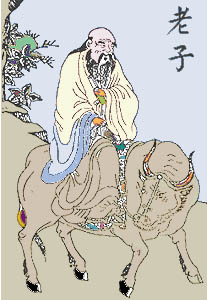
The ancient Masters were profound and subtle...
Fluid as melting ice...
Clear as a glass of water.
Do you have the patience to wait
till your mud settles and the water is clear?
Can you remain unmoving
till the right action arises by itself?
From among all saints and seers, perhaps Lao Tzu above all others most fully intuited the eternal and the divine in water.
Importantly in the wisdom of Lao Tzu is that in his few and fleeting words he captures both sides of the truth of water, the nature of the water without, and its mirror in the water within. The great German, Romantic philosopher Novalis said, “Our bodies are molded rivers.”
Al Gore in Earth in the Balance said the same thing (but please do not tell Mr. Gore that Lao Tzu already knew it 2700 years ago, Mr. Gore thinks he discovered it), He said:
Human beings are made up mostly of water, in roughly the same percentage as water is to the surface of the earth. Our tissues and membranes, our brains and hearts, our sweat and tears--all reflect the same recipe for life, in which efficient use is made of those ingredients available on the surface of the earth.
What I would like us to do in the few moments I have to present my thoughts is open ourselves and seek for starting points in the magic and the divine in our quest for a healthy and happy world, and a cure for the global water crisis.
I believe the frame of mind and the way of being that can guide our path toward good outcomes and the rescue of our planet lies in the secret voice in water itself. Loren Eiseley, the great natural science writer and recipient of 36 honorary degrees said, “If there is magic on this planet, it is contained in water.” (Loran Eisley, The Immense Journey, 1957)
 But perhaps the one voice that captures most perfectly what I want for us today is that of D.H. Lawrence, from his 1929 poetry collection Pansies (a play on the French word Pensees). He says, “Water is H2O, hydrogen two parts, oxygen one, but there is also a third thing that makes water, and nobody knows what that is.” (D.H. Lawrence, Pansies, 1929)
It is vital that we ponder, remember, and honor that third thing, for if we do, and when we do, we lose our indifference, we could no more hurt water than a loved one, and we could no more ignore the thirst, the deaths, and the suffering of the billion, and the little ones, than we could ignore falling into the grip of thirst ourselves.
Certainly the water crisis is a problem for science. And yes it is a problem for policy makers, city planners, and valiant warriors for the rights of the oppressed. But it's deepest face of horror lies within each one of us, it lies in whatever allows me to walk peacefully through life while 3 million water related deaths each year take the lives children under 14.
It is this frightening indifference in us that must be addressed if we have any hope to effectively engage the current and growing global water crisis conversation.
Wherein lies my blindness, my dullness? What is missing in my life, that allows my sense to be so dull? What am I not seeing, not feeling? For each of us is just a single step different from the factory polluting CEO. I lie to myself if I think otherwise.
If we find that we are aware, alert, and invested in rescuing our planet, our brothers and sisters, and the little ones, we can only be thankful for the unknown and unseen that allows us to be awake with a passion and devotion to the grand and pressing a cause.
The secret to saving water is contained in water itself. It cries out to us – water to water. The dew drop and the rapids try with beauty and power to speak to its own self within us. It knows already the path to its rescue. Chuang Tzu (c.360 BC - c. 275 BC) says, “The sound of water says what I think.”
It is us. We are it. It lives, we live. It dies, we die. The holy Qu'ran says, “By means of water, we give life to everything.” (Qu'ran, 21:30).
Water itself contains the secrets, and reveals to us the way to its own rescue. The first of these secrets was recognized by by Lao Tzu when he points out:
The best of man is like water,It is humility, and the contentedness with low places, together with the interior nature to live for the benefit of others that is required at this time to reverse the horrible trends that threaten our fragile environment. The spread of these virtues bode the rescue of water.
Which benefits all things, and does not contend with them,
It is content with the low places that people disdain.
Thus it is like the Tao.
Environmental science is vital, it is needed, but the best of it cannot contend with a disordered race whose inner nature wars with our very aqua vita within. It is not the lack of environmental science that has defiled earth's magic, it is an avarice against which Lao Tzu quietly and gently warned, a lack of contentedness with the “low places,” the lack of a natural impulse to live for the benefit of others and not contend with them.
The second secret (also already mentioned) comes from the great thinker and poet D.H. Lawrence, “Water is H2O, hydrogen two parts, oxygen one, but there is also a third thing that makes water, and nobody knows what that is.” When I read these words of Lawrence and pause to release the voice of water in me, I think of a couple in love, I think of my own wife and me. A marriage is H2O one part me, and one part the woman I love, but there is a third thing that made us a couple, and nobody knows what that is.
The mystery, beauty, and life giving power of water is the secret of love. Of how two become one to become an ever giving and ever sustaing source of new life.
Humility, contentedness with the low places animated by living for the benefit of all, and the bond of love, care, and respect for the other are the secrets of water that can awaken us to turn back from our careless, violent, and polluting era.
I am 71% water, and so are you. Maybe we have a chance.
Wednesday, July 22, 2009
United Nations Speech Announcement
Counter-Terrorism and International Organizations
July 22, 2009 • 4:00 PM ~ 6:00 PM
Hardin Room • 777 UN Plaza, New York, NY
How the Security Council’s Counter-Terrorism Committee is working to bolster Member
States ability to prevent terrorist acts
Ahmed El-Dawla
Participating in his personal capacity, Judge on Leave
Can Religions Help Counter Terrorism?
Frank Kaufmann
Executive Director, Inter-Religious Federation for World Peace (IRFWP)
The entire announcement is here
Hardin Room • 777 UN Plaza, New York, NY
How the Security Council’s Counter-Terrorism Committee is working to bolster Member
States ability to prevent terrorist acts
Ahmed El-Dawla
Participating in his personal capacity, Judge on Leave
Can Religions Help Counter Terrorism?
Frank Kaufmann
Executive Director, Inter-Religious Federation for World Peace (IRFWP)
The entire announcement is here
Sunday, June 14, 2009
Obama in Cairo - Reactions
 President Obama's speech at Cairo University June 4 was important.
A great amount of analysis already has transpired.
Analysis also will appear in this space following the forthcoming major foreign policy address tomorrow from Prime Minister Binyamin Netanyahu. He will speak at Bar-Ilan University.
Observant readers will see immediately the challenges faced by politicians, and by anyone with responsible concern for the region. Obama is a politician. As such, his speeches are political craft by definition, yet his speech is dubbed a speech to the "Muslim world." Have we ever in our lives seen a politician address him or herself to "the Catholic world," or to the "Buddhist world"?
One sentence in the Obama speech reads:
Experience guides my conviction that partnership between America and Islam must be based on what Islam is, not what it isn't.Partnership between Islam and America? What are we talking about here? How about a partnership between Hinduism and Russia? Or a partnership between Zoroastrians and the Marshall Islands?
What was the big flash point in the Cairo speech? The issue of settlements. Do settlements have anything to do with Islam?
No
The issue of settlements is a political matter, NOT a religious one. But wait! For Jews (at least for many Jews) it IS a religious matter.
This tiny observation points to the very tip of the complexity and difficulty of the region, and of how to understand and distinguish between words and actions of politicians, and the nature of religions and religious communities.
Tomorrow we will hear another political speech, again, likely to render politics and policy issues into language evoking religious passions, and laced with religious justification and sanction.

These are interesting times. These are two strong and impressive politicians, and we must (as always) pay very close attention. We are enjoined to pray for our leaders.
In the mean time, I have sought for Leaves readers two sample reactions to President Obama's Cairo speech, one from among Muslim thinkers, another from an Israeli perspective.
I sought commentary that is clear and unequivocal, while simultaneously moderate in tone and disposition.
The Center for the Study of Islam and Democracy (CSID) sits on a very progressive horizon of Muslim thinking. Follows are the thoughts of several thinkers convened to analyze and comment upon President Obama's Cairo speech.
After that is a clear flow of Israeli response to the speech. The Wall Street Journal is always reliable to write quietly but forcefully with a conservative lean in its editorial content.
Here are the speakers from the CSID and the Project on Middle East Democracy (POMED) panel:
The Center for the Study of Islam and Democracy (CSID) and the Project on Middle East Democracy (POMED) co-hosted a panel discussion on Thursday, June 4, 2009 entitled "Analyzing Obama's Speech to the Muslim World." The panelists were Geneive Abdo of The Century Foundation, Richard Eisendorf of Freedom House and Will Marshall, of the Progressive Policy Institute. Radwan Masmoudi, President of CSID, moderated the panel.
Masmoudi expressed his apprehension that President Obama would not prominently feature democracy and human rights in his speech. He was pleasantly surprised, however, that democracy was among the speech's main themes. He noted that after twenty years of deterioration of US-Muslim relations due to mistrust, misunderstandings and a lack of information and knowledge on both sides, President Obama's speech set a new course. And while Obama's speech opened hearts and minds in the Muslim world, Masmoudi warned that people in the region would expect concrete, policy-based follow up to his words.
Marshall labeled the speech as "masterful;" noting Obama' unique ability to delicately address complicated issues while simultaneously providing clear solutions in his speeches. As a corollary, he contrasted Bush's use of the imperative voice in communicating with the Muslim world with Obama's deft tone imbued with honesty and respect. He argued that this approach had a disarming effect to those who are inherently distrustful of the United States and burdens its detractors to justify their clichéd beliefs.While his overall assessment was positive, Marshall insisted on including three caveats to his praise. First, he worried that Obama's message of reconciliation conceded too much to the al-Qaeda narrative of victimization. Marshall argued that it was not Obama's role to reinforce Muslim feelings of identity politics; rather, it was his duty to debunk them. Second, he noted that the historical animosity between the US and the Muslim world would not change in one speech. He argued that Obama spoke to a tough-minded audience and that radicalism and extremism would not bend to rhetorical sweet-talking. In this vein insisted that values should guide US policy and that America should reap the consequences of such an endeavor. Third, he argued that for Obama's efforts to be seen as a departure from Bush-era policies ignores the real problem of fifty years of America's short-minded policies of allying with expedient allies against Communism and radical Islamism. This track record only reinforced his belief that the United States must align with ordinary people's aspirations against their governments and not step back from promoting democracy.
Geneive Abdo characterized Obama's approach as "evasive" and devoid of any real policy prescriptions. And while he addressed buzzwords such as colonialism and occupation, she argued Obama's approach was not nearly expansive enough. She continued by noting how Obama's rhetorical brilliance raised expectation so high that Iran and al-Qaeda had preemptively issued statements responding to his speech. She continued by critiquing Obama's use of extremism as a foil in his speech. She argued that the debate was already well beyond this dichotomy and that Obama should have used his speech to address the political, economic and social reasons for extremism's regional constituency.
She also noted the originality of using the affluence and freedom of America's Muslim community as an argument in the US's favor. She did not think this argument would be particularly persuasive given the divergence of circumstances among Muslims in the United States and the Middle East. On the War in Iraq, Abdo criticized the president for not apologizing for the invasion and not offering concrete plans for the country. She did admit, however, that he at least repudiated the Bush notion that Iraq was a war of necessity and not one of choice. Abdo also believed that Obama criticized the Palestinians far more than the Israelis in his speech, but did note how the president's tough rhetoric revealed a burgeoning rift between the US and Israel. In summation, she graded the presentation of his remarks highly but felt the substance of the speech was mediocre and that the conflict between the two sides was rooted in policy and not a lack of respect.
Richard Eisendorf noted the choice of Cairo as the venue for the speech as the center of the Arab world and that the diversity of the crowd represented the full breadth of Egyptian public opinion. He then pointed to the loud applause during sections on democracy and human rights as evidence the crowd was not full of Mubarak loyalists. Acknowledging the concerns of his fellow panelists, he asserted that while policy follow up to the speech will be the most important element of his outreach to the Muslim world, the speech did leave a very strong feeling of respect in the way the United States under Obama intends to reach out to the Muslim world. He also pointed to the three D's the administration has heretofore considered the cornerstones of its foreign policy: diplomacy, development and defense. He argued that in the president's speech he appeared to add the fourth 'D' of democracy to the fold.
Eisendorf also highlighted the shift Obama intended to make from Bush policies and how that would affect public opinion in the region. He specifically mentioned the straightforward manner in which Obama addressed the Israeli/Palestinian conflict. He also noted the significance of the president's use of the word 'Palestine' and other key buzzwords. In addition, he believed many in the region would find his rhetoric on this issue insufficient. As a final point, Eisendorf felt Obama finally established his doctrine of 'quiet diplomacy based on mutual respect.'
In his summary statement, Masmoudi noted that while the tone of the speech was largely positive, it only represented the beginning of the administration's engagement with the Muslim world and that implementing the ideas of the speech would be a tremendous challenge. Meeting this challenge, he said, would require the concerted effort both by the domestic American reform constituency as well as positive steps by the Muslim world.
Here is the commentary out of the Wall Street Journal:
Why Israelis Are Cool on the Obama Speech
What's needed is an affirmation of Israel's historical right to exist.
By JUDEA PEARL
A friend asked me to explain why people in Israel, including seasoned peace activists, felt less than buoyant about Barack Obama's speech in Cairo last week.
In theory, Mr. Obama's speech has affirmed everything Israelis have ever hoped for. Peaceful coexistence and mutual acceptance with its Arab neighbors has been the ultimate dream of the Zionist movement since the Balfour Declaration of 1917. So, why not embrace a major U.S. presidential speech that calls for concrete steps to advance that dream?
My friend reminded me of the outburst of joy that seized the Jewish world on Nov. 29, 1947, when the United Nations voted to partition the Biblical land into a Jewish and an Arab state of roughly equal size. There was hardly a dissenting voice then among Israelis. Half a century later, the peace offers that Ehud Barak made to Yasser Arafat in 2000 and that Ehud Olmert made to Abu Mazen in 2009 prove that the idea of a two-state utopia is still firmly lodged in the psyche of most Israelis. Why then weren't Israelis ecstatic over Mr. Obama's speech?
There are two main reasons.
The first stems from crossed signals that are blocking the resumption of peace talks. Palestinians view Israeli settlement construction as the litmus test for Israel's intentions vis-à-vis a future Palestinian state. Israelis view Palestinian textbooks, TV programs and mosque sermons to be the litmus test of Palestinian intentions. A society that teaches its youngsters to negate its neighbor's legitimacy, so the argument goes, cannot be serious about respecting a peace accord as permanent.
Mr. Obama's speech, keenly recognizing the importance of emitting trust-building signals to break the stalemate, had crisp and stern words to say about Israeli settlements but hardly a word about Palestinian denial and incitement. "The United States does not accept the legitimacy of continued Israeli settlements," the president said. "It is time for these settlements to stop."
The hoped-for reciprocal sentence -- "It is time for Palestinian incitements to stop" -- was conspicuously absent. Commentaries on Israeli TV noted disappointedly that not a single demand was addressed to the Palestinian Authority.
This has left many Israelis wondering if the Obama administration is aware of the fierce, subterranean "battle of intentions" that has prevented the peace process from moving forward. In Israel, even the harshest opponent of the settlement movement would not support the emergence of a sovereign neighbor, rocket range away, that is unwilling to invest in education for a lasting peace.
A call for a simultaneous freeze on both Israeli settlements and Palestinian incitement, clad in timetables and monitoring methods, would have invited both sides to an equal honesty test. That test could help jump start the "new beginning" that Mr. Obama called for.
Secondly, Mr. Obama's rationale for Israel's legitimacy began with the Holocaust, not with the birthplace of Jewish history. "The aspiration for a Jewish homeland," he said, "is rooted in a tragic history that cannot be denied." Who else defines Israel's legitimacy that way? Iranian President Mahmoud Ahmadinejad does. Iran sees Israel as a foreign entity to the region, hastily created to sooth European guilt over the Holocaust. Israelis consider this distortion of history to be an assault on the core of their identity as a nation.
An affirmation of "Israel's historical right to exist," based on a 2,000-year continuous quest to rebuild a national homeland, is what the region needs to hear from Mr. Obama. The magic words "historical right" have the capacity to change the entire equation in the Middle East. They convey a genuine commitment to permanence, and can therefore invigorate the peace process with the openness and goodwill that it has been lacking thus far.
I hope that Israeli Prime Minister Benjamin Netanyahu, in a policy speech this Sunday, makes historic recognition an axiomatic part of any peace agreement, and that Mr. Obama backs him up. This would turn Mr. Obama's speech in Cairo into a huge leap forward in the quest for peace and understanding in the region.
Mr. Pearl, a professor of computer science at UCLA, is president of the Daniel Pearl Foundation, founded in memory of his son to promote cross-cultural understanding.
Sunday, May 31, 2009
Politics and substance in the Sotomayor nomination
by
Frank Kaufmann
May 31, 2009
We are moving toward a just society.
Not because we are seeing things in the moment grow increasingly just, but because the instruments necessary for justice are gradually falling into place.
Injustice is possible under conditions of imbalance of power, and under conditions of shadow and secrecy.
The communications revolution (spawned by the popular use of internet technology) of the past 10 - 15 years is eroding both these necessary conditions for injustice.
Two things remain missing to complete more sound and rapid progress. These are: 1. Some form of religion in our midst that is void of petty conflict and parochialism, and 2. the evolution from knowing to doing among the increasingly empowered "common" people.
A wholesome and orderly society requires harmony and collaboration among its religious institutions, its political institutions, and its economic institutions. These core pillars are supported by the academy, journalism, and the arts and entertainment.
The population at large is becoming increasingly knowledgeable and expert about society's core pillars little by little. This increasingly widespread knowing will make for a better society, provided a helpful and reliable spiritual element can arise, and if increased knowing can be translated into increased doing, informed action.
Our latest growth of knowledge has come in the area of economics, even at the complex levels of banking, finance, and international, economic relations. This is because, rampant greed collapsed the towers of the economy on each of us personally. We have learned and are learning about economics and finance in the effort to survive. In seemingly no time at all, the same guy beside me at the bar who used to make be feel like an idiot for not knowing what quarter Gretsky's 700th goal was scored, now makes me feel like an idiot for not getting exactly how accrual basis accounting doesn't really work for equity REITs. How and when did that happen?
On Tuesday, President Obama nominated Sonia Sotomayor to replace David Souter on the Supreme Court.

Due the the poverty and superficiality of most news media (especially cable news networks), it will probably be sometime before idiot-Frank's bar friend will have much to say about libertarian, constructionist, or originalist judical philosophies, but he will know that the Sotomayor nomination makes Republicans crazy.
Why though? What even allowed Judge Sotomayor to be positioned to receive Obama's nomination? Answer? Her 1991 appointment to U.S. District Court for the Southern District of New York by George H.W. Bush.
Bush? Then surely she must be a moderate since a major stepping stone in her rise to this moment came at the hands of a Republican president?
In fact no. That lower federal position was approved by GHW Bush as part of the simple horse-trading on which no major political figure ever spends political capital. It was Moynihan's turn to pick, D'Amato's turn to let it go, and the president's turn to leave cease-fires in place. (See Byron York, Washington Examiner, May 26). So the Bush notch in the belt is greatly helpful for the politics of it all (from President's and the Democrat's point of view), but it is unrelated to the substance of the issues at hand, and to why there is a fight over Sotomayor at all.
Wendy Long of The National Review (May 29) helps us understand Republican opposition to Sotomayor. Long identifies three bright lines in Sotomayor's record for anyone interested in moving beyond politics to substance, people more concerned with issues than with the titilating gotcha rants that fuel cable news ratings. These substantial moments are a 1996 law review article said to support "Legal Realism," a 2002 law review article dealing with race, gender, and ethnicity, and a 2005 appearance at Duke Law School stating that appellate courts make policy.
The sum of Long's notes helps us grasp the fact that the substance of what is at stake with this nomination has to do with what is called "judicial restraint," (i.e., preference for the impartial application of neutral principles) on the part of conservatives, as opposed to what conservatives often call "judicial activism," the label they give to judicial-philosophical impulses of liberals or progressives.
It is time that these categories, like so many others have in in recent times, yield to a more subtle, youthful, creative, and energetic bent of mind. The entrenched arguments that stand fast in the structures of battle and conquest fairly well have been perfected. A thinking person should be capable of seeing the wisdom in judicial restraint, every bit as much finding the same degree of wisdom and promise in judicial activism. The very fact that both positions are held passionately all but establish that wisdom and value lies at least in part in both impulses.
It is unlikely that a higher and more profound judicial philosophy with the power to substantially advance the ideal of justice will arise in the already fiery and petty habit of battle that instantly ignited following Sotomayor's nomination.
But surely it is not too much to hope that we can do with questions of justice what we just so quickly did with economics. We have begun to envision more wholesome and more balanced possibilities embracing profit and social care in the way forward. Is it not possible for a better dialogue to emerge in the arena of judicial philosophies? One that allows the emergence of softer, more constructive, less embattled thought, thinking that steps away from old battle lines and is drawn in humility toward the dream and the light of a just society.
Frank Kaufmann is the director of the Inter Religious Federation for World Peace
The opinions here are his own
Frank Kaufmann
May 31, 2009
We are moving toward a just society.
Not because we are seeing things in the moment grow increasingly just, but because the instruments necessary for justice are gradually falling into place.
Injustice is possible under conditions of imbalance of power, and under conditions of shadow and secrecy.
The communications revolution (spawned by the popular use of internet technology) of the past 10 - 15 years is eroding both these necessary conditions for injustice.
Two things remain missing to complete more sound and rapid progress. These are: 1. Some form of religion in our midst that is void of petty conflict and parochialism, and 2. the evolution from knowing to doing among the increasingly empowered "common" people.
A wholesome and orderly society requires harmony and collaboration among its religious institutions, its political institutions, and its economic institutions. These core pillars are supported by the academy, journalism, and the arts and entertainment.
The population at large is becoming increasingly knowledgeable and expert about society's core pillars little by little. This increasingly widespread knowing will make for a better society, provided a helpful and reliable spiritual element can arise, and if increased knowing can be translated into increased doing, informed action.
Our latest growth of knowledge has come in the area of economics, even at the complex levels of banking, finance, and international, economic relations. This is because, rampant greed collapsed the towers of the economy on each of us personally. We have learned and are learning about economics and finance in the effort to survive. In seemingly no time at all, the same guy beside me at the bar who used to make be feel like an idiot for not knowing what quarter Gretsky's 700th goal was scored, now makes me feel like an idiot for not getting exactly how accrual basis accounting doesn't really work for equity REITs. How and when did that happen?
On Tuesday, President Obama nominated Sonia Sotomayor to replace David Souter on the Supreme Court.

Due the the poverty and superficiality of most news media (especially cable news networks), it will probably be sometime before idiot-Frank's bar friend will have much to say about libertarian, constructionist, or originalist judical philosophies, but he will know that the Sotomayor nomination makes Republicans crazy.
Why though? What even allowed Judge Sotomayor to be positioned to receive Obama's nomination? Answer? Her 1991 appointment to U.S. District Court for the Southern District of New York by George H.W. Bush.
Bush? Then surely she must be a moderate since a major stepping stone in her rise to this moment came at the hands of a Republican president?
In fact no. That lower federal position was approved by GHW Bush as part of the simple horse-trading on which no major political figure ever spends political capital. It was Moynihan's turn to pick, D'Amato's turn to let it go, and the president's turn to leave cease-fires in place. (See Byron York, Washington Examiner, May 26). So the Bush notch in the belt is greatly helpful for the politics of it all (from President's and the Democrat's point of view), but it is unrelated to the substance of the issues at hand, and to why there is a fight over Sotomayor at all.
Wendy Long of The National Review (May 29) helps us understand Republican opposition to Sotomayor. Long identifies three bright lines in Sotomayor's record for anyone interested in moving beyond politics to substance, people more concerned with issues than with the titilating gotcha rants that fuel cable news ratings. These substantial moments are a 1996 law review article said to support "Legal Realism," a 2002 law review article dealing with race, gender, and ethnicity, and a 2005 appearance at Duke Law School stating that appellate courts make policy.
The sum of Long's notes helps us grasp the fact that the substance of what is at stake with this nomination has to do with what is called "judicial restraint," (i.e., preference for the impartial application of neutral principles) on the part of conservatives, as opposed to what conservatives often call "judicial activism," the label they give to judicial-philosophical impulses of liberals or progressives.
It is time that these categories, like so many others have in in recent times, yield to a more subtle, youthful, creative, and energetic bent of mind. The entrenched arguments that stand fast in the structures of battle and conquest fairly well have been perfected. A thinking person should be capable of seeing the wisdom in judicial restraint, every bit as much finding the same degree of wisdom and promise in judicial activism. The very fact that both positions are held passionately all but establish that wisdom and value lies at least in part in both impulses.
It is unlikely that a higher and more profound judicial philosophy with the power to substantially advance the ideal of justice will arise in the already fiery and petty habit of battle that instantly ignited following Sotomayor's nomination.
But surely it is not too much to hope that we can do with questions of justice what we just so quickly did with economics. We have begun to envision more wholesome and more balanced possibilities embracing profit and social care in the way forward. Is it not possible for a better dialogue to emerge in the arena of judicial philosophies? One that allows the emergence of softer, more constructive, less embattled thought, thinking that steps away from old battle lines and is drawn in humility toward the dream and the light of a just society.
Frank Kaufmann is the director of the Inter Religious Federation for World Peace
The opinions here are his own
Saturday, February 21, 2009
Hillary's visit to Indonesia: Islam is a religion
Newy York, NY, United States,
Indonesia was the second nation, after Japan, visited by U.S. Secretary of State Hillary Clinton on her first overseas mission for the Obama administration. This was brilliant and correct. There is broad consensus within foreign policy circles that the Asia rim poses the most complex challenges for the Obama administration.
Indonesia was the second nation, after Japan, visited by U.S. Secretary of State Hillary Clinton on her first overseas mission for the Obama administration. This was brilliant and correct. There is broad consensus within foreign policy circles that the Asia rim poses the most complex challenges for the Obama administration.
Clinton, quite properly and naturally, had a center of focus for each Asian nation she visited. In Japan, it was strengthening the two countries’ alliance – with an angry glance over her shoulder at North Korea. In South Korea, the North Korean missile threat brought out the weary phraseology of conflict diplomacy – that the North’s actions were "very unhelpful” and the U.S. was “watching very closely."
That is good enough, though no nation considers itself a "rogue state," and normal human pride, not to mention Beloved Leader pride, raises the question of who gets to decide who's allowed to test missiles, and who not?
The Indonesia stop had a different essential message. "Secretary of State Hillary Clinton, seeking to reinvigorate Washington's ties with the Islamic world, said the Obama administration will develop relations with Indonesia as part of a U.S. diplomatic push in Southeast Asia," the Wall St. Journal said.
Again, this is a fine direction and an excellent message from the Obama administration, one of urgent necessity and launched in the right place. Indonesia is the world's most populous Muslim-majority country – around 200 million, or 86 percent of the population, are Muslim. A highly blessed confluence of geography and cultural and religious history has evolved into an exemplary vision for Muslim politics and society.
As Mark Duff, religious affairs reporter for the BBC, put it:
The national motto is "unity in diversity."
The founding principles of Indonesia, the Pancasila, include a belief in God. But beyond this, religious tolerance is seen as the cornerstone of relations between different faiths - even though almost 90 percent of Indonesians are Muslim.
Moderation is therefore built into the country's constitutional framework.

Also part of the wisdom of placing this childhood home of President Barack Obama in the front line of foreign relations is its important domestic implications.
There are now 7 million Muslims in the United States, and another 1 million in Canada. Though still a small percent of the population, Muslims in America are important for a number of reasons: They are a multiform community – multi-ethnic, made up of both indigenous and immigrant communities – and compared to the rest of the population, they tend to be young, well-educated and positioned in solid middle-to-affluent economic demographics.
But perhaps most important is that Muslims in America tend to be religious, with attendance at Jumma, or Friday prayers, at a full 94 percent and mosque participation growing fully 75 percent in five years.
It is foundational to American thinking that religiosity functions as a spiritual and moral force in society. Spirituality and religiosity are helpful for the health and well-being of a country, especially in multi-faith environments with religious freedom.
Yet there is a vital cautionary note that must be recognized by Clinton and Obama. Islam is a religion. The administration’s actions and policy must reflect a deep understanding of the purely religious aspects of relations with "Islam."
To move properly in this arena requires consultation with knowledgeable religionists, most especially those with hard-won wisdom and expertise in interfaith relations. Despite well-meaning intent, these political figures cannot risk confusing political activity such as U.S.-Indonesia relations with religious activity such as improving relations with "the Muslim world."
This distinction is urgent and imperative. Failure to recognize the distinction is fraught with peril. U.S. relations with Indonesia, and with all the world's "Muslim regimes," must include elements that are "purely religious" in nature. Nations and religions and religious belief are different, and people like Clinton and Obama are trained in the former and not in the latter.
Obama is a self-confessed Christian. It is not impossible for him to understand and appreciate Islam, but it is not automatic either. Forging ever-deepening bonds across boundaries of true and passionately held religious faith is hard work and traverses a rewarding if perilous course. Missteps are easy in the world of interreligious relations and can have dire political consequences.
I offer praise for both the fact and the substance of the Indonesia visit. But I urge caution and beseech Clinton and Obama to avail themselves of sound counsel from people who know the difference between international and interreligious relations, and who are deeply steeped through life accomplishments in the latter.
Frank Kaufmann is the director of the Inter Religious Federation for World Peace. The opinions here are his own.
1.http://www.allied-media.com/AM/
2.http://www.cair.com/Portals/0/pdf/The_Mosque_in_America_A_National_Portrait.pdf
Friday, February 20, 2009
Stimulus Counter Proposal
This morning a friend (a political professional) called:
"Excellent article Frank. I fully agree with the critique you laid out vis a vis the process that led up to passing the current stimulus package. But I must ask, what is your counter proposal?"
I responded that I did in fact have one, but my ignorance of the technical aspects of political life made me reluctant to put it forth.
He encouraged me on two fronts:
Spending available funds piece by piece as emergency generates consensus and cooperation, does 3 things:
This is the only pattern toward reconciliation that can work. Horse trading simply does not work. It does not create (the all necessary element of) deeper understanding of opposing passions and ideologies.
Thus all 780 billion in the stimulus package did not have to be decided upon before a dollar could be spent. It is that assumption that results in politics as usual, in pork, horse trading, and in ongoing partisan entrenchment that I criticized in my article.
Here's the model. My family has $5,000. We will spend all of it. The roof is leaking, Dad "needs" new clubs, daughter "needs" a new phone, the block association is threatening to have us evicted over the length of our grass. OK old politics, "Dad you can have your clubs if I can have a new phone every 6 months for the next 3 years." "The roof is leaking, can we take care of this please?" "You don't touch the roof until I get my phones." What family would possibly live like this?
The only way a family would suffer through such an absurd scenario is if there were some unexamined rule that the entire 5000 had to be "spent" all at once or not at all. No family would behave this way, yet this is how we run our nation, and this is how we just treated nearly a trillion dollars!
The normal way to proceed is. We've got $5000 and we need $650 to fix the roof. We all agree on that right? Good, let's do that, but while we're at it, we need $120 to hire a guy for the yard. The block association's patience is wearing mighty thin. The roof might be a shoo in as a family decision, instant agreement. The grass might need a little debate. Different opinions, but it can be talked out quickly and easily enough, especially as pending eviction looms.
The same pattern could have been done with stimulus money. The absolute emergencies can be worked out, agreed upon quickly, and instantly be acted upon. De-freeze credit and lending, tax relief for small businesses etc. As emergency measures are applied, economic developments follow, and expenditure plans might change to meet the new circumstances.
This simple shift in assumption would allow the new administration immediately to sever life support to "how Washington does business," as was promised.
"Excellent article Frank. I fully agree with the critique you laid out vis a vis the process that led up to passing the current stimulus package. But I must ask, what is your counter proposal?"
I responded that I did in fact have one, but my ignorance of the technical aspects of political life made me reluctant to put it forth.
He encouraged me on two fronts:
- As a person of ideas, it is your responsibility to live under that maxim that no idea is a bad idea. Others will help and refine on those occasions when your recommendations lack understanding.
- Secondly, the actual counter proposal I DID have, and proceeded to explain, in fact (according to this fellow) warranted airing in its content, substance, and its own right (not just "on principle").
Spending available funds piece by piece as emergency generates consensus and cooperation, does 3 things:
- It creates incentive for cooperation
- It nullifies horse-trading as a corrupt and sleazy form of "cooperation," "compromise."
- It allows ideological encounter on a high minded platform of care and public service en route eventually to collaborating on the most difficult areas of difference.
This is the only pattern toward reconciliation that can work. Horse trading simply does not work. It does not create (the all necessary element of) deeper understanding of opposing passions and ideologies.
Thus all 780 billion in the stimulus package did not have to be decided upon before a dollar could be spent. It is that assumption that results in politics as usual, in pork, horse trading, and in ongoing partisan entrenchment that I criticized in my article.
Here's the model. My family has $5,000. We will spend all of it. The roof is leaking, Dad "needs" new clubs, daughter "needs" a new phone, the block association is threatening to have us evicted over the length of our grass. OK old politics, "Dad you can have your clubs if I can have a new phone every 6 months for the next 3 years." "The roof is leaking, can we take care of this please?" "You don't touch the roof until I get my phones." What family would possibly live like this?
The only way a family would suffer through such an absurd scenario is if there were some unexamined rule that the entire 5000 had to be "spent" all at once or not at all. No family would behave this way, yet this is how we run our nation, and this is how we just treated nearly a trillion dollars!
The normal way to proceed is. We've got $5000 and we need $650 to fix the roof. We all agree on that right? Good, let's do that, but while we're at it, we need $120 to hire a guy for the yard. The block association's patience is wearing mighty thin. The roof might be a shoo in as a family decision, instant agreement. The grass might need a little debate. Different opinions, but it can be talked out quickly and easily enough, especially as pending eviction looms.
The same pattern could have been done with stimulus money. The absolute emergencies can be worked out, agreed upon quickly, and instantly be acted upon. De-freeze credit and lending, tax relief for small businesses etc. As emergency measures are applied, economic developments follow, and expenditure plans might change to meet the new circumstances.
This simple shift in assumption would allow the new administration immediately to sever life support to "how Washington does business," as was promised.
Sunday, February 15, 2009
Stimulus Package - Not a Victory
Only by partisan and non-progressive standards can the preliminary passing of this week's stimulus package be called a "victory" for the new Obama administration.
Both the political process and its analysis and commentary in the media were a feast for the demons of politics as usual.
Since 1992, (save the forces and advantages of incumbency), Americans have lurched to and fro voting through a fog of desperation and disgust. The 1994 Gingrich, congressional "revolution" resulted from embarrassment at dog-in-heat-concupiscence and raw ambition in the people's house. By 2000 enough Americans longed for the return of dignity to the White House, the return of meaning to words, and return of the truth the whole truth and nothing but the truth so help me God. This longing for "ground" (moral, semantic, and juridical) created a "reaction-vote," a "bring me the opposite" vote. The 2000 election reflected the nation's desperate longing for a "straight-shooter."
No sooner were foundations "restored" (truth - what the meaning of is is), decency (fewer teenage orgies in the White House), than our other foundations promptly were attacked, goodness (the torture problem), and rights (the domestic spying problem).
Again the nation lurched in desperation, desperate for the return of foundations. This time we longed not for the meaning of is but for the ability to use the word correctly in a sentence, we longed not for a black and white world full of those not with us but against us, but a black and white person who IS us.
For all the historical beauty of the tearful and miraculous milestone full of sweetness and light, the governing since has failed to reflect the promise. There are the horrifying parallels in W's opening times and Obama's. Last week a legislative majority bullied the opposition. And again "emergency" was used to rush and ramrod through massive decisions with long term consequences.
Typically the political right is considered "strong on national security." From a cynical and political standpoint, W was "handed" the "Republican's dream"at the start of his presidency, a "security emergency" of consuming magnitude and a Republican legislative majority. Democrats were all but forced (politically) to violate the ideological impulses of their party, eventually voting to authorize the unprovoked invasion of a sovereign nation.
Conversely the political "left" is typically considered strong on domestic social welfare. Eerily this Democrat president was "handed" his own 9-11, a domestic "emergency" of parallel magnitude (global, economic collapse, job loss, education, health care, and welfare under threat). Eight years ago a Republican was "given" an "attack on America." Today s Democrat was given a trillion dollars to spend on domestic programs and a country teetering on such full blown socialism as the possibility of nationalizing banks! As if this perfect political "gift" were not enough, the Obama administration even tried to exploit the convenient "national security" fear tool in the service of governing heavy-handedly
Every president comes into office promising a "new era of bipartisanship."
The president must engage respectfully leading ideologues and veterans in the legislature, especially those from across the aisle. He must stop campaigning. We have already suffered and paid dearly from the Rove version of that same addiction.
Frank Kaufmann is the director of the Inter Religious Federation for World Peace. These opinions are his own.
Both the political process and its analysis and commentary in the media were a feast for the demons of politics as usual.
Since 1992, (save the forces and advantages of incumbency), Americans have lurched to and fro voting through a fog of desperation and disgust. The 1994 Gingrich, congressional "revolution" resulted from embarrassment at dog-in-heat-concupiscence and raw ambition in the people's house. By 2000 enough Americans longed for the return of dignity to the White House, the return of meaning to words, and return of the truth the whole truth and nothing but the truth so help me God. This longing for "ground" (moral, semantic, and juridical) created a "reaction-vote," a "bring me the opposite" vote. The 2000 election reflected the nation's desperate longing for a "straight-shooter."
No sooner were foundations "restored" (truth - what the meaning of is is), decency (fewer teenage orgies in the White House), than our other foundations promptly were attacked, goodness (the torture problem), and rights (the domestic spying problem).
Again the nation lurched in desperation, desperate for the return of foundations. This time we longed not for the meaning of is but for the ability to use the word correctly in a sentence, we longed not for a black and white world full of those not with us but against us, but a black and white person who IS us.
For all the historical beauty of the tearful and miraculous milestone full of sweetness and light, the governing since has failed to reflect the promise. There are the horrifying parallels in W's opening times and Obama's. Last week a legislative majority bullied the opposition. And again "emergency" was used to rush and ramrod through massive decisions with long term consequences.
Typically the political right is considered "strong on national security." From a cynical and political standpoint, W was "handed" the "Republican's dream"at the start of his presidency, a "security emergency" of consuming magnitude and a Republican legislative majority. Democrats were all but forced (politically) to violate the ideological impulses of their party, eventually voting to authorize the unprovoked invasion of a sovereign nation.
Conversely the political "left" is typically considered strong on domestic social welfare. Eerily this Democrat president was "handed" his own 9-11, a domestic "emergency" of parallel magnitude (global, economic collapse, job loss, education, health care, and welfare under threat). Eight years ago a Republican was "given" an "attack on America." Today s Democrat was given a trillion dollars to spend on domestic programs and a country teetering on such full blown socialism as the possibility of nationalizing banks! As if this perfect political "gift" were not enough, the Obama administration even tried to exploit the convenient "national security" fear tool in the service of governing heavy-handedly
The most immediate threat to U.S. security interests is the festering global economic crisis, the nation's top intelligence official told Congress on Thursday... Blair's remarks reflect both the depth of the unfolding recession and the Obama administration's more expansive definition of national security.
Every president comes into office promising a "new era of bipartisanship."
George W. Bush also insisted on uniting Americans. He wants "to serve one Nation" and not only his Republican supporters... Bush has the best abilities to be able to reunite America because of his Texas record where he successfully dealt with a Democratic legislative majority. [Says W] ... the bitter divide in American politics which has marked the entire Clinton presidency... should come to an end for the sake of America's future...Similarly
Bush as president is the best outcome of this election in the sense that he is a Washington outsider and not implicated in the intrigues and unfair battling which took place in the capital. [Sound familiar?] Moreover, after eight years of Democrats in power, the time for a change has come. Austria, France and Germany are examples of the 1990s which show what happens if one party dominates the executive for too long: its leaders are burned out, collusion, corruption and abuse of power become dangerous."
"I am a uniter not a divider."
Candidate Obama campaigned for president as a different kind of politician. Candidate Obama was all about change, about shaking up Washington and the political establishment. He appealed to the young and the politically disenchanted with calls for bipartisan solutions to the nation's most vexing challenges, energy, health care and getting the economy going again."We have not seen this in the approach to the passing the stimulus package. We have seen governing as did W leading up to the invasion of Iraq. We still see bullying by the manipulation of fear and "emergency." Fort Myers is the new USS Abraham Lincoln, Julio the broadcaster is our latest Joe the Plumber, enough in the minority party once again vote in violation of their traditional strengths, and ideologies, and fear and haste continue to infect what should be managed with extreme care and deliberate decision making.
"We are not red states and blue states, but the United states of America."
The president must engage respectfully leading ideologues and veterans in the legislature, especially those from across the aisle. He must stop campaigning. We have already suffered and paid dearly from the Rove version of that same addiction.
Frank Kaufmann is the director of the Inter Religious Federation for World Peace. These opinions are his own.
Friday, December 26, 2008
Be Good and Grow Rich: Reversing the Economic Meltdown
Frank Kaufmann
December 23, 2008
"Insanity is doing the same thing over and over again and expecting different results."
Albert Einstein
Why is it that suddenly everyone seems lost. Only weeks ago, the pantheon of cable news finance wizards flooded our lives around the clock with pride, bluster, and "expertise." And while they frothed and “explained,” lust and frenzy infected world markets like bone cancer. A financial world was built with bedrock institutions packaging, selling, and buying less than nothing.
When natural laws of economics finally tore though the mirage, financial meltdown fell on us like a flesh eating virus that continues relentlessly and with a vengeance. Extreme responses arose in all sectors with leaders scurrying about like those on the deck of the Titanic hit. Makeshift measures to stanch hemorrhaging in this spot or that were passed in panic, but none brought about a settling, stabilizing, or passing of the storm. We wait with baited breath to see if, when, and how great the carnage, pain, and suffering finally will be. Fully one third of savings have evaporated.
Those working on fixes are not working on a level that matches the depth and nature of the crisis. Everything that breaks does so because essentials are violated, basic elements collapse under the strain. Analyses and proposed remedies must start with clear-headed investigation of what fundamentally broke. What was violated? What snapped? What basic laws and rules were stretched to the breaking point?
Current recommended remedies stem from and remain mired in this mentality of violation and untruth. The slide will pause now at 35% loss, giving us the opportunity to awaken, change, and begin to recover. If we do not acknowledge what we have wrought, the economy will drop its next third, leaving none from this generation to see recovery.
3 sectors are responsible for failures comprising the global economic crisis, the business and financial sector, the political arena, and the media. Great wrong, great greed, and great dysfunction took place under the watch of each of these 3 sectors, each having failed in their respective responsibilities to be sure that such things never happen. The reform of the economy cannot be achieved through the application of mere “economic” fixes. Recovery requires reform, acknowledgement of wrongdoing, taking responsibility for harm done, and commitment to change in each of these three areas.
The economic crisis happened by violating two basics: 1.Self interest cannot evolve into greed to the degree that personal, material lust is sated without regard for the human condition of “the neighbor.” 2. Production and consumption may not persist in a manner and degree that outstrips nature's capacity to repair and rejuvenate herself. The economic meltdown is not merely the fruit of greed. It more accurately occurred through the the deadening of the heart.
According to the UN Food and Agriculture Organization, almost 1 billion people suffer in this year's global food shortages. The number of undernourished, the FAO said, rose by 40 million, following a 75 million jump the previous year. This is simply forbidden. Prosperity and suffering in such magnitude are not coterminous.
Growth of value (perceived by many as growth of capital) cannot continue unchecked when doing so is happens in ways that violate basic human norms and morality. The meltdown will not relent nor subside until approaches at resolution address real causes. Lust for personal profit and consumerist excess may not be sought in anti-human and anti-environment structures and patterns.
The way to genuine recovery, growth, and the return of wealth will come to enterprises oriented specifically to the causal factors of the meltdown. Industries that fit this bill will experience genuine growth and profit. These will produce jobs and wealth aplenty. On the other hand, proposals based on the persistent breaking of natural rules and rectitude not only will fail rescue the economy, but will drive the meltdown further. If we snap the 35% loss barrier through obstinately not learning, the collapse will become irreparable.
What is needed now for recovery is the very opposite of current approaches seeking desperately to resuscitate over-heated, self-gratification, and debt-fueled consumerist materialism.
Real solutions that will turn the tide to recovery will be led by industries and entrepreneurs devoted to the restoration of balance in human affairs, balance such that acquisitiveness is no longer admired if it fails to be coupled with minimum concern for vast numbers of suffering people, the millions who starve and die without hope. Industry that retools itself to create opportunity, housing, education, and work for the needy will prosper.
Secondly, everything entrepreneurial that is devoted to restoring nature's capacity to repair and sustain herself while keeping apace with non-excessive human consumption will prosper.
In short, consumption, growth, and wealth are fine. But gluttonous, consumerist materialism cannot be celebrated and encouraged 1. while able-bodied men and women with families cannot eat or lead lives with minimal opportunity and dignity and 2. when consumption happens in ways that break mother nature's ability to repair herself and sustain environmental balance and health.
In the present moment, industries designed to fix these abuses and violations naturally will inherit and enjoy the privilege of growth and profitability.
Frank Kaufmann is the director of the Inter Religious Federation for World Peace. The opinions here are his own.
Saturday, November 29, 2008
India terror aftermath - Greater integration needed
This morning's AP headline reads "Pakistan U-turns on sending spy chief to India." Three links down on the Google "news page," its collection of links is the Hollywood Today headline: "Mumbai Massacre Now Linked to Pakistan: War to Follow?" making it clear that those who generate current world problems are not merely the lawless and conscience-less villains at the extremes, but rather that our problems stem with near equal abundance from dysfunction, irresponsibility and dangerous blindness in the heart of the "mainstream." While my heart grieves for the innocent in India, a country so beloved to me, I struggle to suppress a heart of anger at institutions like Hollywood Today. I struggle for a moment to cling to the ideal of free press in moments like this. The problem is that the term "free" is false. The vast amount of world media slaves under its yolk of its economic need or lust, and this is not freedom. It is bondage. A cure must be found.
Yet the problem of living more responsibly, and with a more reasonable and holistic grasp of political life, lies not only with much needed reform of media, but also with "the body politic," namely us. We must make it increasingly possible for political leaders to have the breathing room they need to navigate sensitive and fragile territory, especially in hair trigger moments.
The AP article leads with the observation:
Yet the problem of living more responsibly, and with a more reasonable and holistic grasp of political life, lies not only with much needed reform of media, but also with "the body politic," namely us. We must make it increasingly possible for political leaders to have the breathing room they need to navigate sensitive and fragile territory, especially in hair trigger moments.
The AP article leads with the observation:
ISLAMABAD, Pakistan (AP) — Pakistan on Saturday withdrew an offer to send its spy chief to India to help investigate the Mumbai terrorist attacks, damaging efforts to head off a crisis between the nuclear-armed rivals.
Indian officials have linked the attacks to "elements" in Pakistan, raising the prospect of a breakdown in painstaking peace talks between South Asian rivals that has alarmed the U.S.
First, how does it help to desribe these countries as rivals? Everyone are rivals in some areas. And they are partners, collaborators or neutral in others. This is true for India and Pakistan. Why could not the copy read, "painstaking peace talks between South Asian neighbors"? Is this any less true?
Secondly, if indeed this week's horrifying attacks in Mumbai are linked to "elements in Pakistan," why should this be reported as "raising the prospect of a breakdown in painstaking peace talks between South Asian rivals"? Surely there is a vast likelihood that the Mumbai attacks are linked to "elements in Pakistan." Any 10 year old could tell us that. Shocking news would be if the attacks were not at ALL linked to ANY elements in Pakistan. In our world today, everything is linked, and it is like reporting that someone breathed in then breathed out to note the likelihood that terrorists link across national boundaries. Why should such a pat, dull observation "raise the prospect of a breakdown in painstaking peace talks"? Surely Prime Minister Singh was not suggesting that the government of Pakistan was smuggling soul-less animals into Mumbai to shoot up Indian guests and citizens.
The primary point of the AP article notes that Gilani reversed an earlier agreement to send the head of the Inter Services Intelligence agency, had been changed so that a lower-ranking intelligence official would travel instead.
OK. Yes, this can be seen as a disappointment certainly. But it is understandable. Gilani received sharp criticism from Pakistani opposition politicians and a cool response from the army, which controls the spy agency. How hard is that to figure out? Everyone knows the difficulty and stranglehold domestic partisanship poses for national leaders. This is what I mean when I say we (as the body politic) should think in ways that is supportive, helpful, constructive, and reasonable. And we should refuse to continue consuming news presented in ways that we simply know better. These realities are not complicated. Give the leaders room. Let us and the media stop playing pretend. We already know the story. Every national leader is a target from domestic opposition. Each country has a different power configuration, and things are hard.
For these reasons, the greater the persistence for quiet back channels to remain open among leaders the better we can move forward toward peace. Let Gilani and Singh stay in constant communication, and let common sense world citizens support them in all ways to deepen bonds and shared hopes and needs in the region.
The US, despite the decline of its reputation under the current administration, is always a powerful influence in global affairs. Presently nations must navigate quite a radical transition: The current US administration has being trying to persuade Islamabad to shift its security focus from India, with which it has fought three wars, to Islamic militants along the Afghan border, whereas President-elect Barack Obama has identified rapprochement between India and Pakistan as a main plank of his plan to stabilize Afghanistan and defeat al-Qaida.
The former mentioned pressure from the current administration is self-serving and short sighted, whereas the Obama position reflects insight into how stabilization expands. Should India and Pakistan succeed to develop a unified, harmonized and integrated alliance, every last sector of human enterprise in the region would flourish a hundred fold. Such a rich horizon, more than anything else would seek its own natural call through the northwest borders inviting all to the benefits of peace and prosperity.
In the dreams of such a time let us all, especially media, serve such hopes with a more constructive and more common sense to the obvious realities of life and the simple to understand challenges of national leaders.
Frank Kaufmann is the director of the Inter Religious Federation for World Peace. The opinions here are his own.
Subscribe to:
Posts (Atom)