Saturday, October 02, 2004

Peace and the Future of Politics


Frank Kaufmann
October 2, 2004


This panel is designed to have writers and speakers do something new for the sake of peace. We are called to analyze peace efforts so as to bridge visions, proposals and activities coming from religion and civil society with the world of political power.

Peace activists and spiritual leaders often blame politicians for war and conflict, explicitly or implicitly painting political figures in broad generalizations as enemies of enlightenment, peace, and reconciliation. Conversely political leaders and elected officials often see religious and civil peace activists as hopelessly naïve, and clueless about even minimal realities with which responsible political leaders must deal every day.

This lack of understanding and lack of sympathy for the positions and realities of these two groups prevents progress for a better world which both camps long to see, and both camps imagine themselves to be pursuing fervently and responsibly.

It is the purpose of this panel and this paper to ponder the unique constraints facing political leaders and for leaders in various sectors including the political to begin to envision how each respective sector can be more helpful and supportive for conscientious political leaders to take the politically risky steps required to advance the cause of peace. In short, “it is time to stop pointing fingers and blaming others. It is time to begin the work in my own profession and vocation to help empower every fellow traveler.”


What Makes Peace?

Religious acts make peace. Note I did not say religion contains the key to peace. I might. So what. I did not say religion teaches us clearly what is necessary for peace. It might. So what.

Religion has two jobs: 1. accurately identify the source of human problems and clearly prescribe the antidote, and 2. Accurately define the original ideal way for human life in the absence of problems (in other words, what sort of behavior allows the repaired state to persist).

The religious PERSON on the other hand has two slightly different jobs: 1. DO what solves the problem, and DO what maintains an ideal harmonious state.

Every conflict situation results from 2 bases: 1. the history of my wrongdoing, and 2. the history of the wrongdoing of the other. Which of the two do you think you have a greater chance of fixing? To which of the two problems do you have greater access to get your hands on and fix? It is obvious. I have greater access to my own problems. The history of my own wrongdoing and my own present wrongdoing is the only reasonable point of focus for anyone claiming to be serious about the pursuit of peace. I refer to my own personal wrong doing, the wrong doing of my own family, or my own people, of my own race, of my own co religionists. These comprise half of every conflict situation.

Firstly, if I really want peace, what must I do vis a vis my present wrong doing? Answer. Stop it. Stop doing wrong. This is a religious act. To stop doing wrong is a religious act.

Next, what do I do about the history of my wrongdoing, the wrong that members of my family or my clan, or the wrong my people have committed. Answer. Say sorry. Not I’m sorry BUT. Just sorry. To say sorry is a religious act. It is called repentance.

Thirdly, if someone has done wrong to you, wrong to the members of your family, wrong to your people and they come to you and say they are sorry. What should you do? You should forgive that person, or those people. This is a religious act. To forgive is divine.

Conflict canNOT exist in the presence of someone who has genuinely repented of their crimes to the aggrieved party, and the aggrieved genuinely forgave the offending party. If anyone has gone through this you know that the bond of love and tears from these paired acts are among the most powerful in all of the human experience.

Fourthly the repentant wrongdoer and the aggrieved (usually both parties are both), MUST collaborate to establish a just and equitable reality in which no further wrongdoing in system, structure and circumstance obtain, and both sides must invest unconditionally and without reservation in maintaining that universe. This is a religious act, it is called giving.

It should be clear that the problem of peace is NOT complicated. Nothing could be simpler that achieving and maintaining peace. I didn’t say it was easy. I said the problem is simple. Further it should be clear that the path to peace is accomplished by religious acts. Not be religions. Not by religious belief. Not by religious teachings. It is accomplished by 3 religious acts: repentance, forgiveness, and a life of giving unconditionally.


Political Reality

The political coin of the realm is power. It is comprised of 3 things, power over people (or the power OF people), power over wealth (material resources – which includes the power to make gigantic tools of aggression), and power over information; people, money, and knowledge.

There are two approaches to power; control by force and manipulation (power begets power), or influence stemming from attraction for the good that results from the power you accrue.

BUT, whether your relationship with power is of the good or bad sort, does not in any way alter the fundamental reality of politics, and that is that is about power. Power seeks ever greater authority. This is not a negative. In and of itself it is neutral. It is simply the nature of power.

Once you are involved in politics you are in the power game. You are involved in a dynamic in which you participate in the pursuit of ever greater authority (namely ever more complete and ever more expansive authority). There are others involved in the same sweep and dynamics, and you have to deal with this in some manner or another. Even if your relationship with power is of the positive sort, you may well have someone who seeks to challenge your authority using power in a bad or evil way. This is simply your reality. That is the reality of the politician.

[It should be noted that those politicians who engage power in the way of good face no limits to the range and extent of their authority, because they participate in God’s authority and ways. Those who seek the expand power by control and manipulation face a sure half life, and perfect and permanent frustration as resistance will spring forth abundantly and in every place.]


Details of Political Reality

1. You have enemies
2. You represent more than yourself, including representing the wealth and welfare of a community
3. You have electoral vulnerability for your actions
4. You have legal, and material and resource responsibility and culpability for your public actions
5. You have (often powerful) interest groups and contributors associated with your power and authority
6. You have “handlers” and advisors, cabinets, and abundant interests and constraints on your actions which are at all times representative
7. You have the extremely precarious balancing act between “domestic” and “foreign” policy


The Task to Relate Peace and Power

The task before us is quite simple then, how to relate peace dynamics of peace to the realities of those with enough power to do something about matters. I argued earlier that the path to peace involves religious action: 1. Concentrate first on what I myself do and have done wrong. 2. Apologize (repent) to those whom I’ve harmed from my wrongdoing, 3. Forgive those who apologize for their wrongdoing and history of wrongdoing, and 4. Collaborate in a program of giving without reservation to preserve the harmony achieved through the above mentioned acts of reconciliation.

It should be immediately evident that even the best meaning political leader in the world is instantly hamstrung if asked to say I am equally wrong, or to apologize for wrongdoing and so forth. There are massive electoral, legal, fiscal, domestic implications and more for each act an elected representative takes. There are enemies waiting to pounce on any sign of weakness, there are advocacy groups and trial lawyers circling like sharks to demand victim compensation, and the list goes on.

So here you have a group of people in whose hands the whole possibility for peace rests, and they are in the stock and trade which makes it most difficult to effect the basic and most necessary actions which lead to peace.


Preliminary Recommendations to Address This Urgent Challenge

For private sector, civil society, and religious peace activists:
1. Think politically before meeting politicians. Don’t go to meetings only with ideas for peace, but rather with ideas as to how the politician him or herself can safely support your ideas, plans, and recommendations.
a. Do not go just to “inform” or “inspire.” And DEFINITELY do not go to preach. There is no reason to think that you are a better person than the politician whom you go to meet, and there is not reason to presume that your desire for peace or what you are willing to sacrifice for peace is greater than the politician whom you go to meet.
b. Include in your thoughts and proposals what you have to offer politicians (in terms of what THEY THEMSELVES NEED as politicians).
i. Perhaps from the position of your greater freedom, you can provide valuable information. Perhaps you can extend influence to areas or groups that are not accessible to politicians. There are many politically valuable things politicians can use and benefit from, from sincere and genuine peace activitists.
c. a. Surely there is little more politically valuable than the significant human resources represented by major religious groups that are in concert and ready to act in accord.
i. This potential degree of political power can also be used to “express the will of the electorate.” One does not go to elected officials with a begging bowl, but bearing enormous value, “well if you are not interested in supporting tried and effective peace actions, perhaps there is another candidate who could make better use of what we have to offer.
2. Learn political realities and constraints
a. Not every meeting can be public
b. Do not be impatient and judgmental when politicians need to move slowly or discretely
c. Start to think of your own resources in terms of their political value so that you can exert greater influence on the political process, and create a better political environment for enlightened political leaders to act for peace
d. Be willing to get out and work. Find out how to act on the ground politically to build a pro peace political environment in which enlightened political leaders, and elected officials can act more freely and more courageously without being politically and legally vulnerable.

For Political Leaders, Heads of State and Elected Officials
1. See in peace groups valuable political resources, namely people, resources, and knowledge.
2. Support peace activities from the position of your influence and power. Calculate political future and opportunity in terms of alliances and collaboration with true non-agenda driven peace ambassadors.
3. Use the instruments of political power to give advantages to peace ambassadors
4. Place peace ambassadors in positions of influence, in knowledge spheres, and implementation spheres. In short think politically for peace above all, moving constantly in the direction in which the acts which bring peace will be possible for you even as an elected representative, not as an isolated idealist.
Why We Work with Religious Leaders

Dr. Frank Kaufmann
Director of interreligious relations for IIFWP,
Director of IRFWP


Thank you all for coming to the Holy Land. Your commitment to such a high and noble cause is unusual. Do not mistake yourself for being a common person. Your commitment to God is out of the ordinary. I humble myself to you. You left everything behind and trusted your affairs and your family to God. We have to keep each other in our prayers and keep each other healthy and strong. Pray for one another so that as many as possible from us can keep up our work for God here in the Holy Land.I have been asked to speak about why we focus on religious leaders.

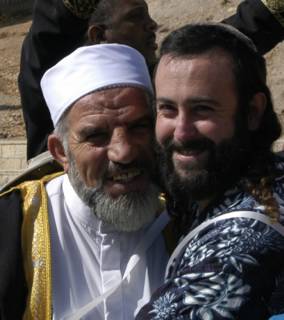
Yesterday we went to Al Aqsa Mosque where we were addressed by religious leaders. Before the Imam could start however there was great fuss over how you would stand best for a picture. I am sure the imam was less concerned about your picture than he was about how well you would grasp the beauty of his tradition.

It is not good to miss the sacred or a learning opportunity because we get distracted by getting ourselves into pictures.

We do not work with religious leaders because they are the most entertainingly dressed of all professions. Religious garb is beautiful. Religious leaders wear beautiful robes, golden crosses and pointed hats. This is how it should be. It helps remind people about God. It is also meant to help religious leaders maintain their obligation to be morally exemplary. If you are dressed so conspicuously, it should be harder for you to behave badly. Still some religious leaders manage to misbehave somehow.

We should not concern ourselves primarily with photo opportunities.

There are four main reasons why religious leaders are central in our efforts for peace:

1. The absence of peace comes from our separation from God. If we were not separated from God, we would livein peace with one another. God designed human affairsfor us easily and effortlessly to live harmoniouslywith one another. Tragically, we separated ourselvesfrom God. Every religion has an explanation about howthis happened. Religion came into being to help people reunite with God. When we follow the dictates of our religion we can go back to God, and we can live in peace with one another. The first reason for working with religious leaders in our efforts for peace is that we must reconnect with God, and we need religious leaders to help us with that work.

2. The second reason we work especially with religious and spiritual leaders is that spiritual reality influences contemporary affairs.We are all under spiritual influence.Our parents or grandparents who are now in the spiritual realmlook to us to fulfill some deep longing they desired in their lives. They actively involve themselves in our day to day efforts. Furthermore, great spiritualfounders who gave their lives for the sakeof God also seek people on earth who can carry their sacred missions forward. These people who are presently in the spiritual world are an integral part of the process that will bring peace.

But working with spiritual reality is dangerous and difficult. It is not a simple matter to engage unseen powers and principalities. Without proper guidance and training we can be misled. Some spirits are powerful enough to enrage people to the point of war, and murder. We should not mistake or underestimate the extent of their power. War and peace themselves originate in the realm of the spirit. Some people are clearly under the influence of malevolent powers. There are torrents of spiritual forces all around us at any given time. These form the realm of causality. It is imperative that we know how to remain safely in relationship with beneficent spiritual forces. Here again, the job of teaching us how the spiritual world operates and how we should relate to the spiritual world is one that belongs to religious leaders. This is the second reason we work with religious leaders.

3. The third reason is that religion evokes the most intense forms of attachment, more than money, power, or knowledge! There are people who easily would give up everythingthey own, and even their lives in defense of their religion and faith. History shows us that warsinvolving religion are the most horrendous. Religiouspeople will kill to the very last person if they believe they are protecting the sacred, sacred texts, or holy places where theirfounder sacrificed his life for God. Because religion represents the loadstone of attachment and difference, religious leaders must pioneer the path to peace.

Do Christians and Muslims believe exactly the same thing? [No they do not]. Do Christians and Jews believe just the same thing? [No] From one way of seeing things, the deepest and most irreconcilable differences are in the world of religion. How on earth can we solve this problem? How can we reconcile such profound differences?

We believe reconciliation and harmony is possible because there is something higher than beliefs and doctrine. That is love. There is nothing in any religious teaching which prevents me from loving another person like my own son, my brother, my father and so forth. In fact this is religious teaching. Every religion teaches us tolove one another infinitely and eternally. No religion teaches us to love only Catholics, or only Muslims.

This is why when a priest, a rabbi and an imam hug, cry, and completely blend into one together, the whole world must acknowledge, “nodifference on earth is greater than the power of love.” We witness with our own eyes that love has bridged the greatest of all difference. When religious leaders transcend the greatest of all differences, no one can insist thattheir own differences are too great to resolve, or their walls too high to take down.

Once religious leaders conquer the hardest and most intractable differences, they render moot all arguments for war. When religions truly stand together objections are removed and a wide path to reconciliation and peace are opened.

4. The 4th and final reason we work with religious leaders is that we must solve the problem of church state relations. We must find the true relationship between spiritual andmaterial dimensions of life.

Until now there is a great clash of cultures and civilizations over the question about how much religion should be integrated formally into affairs of the state. In order to achieve peace we must find a way past this age-old impasse and effectively establish conditions leading to peace and cooperation among different cultures in the world today.

The relationship between temporal andspiritual leadership is important. Public leaders need spiritualguidance, but they tend to keep religion at a distancebecause religions often misuse the power of the state toadvance parochial interests and to oppress believers from other faiths. This is a great black mark in religious history. Religions sin when they act for self. Secular leaders shun religious triumphalism. They are correct when they say, “Stay away from me, and stay away from the state if you seek power and tax money for narrow parochial and denominational interests.” This is right, but pushing religion away from the state comes at a great loss. Political and secular leaders need religious and spiritual help. Insight into good political direction requires support from religious leaders, for these are the people whose job it is to know about God and the spiritual world. Ifreligious leaders stand together across religious lines, political leaderscan no longer voice objections of religious opportunism, and then everyone prospers and benefits.


These are the four reasons why the IIFWP places so much emphasis on religious leaders in its pursuit of peace.

Tuesday, June 01, 2004

Truth and Authority

Ideologically driven leadership, be it religious or political, has the habit or sense of the need to “control” matters and “maintain order.” They especially dislike the fact that ideas resist this impulse to control. Timid or authoritarian leaders tend approach “the problem of truth” by two ways: A. they attempt to boil “truth” down to essential formulas, imagining that in this way truth too becomes “manageable” and b. they attempt to control truth imagining they can contain it by using mundane instruments of power.

Truth however because it is always greater than anyone trying to control it defies these misguided habits, and remains “controllable” only in ways consistent with the grandeur of God.

On the one hand creating formulas proves insufficient because truth reflects reality which is two-fold in nature. It is comprised of both principles and providence. Principles are static and immutable (and can be rendered into formulas), but providence, namely the historical flow of history met with the transformative force of principles interpreted and applied cannot be reduced to formulas.

The progressive forward flow of reality is that element of divine and human existence which gives authoritarian (control-based) leaders the most discomfort. Providence is progressive, and proceeds into the horizon of choice and abundance. Because of this it requires interpretation which by nature is multiform. Truth pertaining to this end of the spectrum cannot be achieved by generating lists of essential (static) principles. A broad and unified home for truth sufficient to embrace providence can be gained only in an atmosphere of openness, trust, dialogue, and consensus (things which tend to be felt as threatening to timid or authoritarian leaders).

Establishing parameters of interpretation sufficient to sustain the homogeneity of a community requires putting forth accessible principles, processes, and publicly identifying and acknowledging persons in the community for the purpose of relating to the multiform by nature of interpretation. These three (principles, processes, and publicly identified and acknowledged persons) should be given the brief by the leadership, with the assent of the community to meet the challenge of harmonizing the multiplicity of interpretation into a common voice. The public and accessible aspect is requisite so as to retain accountability. Truth is allergic to back room politics.

Authoritarian leaders, however, leaders pursue uniformity (also in the area of controlling truth) by seeking to utilize:
a. Control over access to centers of authority
b. Control over human and material resources
c. Control over imprimatur (i.e., what writing and speaking is acknowledged as "offical")

While it is possible to control the physical wherewithal of others by such means for a limited period of time, it is not possible to likewise control ideas. No regime in history, regardless of its might has ever successfully controlled ideas though many have tried. This will always be the case, even for communities where a heavenly truth and a profoundly shared ideal obtain.

Sunday, May 30, 2004

Religion, Humans, and Angels: Breathing In and Breathing Out

Religion, or more specifically the providence of God progresses contingent upon people responsible for the race as a whole fulfilling their responsibilities. God implicates his omnipotence into the service of retaining integrity in a genuine relationship of love with human beings. In fact God’s power is best seen in His decision to sustain instead of destroy our race.

The human being is a bifurcated spiritual entity, fully human as grounded in divine origins, but angelic in nature as a result of the genetics and dynamics of the original human fall. This fact or reality creates an essentially 4 quadrant dynamic through which God weaves the grand scheme of restoration. These four quadrants are: Good human/bad human, and good angel/bad angel. The activities, habits, and nature of all 4 of these are used by God to move restoration forward, but the main effort is to diminish the bad angel, in favor of the good angel, diminish the bad human being also as it is the enemy of the good angel, but finally, and here is where the providence is always difficult, to diminish the good angel, as it is the “enemy” of the good human being.

In order to carry out this complex strategy, God divides the human race into two types of people, angelic type people, and human type people. Thus each human being (during restoration) is primarily of one type or another, but as a type, carrying both a good and bad rendition of their “type.” The front end of advancing the providence occurs with good angel-types and good human-types.

In this set up you find two people both of whom have a strong knowledge of their own goodness (having passed through extreme demands to subjugate their own “bad” side.) These “good” types must meet and be used by God in the final task of elevating the “good human,” over the “good angel.”

The problem with trying to advance this scenario is that it is far easier to come by good angle-types than it is to come by good human being-types. The reason for this is that there have always existed good angels since the beginning of creation, but there has only been one or two good human beings. There are precedents for good angels, but virtually none for good human beings. This is good, other than for the fact that angels are a dime a dozen, God has always had them and a few more or less humans with “good” angelic nature are not especially what God finally seeks.

For this reason, even when things are going pretty great for God, most of the time the providence is really just creeping along. Usually some angelic type is running things imagining themselves to be just what the doctor ordered, not realizing that this is actually a disappointing delay for God’s original desire, for as I said, angels are no problem for God… He can create them all the time, any ol’ time. They are not what God finally wants, but they are infinitely better than “bad” human beings.

Since it is so hard (virtually impossible) to come by a good human being (especially one who endures as such for any length of time), good angelic-types end up occupying central positions of responsibility almost all the time. They get habituated into the position and privilege, and despite the great good they do for extended periods of time, they often if not usually end up obstructing the final steps toward providential advance, by failing to realize that at the end of the day, they were not the goal, but a necessary step.

Angels are unimaginative, and uncreative. They do not produce anything, they only reflect the divine. They do not offer anything - other than faithful obedience, which is surely indispensable for dispensational progress, but not anything of genuine fascination or joy to God. By comparison, you are grateful and happy every time your car starts, but on the other hand, that’s what it’s supposed to do. Same with an angelic “leader”

This is how the providence of God has to progress. Each time there is a fleeting occasion of a human-type becoming “good,” God places that person in a position of central responsibility. God allows this set up to last as long as possible, but invariably the situation must revert back to angelic control because, human goodness, an essentially untried, un-pioneered reality, always slips into its satanic roots to become “fallen.” “Good angelic types are then re-summoned and brought in to coral the emerging fallen nature re-arising in the human-type leader. Though though narrow, unimaginative, and uncreative leading always through control, incapable of leading by love, the angel-type must “lead” once again. An arid, narrow, suspicious era, forever incapable of emulating God’s loving heart, at least it is better than “bad” human beings.

By this process the providence creeps forward at a snail’s pace, with angelic types running things most of the time. The use of good angelic-types to reign in the creeping emergence of the “bad” during the time of human-type leadership, is what I call “breathing in.” It is constrictive, narrowing, reigning in, shutting down. It is order, orthodoxy, propriety. It is vapid, dry, insubstantial, a negative energy, a policing. All this is perfectly fine, since it helps God immensely. Its only problem is its tendency to mis-perceive itself to be the “end” of God’s desire, and its tendency to resist God as obstructionist, whenever God tries to move toward His preferred step.

Sunday, December 07, 2003

Peace in the Middle East
Reflections on Requisite Elements Not Currently Characterizing Any Extant Peace Initiative

There exists a near endless stream of efforts both past and present pursuing peace in the Middle East. Surely each has its place and value, and all to a greater or lesser extent have contributed to mitigate the horrors that have tortured the innocent and well-meaning families in the region.
Here are thoughts positing a distinct ground for the pursuit of Middle East Peace. These basic laws and principles are required for any organization or institution, which sets itself to the task. Absent these conflict will continue unabated.

There are two fronts for this signature, one grounded in the fact that all human phenomena have a spiritual dimension, the second is expressed philosophically.

Spiritual Reality
The key to peace lies with God, and with righting the God-Human relationship. Additionally world affairs are reflected in and related to spiritual reality. The accomplishment of peace is a spiritual undertaking before it is political, social, and scientific. As such religious leaders and believers bear a foundational role and responsibility for this initiative.

The Philosophy of Peace
1. Peace is the establishment of a permanent condition of prosperity, joy, equality of opportunity, and respect for every person and every family in the region. It is predicated upon the complete extirpation of enmity and historical resentment. It is not a project of compromise, but a destiny for mutual embrace, common life, and social care and support for all.
2. Religious leaders and believers are responsible to repent of all past wrongdoing, sectarianism, conflict, aggression, and oppression. Likewise religious leaders and believers are responsible to forgive, embrace, support, and unite with people from other traditions who seek to improve and collaborate to build a future of right relationships and shared happiness.
3. Political and social leaders have a responsibility to collaborate with enlightened religious and spiritual leaders and believers who have reconciled, removed enmity, and achieved oneness through difficult and rigorous, spiritual practices.
4. All sides have problems for which they must repent, and change. Analysis, which has bias toward only one party, can never contribute to the ideal and establishment of enduring peace and happy life for all. The idea of reconciliation and the practice of divine and sacrificial love is greater than the demand for justice.
5. Violence can never result in peace, or liberation.
6. Harmony is achieved through reconciliation by spiritual practice, and only secondarily through the application of scientific analysis and expertise.
7. True peace is measured by the health of family life, and the extent to which social conditions are conducive to promoting the spiritual and material aspirations of all family members from all generations.

Frank Kaufmann
December 7, 2003

Wednesday, November 12, 2003

An Interreligious Summit: How Could, or Should Religions Contribute to Peace
Submitted by
Frank Kaufmann
November 12, 2003
IIFWP Assembly 2003 - Global Governance at a Turning Point, Innovative Approaches to Peace in a Changing World


Thank you Madam Chairwoman.

Distinguished guests, I am grateful for the opportunity to offer some thoughts at this important meeting, on this important subject.

The question “How Could, or Should Religions Contribute to Peace” evokes a sense in everyone that they already know the answer. People automatically think, “The answer to that question is obvious. Just ask me. I’ll tell you.” Not every question evokes the same feeling. For example, “how many calories are there in an apple?” The fact that everyone thinks they know how religions should contribute to peace says a great deal.

We must ask, if the answer is so obvious, then why don’t we have peace already? Can it be that everyone in the world wants peace except religious people? If we can see a clear answer, then there must be something either in religion which is inherently antithetical to peace, or there is something in we ourselves which baffles our own efforts to bring to pass our own desire, and something (peace) which is patently in our own interest.

Whichever way one answers, the essential problem is the same in both cases. That is that there exists something split, divided, a house against itself. All religions teach peace, just as surely as all people desire peace.

Is there some dark shadow in religion(s) which inherently contradicts its own promise, its own core, its own sublime and elevated credenda? Maybe so. Surely people from time immemorial have legitimated war, oppression, and occupation with sacred scripture, and reference to religious obligation.

The other possibility is that the problem lies, not with religion but with we ourselves. Is this where the debilitating and self-destructive, internal conflict lies? Was Paul right, and speaking for us all, when decrying this inner battle? (Romans 2:24-25 24 Wretched man that I am! Who will set me free from the body of this death? 25 … on the one hand I myself with my mind am serving the law of God, but on the other, with my flesh the law of sin.)

The modern world supports a battle between two philosophical camps on this issue. One says that the debilitating, internal contradiction lies in religion itself, and that the human being is fine (and perfectly capable of peace), if spared the burdens of fear, guilt, and superstition, and released to enjoy the calm glories of reason. These are the statists, humanists, enlightenment rationalists and so forth. This view is widespread in modern society (commonly conceded at the United Nations, universities, elite media professionals and so forth).

The other camp says the opposite. Religion is fine (in fact good), and it is the human being which is wracked by this contradiction and split. In fact, it is precisely this human condition of being at war with the higher self which is the exact raison d’etre for religion in the first place.

A resolution to this debate is possible, but it is one which nods a touch in the direction of the religious side. It would state that religion given by God is without the shadow which is leads to war. But insofar as it must be received, constructed and maintained by human beings, it comes to be contaminated by the internal contradictions of its administrators. This resolves the modern debate so that both religions, and the human being bring to the table an inner contradiction which results in a world of war and terror.

Back to the question: What must religions do to contribute to peace? They must purge themselves and their leaders and believers of internal contradictions. In the case of religion, the battle rages between the higher part of each religion which says the religion must exist for the whole world and for every person. This battles with the impulse, likewise in all religions, which says that the religion exists only for its own sake, and the sake of its own believers. Our only concern is with Catholics, we have no compassion or concern for any other sort of religious believer. They are not my problem. (Or only Jews, or only Buddhists and so forth.) This impulse to devote oneself only to self interest at the expense of the greater whole contradicts the higher truth in all religions to serve the whole world, and every person.

The human contradiction is identical. There is a natural aspect of our make-up which altruistic, and conversely a part which is oriented to our own ways, habits (traditions), and self-preservation and promotion. As with religions, these parts of the self must be harmonized, so that the higher (interpretation of) self takes the lead as the primary force guiding our existence.

So, is there a way religions can or should contribute to peace? Yes there is. Enlightened leaders in each tradition must analyze the root revelation and sacred origins and development of each respective tradition to determine which aspects call for serving the whole world and every person, as well as to find in each those impulses which interpret in the direction of greater parochialism, and self-preservation and promotion. Finally these leaders must harmonize this contradiction into a seamless and unified whole in such a way that the narrow parochial elements support and fuel the Divine indwelling which calls believers to love the whole world and every person.

To the extent that each tradition can accomplish this is the extent to which religious difference will cease to be a causus bellum, and shift to become an indispensable voice and contributor to peace on earth.

Monday, June 16, 2003

The Interfaith Movement and the Launch of the Roadmap

Frank Kaufmann
tl@pipeline.com
June 16, 2003

Recent world events awoke the average lay person to the wisdom and necessity of interreligious dialogue. Professionals in the field enjoyed a new environment in which they no longer were met with confused disinterest when sharing their lives with strangers in planes and ariports. Instead they are met with appreciation and admiration. “Huh?” was replaced with “Lord knows we certainly need that.”

As with much of the positive change in the wake of 9-11 (such as heightened social awareness, and restored humanness), newcomers’ enthusiasm for interreligious dialogue also dulled a bit as time went on.

This dulling of the temporary spike in appreciation of interfaith does not bring us back to pre 9-11 levels of unknowing. Events brought new development to the movement, some good, some bad.

The good development is that there has arisen a lot more interfaith activity since 9-11. This has (at least) two benefits: 1. Interfaith projects, events, and awareness has moved far deeper into the grass roots (this is long overdue), and 2. The increase yields a much more variegated landscape,so that many more creative and innovative ideas for approaching interreligious problems and challenges are cropping up. Each new project tends to bear the signature of the leading visionary acting under inspiration.

The negatives include the fact that a sudden but relatively untrained interest (in a world of increasing superficiality and impatience), coupled with the inability of the interfaith movement to produce recognizable results in the world’s most watched, religious trouble-spots (such as Israel) create the danger that the public will return to its prior dismissal and disinterest in the interfaith movement, only more dangerously this time, not merely from ignorance, bit from a conscious and deliberate assessment of the ineffectiveness of the movement. Thus the interfaith movement stands at an important crossroads.

I believe the warm glow will last long enough to produce some fiscal solace by matching the over wealthy with the over needy, but this too will meet rough roads ahead if the interfaith movement does not find a way to do more than assuage the givers social conscience, and instead start to produce some tangible progress in the world of interreligious relations. Very few fundamentally new ideas are coming forth. To benefit from events without taking responsibility for one’s failures, including even those which led up to the very horrifying events themselves is to chase fools gold.

Thursday, February 20, 2003

Friends

Friendship is a peculiar thing. Because it is one of only two deliberate human relationships, it is prey to the same exacting and frequently unsatisfiable demands which refine and intesify themselves in all other parts of life. Think of the insatiatiability characteristic of the rich and famous. The search for satisfaction leads to Leno's acre of cars, Hollywood collections of husbands and wives, and gourmands dissatisfied with a $500 dollar meal and $1500 dollar wine.

The desire for the "perfect" this or that was built into us to make us good, but mixes with our selfishness to dissipate our gratitude and contentment (see Buddha's 4 Noble Truths). This ever greater and more refined sense of our preferences has an impact on the possibility of finding a true companion. For me, a companion moves effortlessly with you to the essence of your concern that moment, and then moves deeply and rapidly beyond. You quickly become of one mind, and then swim together like fish in the sea.

Saturday, February 15, 2003

Some Elements in Reconciliation

Clash, and conflict derive from usually unexamined core or foundational differences, combined with myopia. Not "getting along" comes from the inability to imagine that any way of doing things which differs from my own A. can be a good way of doing things, and B. be done with integrity.

Ways of doing things are not merely personal. On a deeper level they reflect cultures. Cultures in turn grow out of worldviews. (Most worldviews grow out of religions, except for the small few that grow out of religiously held anti-religions).

Meta-religious (cultural) difference includes the Oriental/Occidental rift, the the sacred-whole/post-enlightment-atomistic-rationalism split, as well as the democratic/monarchic split.

The Oriental worldview is often considered "vertical culture." Position dominates, the status of elders signifies "more true," and "more correct." The occidental worldview is often characterized as "horizontal." It tends to be more merit based, and breaking molds is often more prized than preserving the eternal "original superiority" emboddied in the elder. It can be said that in oriental mentality postion trumps person. In the West person trumps position. The split between the "monarchical" worldview and the "democratic" one, parallels the Oriental/Occidental worldviews.

I had presumed these categories to comprise the major divisions in world view. I considered East and West to be the main and final line of cultural division. The largest categories; the spectrum within which all others fall.

A friend however introduced poles of a culture conflicts that never crossed my mind. It was presented as a clash between the dialogical and communal qualities the essentially Jewish culture, and the conscience based subjective certitude of the Protestant experience.

These sorts of culture-rooted differences are antecedent to efforts at reconciliation. They inform the respective partners in ways that confound communication at interior levels beneath consciousness.

Mediation and resolution requires that players become able to live inside worldview of the other to the extend that that view alien to the self is recognized as one which can be held with integrity, and and seen as viable. The position of the other must be recognized as not inferior by definition.

Friday, February 14, 2003

The Night Before Blix

From among the United States, Russia, France, Germany, Belgium, Iraq, the United Nations and Al Qaeda, the one which is most contemporary, most avant garde is Al Qaeda. The second is the United Nations. It is possible that the US is the highest minded from among the group listed, but unfortunately there are enough inconsistencies in the overall collection of US positions internationally, to create at least to some eyes "the appearance of impropriety." The case of the US sadly is NOT "cut and dried," "beyond a shadow of a doubt." This is most unfortunate, and it is in fact the preeminent matter about which the US should be concerned. More concerned in fact than the rise and fall of terror alerts. If anything should happen to cement suspicion of the America's goodness (to the neutral observer), the future of the world will be badly damaged. This is what the US risks with its currents threats of unilateralism.

At least as problematic as the risk of the US squandering its reputation as good, is the fact that the US has shown itself to be dull-witted, flat-footed, uninspired, and behind the times in its wasteful floundering about since 9-11. The age of the big army is obsolete. With the rules re-defined by the 9-11 attacks, and the incessant terror of the intifada, the lesson to be learned is that brute power is a waste of human and material resources. Martyrs and Tyrants are unthreatenable. Once they don't mind themselves and their people dying you might as well put your army away. The billions of dollars spent in fireworks over Afghanistan, and the billions more hovering around the Gulf should be spent on intelligence (for the sake of security), improving the societies of allies and neutral countries in need, and in dissolving the hatred of our enemies.

Of the powers listed above, only the United Nations and Al Qaeda intuit the nature of the world to come. The remaining powers including the United States (in its current behavior) are stuck in a dated and outmoded concept of international relations. The powers which intuit a future world transcending the passe dynamics of the nation state are the one's defining the war, and ultimately pointing to a new future.