The Future of Religion
Richard Rorty
Gianni Vattimo
Edited by Santiago Zabala
New York: Columbia University Press, 2005
91 pages
Reviewed by Frank Kaufmann
The Future of Religion is an outstanding and important work. The editor, Santiago Zabala studied under Gianni Vattimo, and is now a researcher at the Pontifical Lateran University. His published work has tended to revolve around his teacher, having published a “dialogue” with Vattimo ‘Weak Thought’ and the reduction of violence, in 2001, edited Vattimo’s Nihilism and emancipation, Ethics, Politics, and Law in 2003, The Future of Religion in 2005, and presently he is preparing a Festschrift for Vattimo comprising a towering line-up of contemporary philosophers and theologians.
Richard Rorty is a meteoric American philosopher of our time, burning his way through philosophies and universities leaving us with an exciting and significant intellectual biography. Those who know him at all know him for walking away from his home turf of analytic philosophy, finally calling it “nothing more than the last gasp of representationalism.” Rorty is professor of comparative religion and philosophy at Stanford University.
Gianni Vattimo, once a student of Gadamer and and Karl Loweth at Heidelberg, followed those roots to advance the “Gadamerian culture of dialogue.” Vattimo now teaches at his alma mater, Turin as professor of philosophy.
The slim volume has four sections, namely Santiago’s introduction entitled, “Religion without Theists or Atheists,” Rorty’s essay, “Anticlericalism and Atheism,” Vattimo’s “Age of Interpretation,” and finally a three way conversation (or perhaps a moderated two way conversation) entitled, “What is Religion’s Future after Metaphysics.”
The Future of Religion is not easy to read or understand. It requires that the reader have strong familiarity with 20th Century Western (Continental and American) philosophy, especially with what is called the “post-metaphysical” period. Even highly educated people lacking this specific narrow philosophical, theological, and linguistic training cannot easily follow the book’s content. Imagine reading a debate among computer programmers debating the competencies of Perl and Linux languages. As much as one might find the first few sentences of such a conversation fascinating, most would tend to lose the thread once terms such as C, sh, csh, grep, sed, awk, Fortran, COBOL, PL/I, BASIC-PLUS, SNOBOL, Lisp, Ada, C++, and Python, were treated as common parlance, needing no explanation.
As such The Future of Religion should be seen as a “trade” book, by philosophers for philosophers (and a very narrow band of philosophers at that!) Most even highly educated people would have NO IDEA what these three people are talking about. Add to that a starting point for the conversation that takes the “death of God” for granted, and a strong temptation arises to dismiss The Future of Religion along with a blast of related scattershot decrying “everything that’s wrong with this world.” To succumb to such a temptation, however, would be to err. Leaving the extreme “in group” quality of the discourse aside, The Future of Religion represents a genuinely valuable and intellectually important encounter. Jean Grondin from the University of Montreal calls Rorty and Vattimo “the two most preeminent figures of postmodernism.” Nancy Frankenberry of Dartmouth College calls them “two of the world’s leading philosophers.” Radical progress requires on occasion that peers be free to pursue the horizons of their expertise unfettered by having constantly to translate themselves.
The premise of The Future of Religion is well conceived and works well. In fact, as we shall see, it embodies the very philosophical commitments of the thinkers involved. Rorty and Vattimo stand at the edges of anti-foundationallsm or anti-essentialism. They think hard at the edges of the postmodernism and bring from this elite precipice some of of Western philosophy’s strongest challenges. In response the “death of God, and the deconstruction of metaphysics,” Rorty and Vattimo wandered off in different directions, Rorty through Dewey’s door of pragmatism, and Vattimo through Gadamer’s hermeneutics. Zabala thought these men should talk. The result of all agreeing to do so is The Future of Religion.
Terms and thinkers which inform this conversation and are requisite for readers to understand this volume include Nietzche, Wittgenstein, Heidegger, Gadamer, Dewey, Benedetto Croce, Derrida, nihilism, historicism, postmodernism, hermeneuticism, and neo-pragmatism.
The Death of God
The term “Death of God,” was probably coined to provoke and anger theists,. If so it surely succeeded, and along with this childish penchant among the precociously bright, proponents probably enjoyed the teen-style lament “you just don’t understand.” The milder term for the same philosophical collection is “radical theology.”
S.N Gundry rightfully notes that the “death of God” movement of the mid-60’s never coalesced around a single center or definition for the notion. Presently these philosophical innovations have both social and linguistic implications and influences:
The social or historical element has its late (1960’s) roots in Gabriel Vahanian’s book, God is Dead, in which he analyzed the historical elements that contributed to “the masses accepting atheism not so much as a theory but as a way of life” [Gundry: m-bsoft.com/believe]. The linguistic side of the problem derives from “premise [that arose] among empirical analytic philosophers that real knowledge and meaning can be conveyed only by language that is empirically verifiable” [Gundry].
Together these sparked a fluid (and likely North Atlantic-centric) sense that “God” no longer functioned as a dominant or efficient category in modern society (giving birth to “this-worldly”, and secular theologies), and linguistically that the term “God” could no longer function as a verifiable or reliable referent. Thus “the death of God.”
The Rejection of Metaphysics
The “death of God,” is an unfortunate, provocative (albeit catchy and journalistically enticing) description of genuine and substantial philosophical challenges. Philosophy stumbled across three great difficulties regarding existence and experience. 1. Human existence is always “in history,” 2. Experience is always structured in the “linguistic a priori,” and finally 3. The devastating synthesis, namely the historicity of language itself!
These observations compel the rigorous philosopher to engage in the “deconstruction of metaphysics,” a task which results in “the end of logocentrism, the end of the privilege accorded by metaphysical thought to presence and voice incarnations of the Logos, capable of rendering Being available to a finite subject.” [Zabala: 6]
Rorty, Vatimmo and others thus reject any “authority that, in the guise of a scientific or ecclesiastical community, imposes something as objective truth.” (Zabala: 8] They insist rather in the “historicity of all knowledge,” believing that recognizing such allows for the dissolution of the modernistic dispute between religion and science (in which modernity gave science the upper hand). They speak of “the weight of objective structures,” and the “violence of dogmatism.” In its extreme, even “method,” and “grammar,” are looked upon with suspicion.
The vertigo and resulting sense of freefall coming from these positions is so intense that many react angrily and combatively to these philosophers and philosophical impulses. It is better, however, that such challenges be embraced, digested, considered and resolved, than merely opposed with a vigilante spirit. If people like Rorty and Vattimo have the stomach to stare these philosophical developments in the eye, we should pray diligently for their safe return from the Mount of disFiguration.
Rorty’s Hope
Rorty rejects the notion that philosophy can be done “a historically.” This means that philosophers believe our era is ready to grasp the relative nature of all beliefs, a theory that echoes Isaiah Berlin’s idea that there is “no Archimedian point” outside ourselves, our history, our language, or our concepts where we can stand we can stand to achieve and objective viewpoint toward all that we claim to know or believe." Postmodernists like Rorty are not blind to the implications of “a-ntology” (my neologism combining “a” as in apolitical, and “ntology” from the philosophical field “ontology.”).
He does not shy away from the implications of anti-foundationalism for moral and ethical concerns. Later in his essay he writes, “nor is there any need to attempt to reach an ahistorical, God’s-eye view of the relations between all human practices." [Rorty: 32]
How can Rorty (and later as we shall see the devout Catholic, Vattimo) remain so sanguine as the pillars of certitude crumble around them like the fall of the Roman Empire.
There is on the one side an admirable courage and integrity to these men who face the howling winds and philosophize on the edge. In another way they are simply dutiful, like the 9/11 firefighters, or the quartet as portrayed by Cameron in The Titanic. You deal with what is, and the near ritualistic execution of one’s vocation is the best way to meet crises.
Finally one can feel a touch of the rebellious teen in this community, the teen who enjoys the luxury of rebellion while enjoying the benefits of the father’s toil and sweat to pay the rent and feed the family.
It must be accredited to Rorty (and Vattimo) that they view these developments positively, and draw constructive conclusions. Rorty wisely abandoned the self-ascription “atheist,” and changed it to softer, more palatable ascriptions like “anti-clerical,” and “religiously un-musical.”
Ultimately Rorty extends Dewey’s pragmatism toward the philosophical ground of a utopian democracy, citing “what contemporary American philosopher Robert Brandom calls “the game of giving and asking for reasons.” [Rorty: 37]. Rorty plays fair in that he is not unwilling to confess his faith (while “sav(ing) religion from Onto-theology”).
My sense of the holy, insofar as I have one, is bound up with the hope that someday, any millennium now, my remote descendents will live in a global civilization in which love is pretty much the only law. In such a society, communication would be domination free, class and caste would be unknown, hierarchy would be a matter of temporary pragmatic convenience, and power would be entirely at the disposal and the free agreement of a literate and well educated electorate. [Rorty: 40]
Vattimo’s Hope
Gianni Vattimo stands on the same ground, or perhaps sinks in the same quicksand as Richard Rorty. There is no difference between the two men insofar as their respective assessment of the possibility of metaphysics. Lest anyone accidently suggest something might actually be the case, early on in his essay Vattimo wants us to be sure that we know that when “Nietzche writes, “there are no facts, there are only interpretations” [that he is not making] an objective, metaphysical proposition.” [Vattimo: 44]. Okay, relative enough? We need not reiterate the anti-metaphysical efforts of postmodernists to provide tight enough security to protect us from the horror that something might inadvertently be recommend as true.
The difference between Rorty and Vattimo does not lie in how they read our condition, it lies rather in two things peculiar to their personal histories: 1. Rorty thinks of himself as “religiously unmusical,” and Vattimo considers himself a devout Catholic. 2. Rorty advances his philophical horizons more in the tradition of American philosophers, and Vattimo more in that of the “continental” philosophers. They pass through very different doors, but arrive at remarkable similar locations. This is the great beauty of this book.
Vattimo credits Christianity with the incipient impulses of Nietzche’s nihilism, and Heidegger’s end of metaphysics. For Vattimo (as we saw with Rorty) this is a positive direction. Vattimo explains, “Christianity introduces into the world the principle of interiority, on the basis of which “objective” reality gradually loses its preponderant weight.” [Vattimo: 46-7] … hermeneutics as a radically “nihilist” ontology … I believe we must” insists Vattimo, “[argue] that postmodern nihilism constitutes the actual truth of Christianity.” [Vattimo: 47] These examples abound, “Christianity as a message of salvation consists above all in dissolving the peremptory claims of ‘reality,’ Paul’s sentence, ‘Oh death where is thy victory?’ can rightfully be read as an extreme denial of the ‘reality principle.’ [Vatimmo: 49 – 50], … [and] Wittgenstein’s phrase that philosophy (for us, this would be the postmetaphysical philosophy made possible by Christ) can only free us from idols.” [Vattimo:50]
The anti-authoritarianism of this impulse that we saw in Rorty’s explanations obtain with Vattimo as well, “All claims by historical authorities to command in the name of truth have been revealed as deceptions that absolutely cannot be tolerated in a democracy.” [Vattimo:54]
So where does Vattimo’s “Christianity,” and roots in continental philosophy take one to find solace from the queasy feeling of ever shifting sands? Interestingly Vattimo also arrives at “democracy.” Not the social democracy of a “domination free” society in which “love is the only law,” taken by extension from Dewey and the traditions of American philosophy, but rather as it expresses itself in “the philosophy of communicative action of Habermas… No experience of truth can exist without some kind of participation in community… [with] Gadamer hermeneutics, truth comes about as the ongoing construction of communities that coincide in a fusion of horizons… Truth consists above all in their being shared by a community.” [Vattimo: 51]
It is easy to see that the “redemption of nihilism” (my phrase) lies in fraternite. Whether it be the “pragmatic” unfolding of a democracy through shared practice (charity), or the unfolding of “what is true for all of us” (my phrase) through participating in the interpretation of our historicized moment in a “fusion of horizons.”
Rescuing the Orphans
There are a number of significant flaws in postmodernist philosophies, the most noteworthy being that unless one thinks really carefully, and really hard, and really faithfully it is simply not how we think. It is not how we feel. I think it requires that one be able to make a living out of thinking this way, before it starts to feel natural.
It is this innate or “gut” sense that postmodernist views are only really practical for the pampered elite that engenders some of the visceral reactions to postmodern philosophical propositions. The “I don’t know what they’re sayin’ but I know I don’t like it,” feeling, or “There are no facts? How about you’re on fire? Is that factual enough for ya, mister?”
This incongruence with lived experience, I believe, accounts for some of the strong, even emotional opposition toward anti-foundationalists, and hermeneutic nihilists. Since social and legal conventions require that we try to express ourselves philosophically without setting our dialogue partners on fire, let us see if we can identify elements in the human experience which challenge the analyses and conclusions of even the most superior postmodernists such as Rorty and Vattimo.
I Owe this All to …
The first thing to note in postmodernism is its extreme anti-authoritarian geneses. Hierarchy, power, authority, and any related elements in the human experience are presumed laden with oppression, exploitation, and other inevitable effects, all ultimately harming the welfare and impeding the eventual liberation and emergence of innate human goodness.
The problem with this view, its sybaritic appeal notwithstanding, is that it simply is not our experience with authority a vast percentage of the time. The negatives presumed by postmodernists describe only occasional experiences, and only with some authority. What is presumed to be “true” about hierarchy and authority in fact only describes the misuse, abuse, and exploitation of authority. But what of the 1,000’s of occasions in which authority is benign, if not downright pleasant? My children’s primary school crossing guard. An absolute authority. From the littlest one in Buster Brown’s to the bone-crushing driver of the 16-wheeler, obeyed this small lady absolutely! Always fun, often with a lollipop on hand, or scolding Junior for his ever-untucked shirt. My 18-year-old kids still visit her, still standing in the same intersection, and still getting a lollipop whenever they can.
I have never seen Blues performed when the artist did not pay homage to a teacher or an old great. It is an honor they LOVE to confer, humility, surrender, and glorification of an authority they gratefully embrace.
Examples abound. The point is that in this world, and in being human it is just a “fact” that there are those who “know” more. They are older and we not only permit, but keep doors wide open and in fact cherish any time these benevolent “higher ups” tell us what to do. What I describe here might be called the “vertical” dimension of the human macrocosm (if we consider the utopian fraternite of the postmodernists, the “horizontal” dimension). Both are sweet. They round out life. The flat utopias of Rorty and Vattimo are too flat. They do not match reality, and they omit a sweet and known part of human existence. Give me B.B. King, give me Yogi Berra, give me my 7th grade Latin teacher. And above all, if you are lucky (and many of us are) give me my mom and dad. Herein lies an axis of meaning and even “truth,” missing in the horizontal, two-dimensional utopias of Rorty and Vattimo.
Lord of the Flies
The second thing we “know” (somehow) that rejects even the most elegant siren-call of such enchanting postmodernists as Rorty and Vattimo, is that we do not order ourselves better when simply left alone. History and subjective experience of self speaks unequivocally of the existence of profound evil in human affairs. Again, even without the philosophical sophistication to challenge these brilliant thinkers, people of average intelligence know that communitarian constructs sprouting in the Petri dish of radical nihilism disremember the “truth” of evil in our experience, in our immediate and subjective “knowing.” We “know” that when things get really evil, you just cannot just talk them away. There are some “horizons” with which we know in our gut we are not meant to “fuse.” History and our present world are rife with evidence that part of the human condition and the resulting horrors of dehumanization are “true,” and they not reformed simply by talking long enough. Thus the second missing or errant element in the postmodern project is the naiveté that inadvertently inheres ironically within its sophistication. Even those without philosophical training “know” fraternite neglects to integrate this particular universal in the human experience.
Epistemology
The final critique of anti-essentialism, nihilism, and hermeneuticism I offer here takes up the epistemological shortfall in these postmodern systems. What Rorty, Vattimo and their contemporaries fail to incorporate in their analyses is the role of “doing” in “knowing.”
Until now, epistemology has concerned itself with the apprehension and affirmation of propositions.
The breakdown in that relationship, and the insistence that we have lost our ability to claim that one can “know” something as “true” plays a strong and major part in the legitimate challenges forged by postmodernists. Rorty was perfectly right as a celebrity pioneer to rent himself from the warp and woof of positivism, and the analytic tradition, that last gasp in which truth was sought by reducing language to mathematics. This could not fend off the horror as the referent similarly tore itself free from language.
It is accurate then that “truth seeking” in the realm of language-sodden propositions is a lost cause. The postmodern project, in my opinion is most intuitive in its rigorous refusal to permit reckless and sloppy truth claims singing blindly in the chasm between le mot and l’objet. In this I have no problem.
I have a problem with the solutions they propose, that they remain in the cave and offer irrational solutions that stay in the shadows.
Just as the forfeit of the “vertical” and of “authority” lacked sufficient imagination to take up life’s reality honestly, similarly the surrender to the end of metaphysics fails to find an imaginative solution to the legitimate epistemological challenge rightly put forth in postmodern observations.
It is in moving beyond the disembodied intellect and its relationship to proposition that the postmodern challenge can be met with solutions that match human experience and the fact that we all know it is possible to “know” something. The postmodern, epistemological challenge should not be met playfully, it should be met in a way that conforms to a full and honest gaze at life in the world.
The better solution is achieved by approaching “knowing” in a more wholesome, more well rounded, and more integrated way, one that considers the human being with greater nuance and through more aspects than merely its intellectual relationship to metaphysical proposition.
The development of an integrated epistemology is far-reaching and complex ultimately requiring the full involvement of mind-brain theory. It is impossible to fully develop this solution in this short space, but the necessary elements can be introduced.
The key to re-opening the possibility of knowing after postmodernism lies in affirming and recognizing the relationship between two key elements. These are: 1. Human beings are a microcosm of the universe in which we act. (i.e., we – including our brains – are made out of the same stuff we apprehend and manipulate), and 2. (The integrally related reality) action affects cognition.
Once philosophy approaches the reality of human knowing in this more full and integrated embrace, recognizing that proposition is transformed into knowledge through experience and action, (i.e. how we in fact live in the world), we can become free to benefit from the valuable observations of the postmodernists. Courageous and aesthetically pleasing thinkers like Rorty and Vattimo deserve their rightful place as contributors in the pull toward the peaceful world they envision.
For the old order of things has passed away
Rorty, Vattimo and the postmodern philosophical movement needs to restore and integrate “the vertical,” the sweet matrix of “authority” into a richer and fuller account of human life. Secondly they need a more intuitive and sophisticated grasp of the reality of evil. And finally they need to recognize and develop an epistemology that understands the relationship between action and cognition.
If these are taken up in earnest, they can develop radically new foundations (even as watchdogs to keep the old foundations away) for the next era of human spirituality, new and effective agents to pursue an ideal world. We could not have fresh ground awaiting new foundations were it not for great thinkers like Rorty and Vattimo who are willing to think so hard, facing the icy winds at the edges.
Tuesday, August 23, 2005


Sunday, July 17, 2005
Thank Allah for Tony Blair
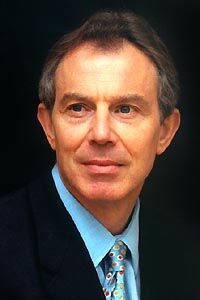
If Mr. Blair can stay the course he set in response to the deplorable London bombings, and if the people whom he calls as partners can rise to meet the challenge, what is called Muslim terrorism will end.
Mr. Blair offers the first intelligent response from a major Western leader to what is called Muslim terrorism. Mr. Blair’s clear and balanced 4 point plan introduced in Parliament promises to reverse our plummet into the blind and primitive militarism that nourishes escalating guerilla attacks on innocents.
Mr. Blair’s 4 point plan boasts simplicity rather than simple-mindedness. He calls for:
o New laws as planned against incitement and instigation of terrorism
o New measures to keep people inciting hatred out of the UK, or making it more easily to deport them
o Help for the Muslim community to counter the "evil" interpretation of their faith
o International effort to mobilize the "moderate and true voice of Islam"
He shifts focus from acts of terrorism to incitement and instigation of terrorism. “The laws,” reports BBC, “would focus on measures the police and security services believed necessary to combat the incitement and the instigation of terrorism as well as the acts of terrorism themselves." Additionally he includes a pledge “help for the Muslim community to counter the "evil" interpretation of their faith”, and to launch “an international effort to mobilize the "moderate and true voice of Islam"
The analysis and the plan are finely integrated. The deportation aspect flirts with the unimaginative, wholly ineffective impulse to “get rid of people.” But it is nevertheless reasonable and proper as it deals with the laws of his own sovereign state, and his responsibility to protect its citizens.
Otherwise here’s how “getting rid of people” works:
In July 2004, US Vice President Cheney stated "many of al Qaeda's known leaders have been captured or killed. Those still at large are on the run, and we are going to hunt them down--one by one." In September, US President GW Bush stated “More than three quarters of Al Qaeda’s key members and associates have been detained or killed.” In the mean time the US government reports of 2004 stated, “The number of "significant" [terrorist] attacks grew to about 655, up from the record of around 175 in 2003.” “Terrorist incidents in Iraq also dramatically increased, from 22 attacks to 198, or nine times the previous year's total.”
Mr. Blair instead correctly identifies the source of the problem as an ideology. He offers a clear and effective program in response by identifying the right allies, and promising resources to that community.
We do not find in Mr. Blair’s rhetoric references to a disembodied, non-defined bogey-man (terrorism) on which we “wage war.” He points out instead, “we are dealing with “an extreme and evil ideology whose roots lie in a perverted and poisonous misinterpretation of the religion of Islam.”
With Blair, the perpetrators of inhuman horror among us are no longer a science-fiction like, mercurial web of high-tech, inhuman demons lurking among us (maybe that 87 year old lady from Iowa getting her shoes scanned at JFK airport is one of them.) They are teachers, ideologues. They teach, they incite, they instigate, and they effectively recruit and promote “an evil interpretation of the Muslim faith.” They are not best identified by having a pair of finger nail clippers in their carry-on luggage.
Who do they teach? Muslims. What do they teach? “A misinterpretation of Islam.” Who best might be able to identify these evil-doers? Blair immediately met with Muslim members of parliament, and will host a summit of UK Muslim leaders. This is the correct read. In the same speech he warned that Britain's Muslim community should be protected from reprisals or suspicion following the bombings -- insisting that any attempts by the far right to use the attacks to stir up racism would be "particularly revolting".
Perhaps Mr. Blair is lucky he doesn’t have his country’s leading Christian shouting across the dinner table, “Islam is “wicked, violent and not of the same god.” (Asked by NBC News to clarify his statement, Franklin Graham stood his ground.)
Mr Blair while meeting with Muslim MPs on Wednesday said "this evil [is] within the Muslim community… In the end, this can be taken on and defeated only by the community itself."
Now that Mr. Blair has identified and pledged to support the international “moderate and true voice of Islam,” to combat perpetrators of “a poisonous and perverted misinterpretation of the religion of Islam,” maybe we can relieve corn-fed, Christian boys and girls from Arkansas of that duty.
In August of 2000, immediately prior to the bi-centennial General Assembly, (and well before 9/11) Dr. Sun Myung Moon delivered in the United Nations the speech, Renewing the United Nations and Building A Culture of Peace. After admonishing religious leaders, “Religious people have not been good examples in the practice of love and living for the sake of others … religious leaders [should] stand against the injustices and evils of the world... we [must] go beyond interests of particular religions, and put our love and ideals into practice for the sake of the world,” he then made the radical proposal, “World peace can be fully accomplished only when the world's religious leaders work cooperatively and respectfully with national leaders who have much practical wisdom and worldly experience about the external reality… Serious consideration should be given to forming a religious assembly, or council of religious representatives within the structure of the United Nations.”
This clarion call was all but ignored, horror replaced hope, and the “new millennium” became a time of war.
Since the UN is a membership organization, the establishment of the council called for by Dr. Moon should have been pursued member nation by member nation. That model could then have been mirrored in corresponding new structures for the world body itself.
In the throes of sadness, Mr. Blair rose to perfectly fulfill that vision in his 4 point response to 7/7. Now it is up to the ones he calls as partners, the ones whom Mr. Blair optimistically calls the "moderate and true voice of Islam, the ones to whom he has promised support at home and abroad.
In this he has done more than the politician’s job, and he has done so with a religion not his own! This is path breaking statesmanship in the face of a devastating crisis.
It is now up to Muslim leaders, not only in Britain, but world-wide to meet the this trust and optimism offered at the “West’s” highest levels. Muslim leaders must put aside all petty conflict and division, and rise to this call. Leaders of the “moderate and true voice of Islam,” have been offered respectful support from a mighty Western power, to effectively counter the “evil interpretation of their faith,” and remove the poison from their midst. This is a great challenge, but a precious opportunity for “Islam” to bring genuine benefit to all people of all faiths and all cultures.
Frank Kaufmann
July 17, 2005
Frank Kaufmann is the Director of the Office of International Relations of the IIFWP
This writing represents the personal opinion of the writer, not the position of the IIFWP
Tuesday, June 21, 2005
The Democrat crusade for irrelevance
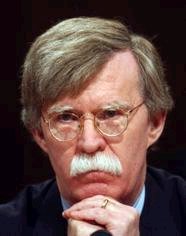
Gas hit sixty dollars a barrel today. Iraq fatalities and casualties drip daily into the sandstone of citizen confidence. Rogue states own and build nuclear weapons with impunity, and the Democrats nobly and fiercely joust at the windmill named John Bolton.
The United Nations lies crippled under a pathetic scandal of simple greed and graft, which spread like cancer to every crevice of the long-ineffective world organization.
In the post-Soviet-era, the United States and the United Nations vie to posture as the defining world organization. The United States abandoned any pretense of collaboration with the United Nations on March 19, 2003 by inventing its own international organization (which it called “the coalition of the willing”) to support its decision to attack Sadam’s Iraq with the full force of its military.
The food for oil scandal, reaching as it does into the very family of the US sanctioned UN Secretary General Anan, leaves the international organization crippled and decimated. The US – UN competition to “rule the world” is like one of those high school softball games when the score reaches 23 – 0 in the 3rd inning. As the US continues its Bush-signature, foreign policy, with Secretary of State Rice thumping out a “no-tolerance” doctrine around the world, what difference could it possibly make who the US ambassador to the UN is? What average citizen cares even remotely who the US ambassador to the UN is?
The Democrats picked their Snidely Whiplash, big-mustachioed bad guy in John Bolton as the vehicle through which to nip Chihuahua-like at the heels of the all Republican, all the time majority in all branches of government.
Republicans can only hope that Mr. Bolton holds up and is willing to remain the poster-boy for Republican meanness. The Democrats for their part, in the place of genuine, creative ideas and constructive alternatives can enjoy a few more rushes at the red cape of the mean Mr. Bolton, while Republican matadors can enjoy the opportunity to inch the United States saber by saber toward becoming a one party state.
Tuesday, June 14, 2005
Only radical change can save the European Union

Europe is a land of conflict grounded in religious difference.
August Prize winner, Sweden’s Per Olov Enquist notes that “half of Europe’s wars, from the Monophystic struggles in the Roman Empire… to the German Empires’ cultural battles in the 19th Century, had arisen from some sort of theological strife, and since the church was a state institution, it led to war.”
The so-called “cultural differences” influencing anti-Constitution referenda have their roots in long histories of religious wars. Not only have they never been solved, they’ve never been addressed. In 1648 they began to be ignored.
This effort to ignore religion results in dominant European powers stumbling in the darkness, and tripping flat-footed over matters of religion. France, a massive player in EU politics was deemed in violation of International Law in its discriminatory headscarf ban, and likewise Germany has had the dubious distinction of being declared a human rights violator by numerous human rights watchdogs and organizations — most notably including the U.S. State Department, the United Nations Human Rights Committee, the Rutherford Institute, Human Rights Watch/Helsinki and the Organization for Security and Cooperation in Europe.
In Catholic Europe's largest dioceses in Germany, France, Italy, and Ireland, the percentage of Catholics who attend Mass regularly has slipped to as low as 20 percent, and in a few cities, like Paris, has reached as low as the single digits, according to figures compiled by the church. Yet pope John Paul II and the Vatican pressed for an explicit recognition of Christianity in the European constitution. Although that effort ultimately failed, the Pope stayed resolute on the importance of the continent's Christian patrimony. "Whether or not it is recognized in the official documents," he said, "it is an undeniable fact, which no historian can overlook." Yet 15 million Muslims live in Europe, up to 3 times the number of Muslims living in America. 10 million Muslims live in France and Germany alone, and Muslim Turkey remains in its 4th decade of seeking European status.
An EU is a wonderful idea. It should happen. Success in that effort would help the whole world. Unfortunately this cannot happen so long as it is pursued on the patently unworkable notion that a union of any sort can be built on purely economic and political designs.
One downside of trying to cobble political and economic unions together while remaining blind to the spiritual and religious aspects of “cultural” rootedness is that you end up with 60,000 word, 265 page constitutions. The United States constitution based as it is on a declaration of self-evident truths, that all men are created equal, … endowed by their Creator with certain unalienable Rights is one 12th the size.
In the United States the ideal of human equality is based on the assertion that we are created this way. Our rights are endowed by our creator. “Europe” on the other hand extracts rights and equality by drawing inspiration from the cultural, religious and humanist inheritance of Europe. Of the 25 “plenipotentiaries” affirming that human equality arises from Europe’s inheritance, almost a third sign as his or her majesty or royal highness.
As Enquist notes, Europe has hosted and exported religious conflict from its earliest days, but worse for its well-being is its recent 400 year experiment of hoping that religion if ignored will go away.
Religious fighting decimated and exhausted Europe in the 17th Century. It tired people of religion, but left state churches in place. Religious tiredness and state churches continue in Europe today, but the ascendant reign of the contra-religious intelligentsia never served to heal the ancient strife. Why? It is because healing division is itself a spiritual and religious act. That is the job of God and religion, to make things “one.”
The United States has yet to realize perfectly its ideals of universal rights and human equality, but it remains a union of the most far ranging diversity in history. It is a union that begins with the plain and unabashed acknowledgment that equality and rights are endowed by a creator, not inspired by fractious threads of philosophical and ideological inheritance.
All progressive and clear-thinking people should long to see a European Union. But, so long as the spiritual mission of “making things one,” is misconceived as purely political and economic, and so long as religious hostilities and prejudices remain enshrined in the hearts of people, prospects remain near hopeless.
Enlightened religious leaders are needed to light the way out of this history. But how dark is their path in modern-day Europe?
Dr. Frank Kaufmann
Director
Offcie of Interreligious Relations
IIFWP
These are the opinions of the author, not the positions of the IIFWP
Europe is a land of conflict grounded in religious difference.
August Prize winner, Sweden’s Per Olov Enquist notes that “half of Europe’s wars, from the Monophystic struggles in the Roman Empire… to the German Empires’ cultural battles in the 19th Century, had arisen from some sort of theological strife, and since the church was a state institution, it led to war.”
The so-called “cultural differences” influencing anti-Constitution referenda have their roots in long histories of religious wars. Not only have they never been solved, they’ve never been addressed. In 1648 they began to be ignored.
This effort to ignore religion results in dominant European powers stumbling in the darkness, and tripping flat-footed over matters of religion. France, a massive player in EU politics was deemed in violation of International Law in its discriminatory headscarf ban, and likewise Germany has had the dubious distinction of being declared a human rights violator by numerous human rights watchdogs and organizations — most notably including the U.S. State Department, the United Nations Human Rights Committee, the Rutherford Institute, Human Rights Watch/Helsinki and the Organization for Security and Cooperation in Europe.
In Catholic Europe's largest dioceses in Germany, France, Italy, and Ireland, the percentage of Catholics who attend Mass regularly has slipped to as low as 20 percent, and in a few cities, like Paris, has reached as low as the single digits, according to figures compiled by the church. Yet pope John Paul II and the Vatican pressed for an explicit recognition of Christianity in the European constitution. Although that effort ultimately failed, the Pope stayed resolute on the importance of the continent's Christian patrimony. "Whether or not it is recognized in the official documents," he said, "it is an undeniable fact, which no historian can overlook." Yet 15 million Muslims live in Europe, up to 3 times the number of Muslims living in America. 10 million Muslims live in France and Germany alone, and Muslim Turkey remains in its 4th decade of seeking European status.
An EU is a wonderful idea. It should happen. Success in that effort would help the whole world. Unfortunately this cannot happen so long as it is pursued on the patently unworkable notion that a union of any sort can be built on purely economic and political designs.
One downside of trying to cobble political and economic unions together while remaining blind to the spiritual and religious aspects of “cultural” rootedness is that you end up with 60,000 word, 265 page constitutions. The United States constitution based as it is on a declaration of self-evident truths, that all men are created equal, … endowed by their Creator with certain unalienable Rights is one 12th the size.
In the United States the ideal of human equality is based on the assertion that we are created this way. Our rights are endowed by our creator. “Europe” on the other hand extracts rights and equality by drawing inspiration from the cultural, religious and humanist inheritance of Europe. Of the 25 “plenipotentiaries” affirming that human equality arises from Europe’s inheritance, almost a third sign as his or her majesty or royal highness.
As Enquist notes, Europe has hosted and exported religious conflict from its earliest days, but worse for its well-being is its recent 400 year experiment of hoping that religion if ignored will go away.
Religious fighting decimated and exhausted Europe in the 17th Century. It tired people of religion, but left state churches in place. Religious tiredness and state churches continue in Europe today, but the ascendant reign of the contra-religious intelligentsia never served to heal the ancient strife. Why? It is because healing division is itself a spiritual and religious act. That is the job of God and religion, to make things “one.”
The United States has yet to realize perfectly its ideals of universal rights and human equality, but it remains a union of the most far ranging diversity in history. It is a union that begins with the plain and unabashed acknowledgment that equality and rights are endowed by a creator, not inspired by fractious threads of philosophical and ideological inheritance.
All progressive and clear-thinking people should long to see a European Union. But, so long as the spiritual mission of “making things one,” is misconceived as purely political and economic, and so long as religious hostilities and prejudices remain enshrined in the hearts of people, prospects remain near hopeless.
Enlightened religious leaders are needed to light the way out of this history. But how dark is their path in modern-day Europe?
Dr. Frank Kaufmann
Director
Offcie of Interreligious Relations
IIFWP
These are the opinions of the author, not the positions of the IIFWP
Saturday, May 21, 2005
War, Journalists, and Cultural Blunders
By Frank Kaufmann
Special to World Peace Herald
Published May 21, 2005
NEW YORK -- The near thorough removal of all communications boundaries in our contemporary world is literally unprecedented. Incendiary Arabic language sermons quickly circulate among American conservatives, and insults to Islam are heard instantly in remote cities and villages from Peshawar to Kuala Lumpur. We do not yet have habits of mind that match this new reality. Debate, reactions, and analyses struggle to transcend traditional categories. As such they do not shed light. Wholesome responses and solutions elude us.
Last week two privately owned corporations, namely Newsweek Inc. (a Washington Post company), and the Washington Times sparked high intensity, international incidents. In one there was even loss of life. Newsweek ran a half a sentence on desecrating the Qu'ran causing a worldwide firestorm including riots and death, and the Washington Times ran an objectionable and embarrassing cartoon. The half sentence and the cartoon caused problems of towering gravity and consequence. Very little is similar between the two cases other than that they both had to do with the incredibly fragile relations between "the West" and "Islam."
The Times peccadillo came and went somehow waning despite the paper's odd non-apology about "man's best friend." Perhaps the more horrifying series of events surrounding the Newsweek half sentence knocked the legs out from under the Times' troubles.
Analysis of these phenomena should concentrate on two most important aspects:
David Brooks described the politicization well in his May 19, 2005 New York Times editorial. The Newsweek problem called for quick, genuine, and creative solutions. Instead we were buried under the hype and barrage of finger pointing and blame from all sides. Then, instead of searching for creative, urgently needed solutions, we are made cross-eyed by yet another round of media narcissism obsessing on itself in the tiring minutiae of journalism standards, use of sources and other shop talk. These are all red herrings even though the real problem is plain. What the Newsweek blunder showed, more than confusion over the use of sources, was the simple fact that almost no non-Muslim Americans naturally know how the Qu'ran truly functions in Muslim life and piety. Why wasn't our ignorance of the one of the most basic facts of Muslim piety the immediate focus of our national conversation? (Same with the offensive "dog" cartoon. How many non-Muslim Americans know how dogs are viewed in Muslim culture?)
Yes, the question of single source and anonymous source reporting is interesting. Yes, the question of media responsibility in a "time of war" is interesting. Surely the question of prisoner rights is interesting, and all are extremely important. The most frightful revelation however shown by the "Newsweek horrors" is that the cost of cultural and religious ignorance in a world of instant communication is at an all time high, and can no longer be ignored or left unattended. The solution to this problem does not lie in blaming newspapers, interrogators, or militants. It is a complex problem that should be approached by all communities and leaders unencumbered by the poison of blame and politicization.
The second major problem revealed in these events has to do with a near impossible effort to divide a "foreign" cultural sphere into an enemy half and an allied half. To presume that one can simply divide into "good guys and bad guys," a one billion person, international community grounded in 1,400 years of complex and opaque processes and evolution is silly on the face of it. Islamic history, theology, jurisprudence, political philosophy, and the profound and subtle evolution of its schools of interpretations, its political and theological development, its own debated issues of expansion, modernization, race and gender issues and more takes patience and understanding to intuit. To think that one can do this on the cheap, and further to think this is possible under the defining context of military alliances and national self-interest is in a word, impossible, and should be unthinkable.
Until the alliance between the United States and forward looking Muslim thinkers, countries, and leaders is one that transcends military purposes, and grows to become one of mutual embrace, and until the centuries long slide of modernity into the secularization that misses religion as a vital to the human experience is reversed, we are bound to continue suffering from the results of self-imposed ignorance.
We may not always have Mr. Isikoff to blame for our own sins. The next half sentence might be my own.
Only a starting point of true inter-cultural and interreligious respect and collaboration can start to dampen the flames of violence couching ever ready at the doors of instant global communication.
By Frank Kaufmann
Special to World Peace Herald
Published May 21, 2005
NEW YORK -- The near thorough removal of all communications boundaries in our contemporary world is literally unprecedented. Incendiary Arabic language sermons quickly circulate among American conservatives, and insults to Islam are heard instantly in remote cities and villages from Peshawar to Kuala Lumpur. We do not yet have habits of mind that match this new reality. Debate, reactions, and analyses struggle to transcend traditional categories. As such they do not shed light. Wholesome responses and solutions elude us.
Last week two privately owned corporations, namely Newsweek Inc. (a Washington Post company), and the Washington Times sparked high intensity, international incidents. In one there was even loss of life. Newsweek ran a half a sentence on desecrating the Qu'ran causing a worldwide firestorm including riots and death, and the Washington Times ran an objectionable and embarrassing cartoon. The half sentence and the cartoon caused problems of towering gravity and consequence. Very little is similar between the two cases other than that they both had to do with the incredibly fragile relations between "the West" and "Islam."
The Times peccadillo came and went somehow waning despite the paper's odd non-apology about "man's best friend." Perhaps the more horrifying series of events surrounding the Newsweek half sentence knocked the legs out from under the Times' troubles.
Analysis of these phenomena should concentrate on two most important aspects:
1. The immediate politicization of the problem and virtually all commentary that followed.
2. The clear evidence that cultural ignorance a. abounds, and b. has dire consequences in this age of instant communication.
David Brooks described the politicization well in his May 19, 2005 New York Times editorial. The Newsweek problem called for quick, genuine, and creative solutions. Instead we were buried under the hype and barrage of finger pointing and blame from all sides. Then, instead of searching for creative, urgently needed solutions, we are made cross-eyed by yet another round of media narcissism obsessing on itself in the tiring minutiae of journalism standards, use of sources and other shop talk. These are all red herrings even though the real problem is plain. What the Newsweek blunder showed, more than confusion over the use of sources, was the simple fact that almost no non-Muslim Americans naturally know how the Qu'ran truly functions in Muslim life and piety. Why wasn't our ignorance of the one of the most basic facts of Muslim piety the immediate focus of our national conversation? (Same with the offensive "dog" cartoon. How many non-Muslim Americans know how dogs are viewed in Muslim culture?)
Yes, the question of single source and anonymous source reporting is interesting. Yes, the question of media responsibility in a "time of war" is interesting. Surely the question of prisoner rights is interesting, and all are extremely important. The most frightful revelation however shown by the "Newsweek horrors" is that the cost of cultural and religious ignorance in a world of instant communication is at an all time high, and can no longer be ignored or left unattended. The solution to this problem does not lie in blaming newspapers, interrogators, or militants. It is a complex problem that should be approached by all communities and leaders unencumbered by the poison of blame and politicization.
The second major problem revealed in these events has to do with a near impossible effort to divide a "foreign" cultural sphere into an enemy half and an allied half. To presume that one can simply divide into "good guys and bad guys," a one billion person, international community grounded in 1,400 years of complex and opaque processes and evolution is silly on the face of it. Islamic history, theology, jurisprudence, political philosophy, and the profound and subtle evolution of its schools of interpretations, its political and theological development, its own debated issues of expansion, modernization, race and gender issues and more takes patience and understanding to intuit. To think that one can do this on the cheap, and further to think this is possible under the defining context of military alliances and national self-interest is in a word, impossible, and should be unthinkable.
Until the alliance between the United States and forward looking Muslim thinkers, countries, and leaders is one that transcends military purposes, and grows to become one of mutual embrace, and until the centuries long slide of modernity into the secularization that misses religion as a vital to the human experience is reversed, we are bound to continue suffering from the results of self-imposed ignorance.
We may not always have Mr. Isikoff to blame for our own sins. The next half sentence might be my own.
Only a starting point of true inter-cultural and interreligious respect and collaboration can start to dampen the flames of violence couching ever ready at the doors of instant global communication.
Tuesday, May 10, 2005
Kill People, Break Things, Hug Children

There are seven areas of great political interest at this time, Afghanistan, Iraq, Ukraine, Lebanon, Palestine, Taiwan, and Korea.
The similar cases have strong differences and unique aspects. Still three basic groupings are evident: 1. Afghanistan and Iraq, 2. Ukraine, Lebanon, and Palestine, and 3. Korea and Taiwan.
Afghanistan and Iraq are countries recently invaded by the United States, and presently sustain strong, U.S., military presence.
Ukraine, Lebanon, and Palestine are countries shedding or seeking to shed historical “oppressors” and “occupying” forces through internal political evolution, and internationally monitored dialogue with an historical “oppressor” (Russia for the Ukraine, Syria for Lebanon, and Israel for Palestine).
Taiwan and Korea, though different, make a group because the U.S. is associated militarily with one partner in both cases (South Korea in the fragile, nuclear tinderbox on the Korean Peninsula, and Taiwan in the complex and deeply ideological standoff involving the claims of the People’s Republic of China.)
In sum, two cases with the U.S. military already embroiled, 3 cases without explicit U.S. military presence, and two cases with the U.S. military teetering precariously on the periphery of nightmare scenarios.
Of the 3 groupings, only in Iraq and Afghanistan do death and war-related injury increase daily, the Iraq death toll is now over 3,000 US and coalition deaths, and over 11,000 US and coalition casualties. Iraqi civilian casualties exceed 17,000. In Afghanistan they exceed 4,000. The new category of soaring deaths and injury is among Iraqi police and security personnel, intensifying since the formation of Iraq’s interim government. Of all U.S. killed and wounded, 92% have been since the declared end of combat operations on May 1, 2003! 18,000 U.S. Military remain in Afghanistan, 120,000 in Iraq. Current war costs for Iraq stand at 168 Billion dollars.
In virtually all places in the world notorious for militancy and conflict, positive signs of progress abound. Sharon and Abbas display mastery and courage despite extremes hovering to the left and the right like vultures waiting for a misstep. India and Pakistan positively glisten as examples of positive, political vision and courage. Even Taiwan and Beijing inch timidly toward the dance floor.
Only where the US has injected itself militarily is death and war-relted injury a daily phenomenon.
The US military arguably is the best in history; not only for its power, but more gloriously for the humane ethic and ideal it pursues (Even the horrific exceptions meet swift, self imposed justice). Nevertheless US military presence has proven perfectly ill-conceived as concept for bringing peace and stability. The tragic attempt at diplomacy-by-army is surely discredited if even so “good” and so powerful a group of young people prove powerless to suppress ideological commitment to resistance.
The experiment is a failure not in its result, but in its premise. The world no longer admits of mixing war and good. It is a crime to ask America’s noble young soldiers to serve as the agents of “good-will,” and the bearers of the “democratic ideal.” The contradiction of purpose endangers the lives of our sons and daughters. 1. They are members of an organization designed for destruction and violence. 2. They began their stay in Afghanistan and Iraq violently. 3. They are not trained as Ambassadors, despite their frequently loving and compassionate acts in the countries where they are stationed, 4. They represent an enemy to entrenched resistance. These young people are saddled with improper and self-contradictory expectations, an impossible mission for which they are losing their lives.
America’s rise to the position of “world’s sole super-power,” blinded us to the roots of our greatness. In both Afghanistan and Iraq where violence abounds, we claim our massive military presence remains to train and support the nascent, indigenous, security forces to protect and rebuild the infrastructure deemed necessary to allow the maturation of “democracy” and social stability.
The problem here is that the roots of American freedom and stability are not security based. We do not have military and paramilitary forces keeping majorities and minorities apart in our country. American Democracy, freedom, and social stability are the result of theological and social concepts that convince us of human equality. From this we recognize, support, and defend the rights of our compatriots, even those whom we do not like. On this foundation we live together, at first reluctantly and over time in harmony.
Our democracy, freedoms, and social stability were not imposed upon us by force by foreign powers. They are imposed on us by conscience and an enlightened ideal. If these are our roots, where did we get the idea that security and military force are the roots of democracy? Our greatness lies in a compelling theological and social case for human equality. It seems 168 billion dollars should be enough to help spread this notion.

There are seven areas of great political interest at this time, Afghanistan, Iraq, Ukraine, Lebanon, Palestine, Taiwan, and Korea.
The similar cases have strong differences and unique aspects. Still three basic groupings are evident: 1. Afghanistan and Iraq, 2. Ukraine, Lebanon, and Palestine, and 3. Korea and Taiwan.
Afghanistan and Iraq are countries recently invaded by the United States, and presently sustain strong, U.S., military presence.
Ukraine, Lebanon, and Palestine are countries shedding or seeking to shed historical “oppressors” and “occupying” forces through internal political evolution, and internationally monitored dialogue with an historical “oppressor” (Russia for the Ukraine, Syria for Lebanon, and Israel for Palestine).
Taiwan and Korea, though different, make a group because the U.S. is associated militarily with one partner in both cases (South Korea in the fragile, nuclear tinderbox on the Korean Peninsula, and Taiwan in the complex and deeply ideological standoff involving the claims of the People’s Republic of China.)
In sum, two cases with the U.S. military already embroiled, 3 cases without explicit U.S. military presence, and two cases with the U.S. military teetering precariously on the periphery of nightmare scenarios.
Of the 3 groupings, only in Iraq and Afghanistan do death and war-related injury increase daily, the Iraq death toll is now over 3,000 US and coalition deaths, and over 11,000 US and coalition casualties. Iraqi civilian casualties exceed 17,000. In Afghanistan they exceed 4,000. The new category of soaring deaths and injury is among Iraqi police and security personnel, intensifying since the formation of Iraq’s interim government. Of all U.S. killed and wounded, 92% have been since the declared end of combat operations on May 1, 2003! 18,000 U.S. Military remain in Afghanistan, 120,000 in Iraq. Current war costs for Iraq stand at 168 Billion dollars.
In virtually all places in the world notorious for militancy and conflict, positive signs of progress abound. Sharon and Abbas display mastery and courage despite extremes hovering to the left and the right like vultures waiting for a misstep. India and Pakistan positively glisten as examples of positive, political vision and courage. Even Taiwan and Beijing inch timidly toward the dance floor.
Only where the US has injected itself militarily is death and war-relted injury a daily phenomenon.
The US military arguably is the best in history; not only for its power, but more gloriously for the humane ethic and ideal it pursues (Even the horrific exceptions meet swift, self imposed justice). Nevertheless US military presence has proven perfectly ill-conceived as concept for bringing peace and stability. The tragic attempt at diplomacy-by-army is surely discredited if even so “good” and so powerful a group of young people prove powerless to suppress ideological commitment to resistance.
The experiment is a failure not in its result, but in its premise. The world no longer admits of mixing war and good. It is a crime to ask America’s noble young soldiers to serve as the agents of “good-will,” and the bearers of the “democratic ideal.” The contradiction of purpose endangers the lives of our sons and daughters. 1. They are members of an organization designed for destruction and violence. 2. They began their stay in Afghanistan and Iraq violently. 3. They are not trained as Ambassadors, despite their frequently loving and compassionate acts in the countries where they are stationed, 4. They represent an enemy to entrenched resistance. These young people are saddled with improper and self-contradictory expectations, an impossible mission for which they are losing their lives.
America’s rise to the position of “world’s sole super-power,” blinded us to the roots of our greatness. In both Afghanistan and Iraq where violence abounds, we claim our massive military presence remains to train and support the nascent, indigenous, security forces to protect and rebuild the infrastructure deemed necessary to allow the maturation of “democracy” and social stability.
The problem here is that the roots of American freedom and stability are not security based. We do not have military and paramilitary forces keeping majorities and minorities apart in our country. American Democracy, freedom, and social stability are the result of theological and social concepts that convince us of human equality. From this we recognize, support, and defend the rights of our compatriots, even those whom we do not like. On this foundation we live together, at first reluctantly and over time in harmony.
Our democracy, freedoms, and social stability were not imposed upon us by force by foreign powers. They are imposed on us by conscience and an enlightened ideal. If these are our roots, where did we get the idea that security and military force are the roots of democracy? Our greatness lies in a compelling theological and social case for human equality. It seems 168 billion dollars should be enough to help spread this notion.
Saturday, January 01, 2005
Worldwide Call to Prayer
The Interreligious and International Federation for World Peace, Office of Interreligious Relations

Affected Area
Our family has suffered a terrible blow, this time in Southeast Asia and stretching right the way across to Somalia on Africa’s eastern coast. Confirmed deaths exceed 124,000 with 1,000s still unaccounted for, and millions remain homeless.
Reports are of a frantic race to save millions of survivors from dehydration and disease and stop the terrifying death count from climbing further.
On the humanitarian side we have responded well. Aid for Tsunami relief has already topped 2 billion dollars making this the biggest relief effort in history. Japan so far is the biggest donor having pledged 500 million dollars; the United States has offered 350 million dollars so far. Even so circumstances and disorganization are creating obstacles for the safe delivery of relief.
Governments, the United Nations, and relief agencies from civil society have exhibited remarkable rapidity of response, sadly however, the religious world has not manifest a similar degree of coordination to provide our human family with guidelines for the religious and spiritual response to so great a change in the human landscape.
Massive numbers are transitioning from temporal life to eternal life in the spiritual world. Furthermore the passing of so huge a number occurred all at once. This is a shock. It has significant impact on the human family. Religions together should guide us through times of such intense impact on our consciousness as Gods human family.
Already millions are becoming experts on sub-oceanic geology, but how many have learned more clearly about life and death?
Two communities are affected most by the passing and transition from temporal life to eternal life; those who find themselves forced to deal with eternal life suddenly and without time to prepare, and those who lost loved ones; parents, children, husbands and wives, brothers and sisters. We of the global family have as much responsibility to care for our brothers and sisters in spiritual need as we do to care for them physically.
Surely in a disaster of this magnitude brothers and sisters from every faith have been lost to us. Is there guidance which speaks universally, across all traditions? How are we as a family to care for our brothers and sisters who are starting their new life in the spiritual world? How are we to care for those who similarly must make a radically new start in life, rebuilding life suddenly without precious, loved ones?
There is guidance from the world’s religions for times such as these. At this moment we call for a world-wide time of prayer, repentance, and reflection. Every person should look to the wisdom of their respective traditions, but as we pray, as we beseech the loving God to help us all in the face of this shocking event, let us pray as one. The Muslim upon hearing that anyone has lost his or her life is required to recite the short statement, “from Almighty God we come and to Him is our return.” The Holy Quran 41.30-31 reminds us that “Those who have said, "Our Lord is God," then have gone straight, upon them the angels descend, saying, "Fear not, neither sorrow; rejoice in Paradise that you were promised. We are your friends in the present life and in the world to come; therein you shall have all that your souls desire..." and with perfect clarity insists “Do not say, "They are dead!" about anyone who is killed for God's sake. Rather they are living, even though you do not notice it.” (Qur'an 2.154)
Catholic Christians are guided to pray, “Eternal rest grant to them, O Lord, and let perpetual light shine upon them. May the souls of the faithful departed, through the mercy of God, rest in peace. Amen.” Jews and Christians know from Ecclesiastes 12.7 “The dust returns to the earth as it was, and the spirit returns to God who gave it”. In the New Testament, Christians are reminded to be, “always of good courage; we know that while we are at home in the body we are away from the Lord, for we walk by faith, not by sight. We are of good courage, and we would rather be away from the body and at home with the Lord.” (2 Corinthians 4.16-5.10)
Father Moon of the Unification community speaks for volumes on the relationship between the spiritual and physical realm. In fact, every morning of their lives, Unificationists from the youngest to the oldest make a solemn promise in front of God, “Our family, centered on true love, pledges to strive daily for greater unity between the spiritual world and the physical world.”
The I Ching, in the Great Commentary 1.4.2 reminds us “Birth and death form one recurring cycle, like the alternation of the seasons. Spirit comes from the invisible realms to the visible, then returns to the invisible realms again. “ Hinduism says, “As a man passes from dream to wakefulness, so does he pass at death from this life to the next.” (Brihadaranyaka Upanishad 4.3.11-14, 35). Buddhists have peace in the knowledge that “Man's real nature is primarily spiritual life, which weaves its threads of mind to build a cocoon of flesh, encloses its own soul in the cocoon, And, for the first time, the spirit becomes flesh. Understand this clearly: The cocoon is not the silkworm; In the same way, the physical body is not man but merely man's cocoon. Just as the silkworm will break out of its cocoon and fly free, So, too, will man break out of his body-cocoon and ascend to the spiritual world when his time is come. Never think that the death of the physical body is the death of man. Since man is life, he will never know death. (Seicho-no-ie. Nectarean Shower of Holy Doctrines.)
The list, and the teaching of the living God is abundantly to be found in every tradition. Please let us as one family pray for the living, and for those who have moved on to the spiritual world. We must be serious, faithful, and caring at times like this.
The Interreligious and International Federation for World Peace, Office of Interreligious Relations

Affected Area

Our family has suffered a terrible blow, this time in Southeast Asia and stretching right the way across to Somalia on Africa’s eastern coast. Confirmed deaths exceed 124,000 with 1,000s still unaccounted for, and millions remain homeless.
Reports are of a frantic race to save millions of survivors from dehydration and disease and stop the terrifying death count from climbing further.
On the humanitarian side we have responded well. Aid for Tsunami relief has already topped 2 billion dollars making this the biggest relief effort in history. Japan so far is the biggest donor having pledged 500 million dollars; the United States has offered 350 million dollars so far. Even so circumstances and disorganization are creating obstacles for the safe delivery of relief.
Governments, the United Nations, and relief agencies from civil society have exhibited remarkable rapidity of response, sadly however, the religious world has not manifest a similar degree of coordination to provide our human family with guidelines for the religious and spiritual response to so great a change in the human landscape.
Massive numbers are transitioning from temporal life to eternal life in the spiritual world. Furthermore the passing of so huge a number occurred all at once. This is a shock. It has significant impact on the human family. Religions together should guide us through times of such intense impact on our consciousness as Gods human family.
Already millions are becoming experts on sub-oceanic geology, but how many have learned more clearly about life and death?
Two communities are affected most by the passing and transition from temporal life to eternal life; those who find themselves forced to deal with eternal life suddenly and without time to prepare, and those who lost loved ones; parents, children, husbands and wives, brothers and sisters. We of the global family have as much responsibility to care for our brothers and sisters in spiritual need as we do to care for them physically.
Surely in a disaster of this magnitude brothers and sisters from every faith have been lost to us. Is there guidance which speaks universally, across all traditions? How are we as a family to care for our brothers and sisters who are starting their new life in the spiritual world? How are we to care for those who similarly must make a radically new start in life, rebuilding life suddenly without precious, loved ones?
There is guidance from the world’s religions for times such as these. At this moment we call for a world-wide time of prayer, repentance, and reflection. Every person should look to the wisdom of their respective traditions, but as we pray, as we beseech the loving God to help us all in the face of this shocking event, let us pray as one. The Muslim upon hearing that anyone has lost his or her life is required to recite the short statement, “from Almighty God we come and to Him is our return.” The Holy Quran 41.30-31 reminds us that “Those who have said, "Our Lord is God," then have gone straight, upon them the angels descend, saying, "Fear not, neither sorrow; rejoice in Paradise that you were promised. We are your friends in the present life and in the world to come; therein you shall have all that your souls desire..." and with perfect clarity insists “Do not say, "They are dead!" about anyone who is killed for God's sake. Rather they are living, even though you do not notice it.” (Qur'an 2.154)
Catholic Christians are guided to pray, “Eternal rest grant to them, O Lord, and let perpetual light shine upon them. May the souls of the faithful departed, through the mercy of God, rest in peace. Amen.” Jews and Christians know from Ecclesiastes 12.7 “The dust returns to the earth as it was, and the spirit returns to God who gave it”. In the New Testament, Christians are reminded to be, “always of good courage; we know that while we are at home in the body we are away from the Lord, for we walk by faith, not by sight. We are of good courage, and we would rather be away from the body and at home with the Lord.” (2 Corinthians 4.16-5.10)
Father Moon of the Unification community speaks for volumes on the relationship between the spiritual and physical realm. In fact, every morning of their lives, Unificationists from the youngest to the oldest make a solemn promise in front of God, “Our family, centered on true love, pledges to strive daily for greater unity between the spiritual world and the physical world.”
The I Ching, in the Great Commentary 1.4.2 reminds us “Birth and death form one recurring cycle, like the alternation of the seasons. Spirit comes from the invisible realms to the visible, then returns to the invisible realms again. “ Hinduism says, “As a man passes from dream to wakefulness, so does he pass at death from this life to the next.” (Brihadaranyaka Upanishad 4.3.11-14, 35). Buddhists have peace in the knowledge that “Man's real nature is primarily spiritual life, which weaves its threads of mind to build a cocoon of flesh, encloses its own soul in the cocoon, And, for the first time, the spirit becomes flesh. Understand this clearly: The cocoon is not the silkworm; In the same way, the physical body is not man but merely man's cocoon. Just as the silkworm will break out of its cocoon and fly free, So, too, will man break out of his body-cocoon and ascend to the spiritual world when his time is come. Never think that the death of the physical body is the death of man. Since man is life, he will never know death. (Seicho-no-ie. Nectarean Shower of Holy Doctrines.)
The list, and the teaching of the living God is abundantly to be found in every tradition. Please let us as one family pray for the living, and for those who have moved on to the spiritual world. We must be serious, faithful, and caring at times like this.
Thursday, December 16, 2004
IIFWP's Methodology for Peace and Its Application
By
Frank Kaufmann
December 12, 2004
IIFWP identifies two core principles as requisite for the effective pursuit of peace. These are "living for the sake of others", and "life without boundaries." These concepts carry a great danger of misunderstanding, which could slow down or impede our peace efforts. Why? It is because people use terms like these thinking they have a single, universal meaning. In fact the meanings can vary greatly from person to person. We can end up speaking past each other, while thinking we are on a shared road of understanding.
If we are going to build a serious, substantial, and expansive peace movement, involving top world leaders, it is crucial that collaborators and fellow travelers share clear and common use of terms at the very outset. This will avoid problems and disappointments later down the line.
Living for others, and living without boundaries seem like common sense terms, and obvious requisites for effectively pursuing lasting peace. Yet if they are so obvious, and make such common sense, then why don't we have peace already? Further if they obviously have not brought peace, then why would IIFWP be so excited about its prospects, simply by stringing these simple notions together? This really needs to be considered! No one here needs to be wasting their time.
Life for the Sake of Others
Is this phrase just another name for "unselfishness"? Is IIFWP's great contribution to world peace nothing more than an admonition to "not be selfish"? How would this great insight apply? Say you make a million dollars a year and pass someone with nothing. In this moment, what would successfully constitute "living for the sake of others"? What if you gave this person 10 dollars? I think it must be very rare for a destitute person to receive 10 dollars from a passerby. But if you are worth several million dollars and you meet someone with absolutely nothing, no food, no shelter, I think it should hardly count much as living for the sake of others, by giving the person 10 dollars. Well how about 100 dollars? Is that enough? How about deciding to give this person a modest room, meals each day, shoes, and a coat for winter. Then you would end up with 994,000 dollars each year, and the other person has a room, food, shoes and a coat. How's that? Is that enough? Should you do that for the next person you meet who has nothing? Or would that start to eat to much into your remaining 994,000 dollars? Another option might be to yourself have just a room, food, shoes and a coat, then with your million dollars a year 750 people could live without want. You could be one of them. If you want to live more luxuriously, how about splitting your earnings 50 - 50 with the one in need. Surely we can survive on half a million dollars a year?
When we sit down and begin to plan for peace with our fellow IIFWP ambassadors all extolling living for others, are we talking to a guy who once gave a needy person 10 bucks, or with a person who makes a million dollars a year and has a room, food, shoes and a coat, along with 750 formerly hungry friends.
Do you see the problem of trying to build a unified organization on so vague a term? We could be in a room full of leaders all claiming to "live for the sake of others" and in fact have no real idea if we are working together or not? How should IIFWP solve this problem? Should we issue some chart of percentages? Would this clarify matters for establishing the qualifications of a peace ambassador?
And next we need to examine who to live for. Supposing you give half to your wife, and a quarter to your son? Can you then say "hey, I give away almost everything I make away." Does that count? Some people might think that's a little tricky. They might quietly think "hmmm, this fellow isn't really living for others, he just has a demanding wife and a lazy son." How will IIFWP solve that problem? Should we issue a list of people who qualify as people to "live for their sake"?
Obviously we cannot clarify our terms in this way. Such a project would be endless. On your chart of percentages you would have to create additional addenda to apply to whether the person is need is located in France or Paraguay. What if the person already has a coat but no shoes? Or, exactly how old are his shoes? What if his shoes are just plain ugly - don't go with his coat?
And who counts as the other? How about a half son, or a cousin? Once one goes down the road of legalism to create common meaning there is no return. You'll end up with lawyers instead of peace.
Life Without Boundaries
Let us quickly do something similar here to see if we have a common understanding this second, core concept? Just what is meant by living without boundaries? Surely life requires that we recognize boundaries. Is it legitimate for example to have a fence or some sort of demarcation around one?s property? Is it legitimate to differentiate between which sons and daughters are yours and which are mine? How about the boundary between those who believe Jesus of Nazareth rose from the dead, and those who do not? Is that a legitimate boundary?
It is easy to see here once again that presuming common meaning with this terms is also unreasonable.
Do we really want to start down so serious a road together assuming we share a common agenda and set of principles, without bothering to check of that is really the case? Aren't we inviting disappointment down the line, perhaps coming at a time when we can least afford to degenerate into discord, perhaps at a time just on the verge a a big breakthrough for peace.
We already recognize that legalistic attempts to nail down common understanding is a labor of Sisyphus. So, what to do?
Preliminary Clarification
The solution to this problem lies in creating common use of terms in non-legalistic ways.
The success of the IIFWP, and its power to extend so deeply and effectively into world affairs based on what seem like obvious observations, lies in the fact that its principles are far more profound, and systematic than first meets the eye. Life for the sake of others, is not a mere synonym for the vague catchphrase "unselfishness," and "life without boundaries" similarly is not a vague affirmation of "understanding," or "getting along." The way for IIFWP activists to truly act in accord requires that we grow in our understanding of the system and worldview on which they stand as essential and foundational.
Life Lived for the Sake of Others
We can gain greater clarity in our understanding of the term "living for the sake of others," when we approach all of reality as grounded in purpose. This can guide our sacrificial activity and remove the guesswork from making this into a legitimate principle on which to build a peace movement. The ground of purpose renders moot questions like how much to give, and to whom we should give. Our guideline is to give in the way which effects the greatest good for the greatest number of people.
Two corollaries for this principle point to greater clarity for IIFWP's notion of living for the sake of others. These are:
Note by this small example how these work:
See how quickly we can move from the evil of subtracting good out of the world, to a single person benefiting thousands of people. Just two steps! But the most important matter to note is that we cannot simply skip a step. Do you think a wife will follow a husband who is unfaithful, or children will follow a parent who is selfish? It is not possible. The root, the trunk, the branches, and the leaves of living for the sake of others, must all be connected and working in harmony. If I can get the 3000 people in my neighborhood to sacrifice themselves for our state or our nation in must one more step, then my "living for others" multiplies to millions.
The inner meaning of IIFWP's "living for the sake of others," more accurately follows the dynamic of the smaller living for the sake of the larger. This is only the most rudimentary introduction to the first core IIFWP principle, "life for the sake of others." Hopefully we can see that we are describing a very precise dynamic, and not building an organization based on a vague synonym for unselfishness.
How much should one give? The answer is everything, but that is an essay or another time. To whom? To God, all people, and all of nature. This too should be further clarified over time.
Life Lived without Boundaries
Finally, let me briefly touch upon a similar, introductory exposition for "life without boundaries," again so as to help account for the vitality, and transforming power of the IIFWP as a peace movement:
As I already said, one cannot in a facile manner proclaim oneself committed to removing all boundaries, when simply navigating life surely requires the recognition of countless boundaries.
Obviously conflict results from hostility toward some one or some group outside our those who we are willing to embrace, care for, and support. We place a boundary between ourselves and others. Versions of this include racism, religious intolerance, nationalism, ideological conflict, and other forms of separatism and intolerance. Hardening these these boundaries plays a big role in the horrors of hatred, war, and oppression. As a result it is all but a tautology to make "living without boundaries" a core principle of a peace organization.
In this second case too, how can we understand IIFWP to be saying anything other than the patently obvious? Furthermore what principles guide decisions in a grey areas? Are people's religious beliefs of no consequence? Are people's cultural and national heritage of no consequence? What if others threaten these treasures and irreplaceable legacies? Is the answer a simplistic "live without boundaries."
The aspect of IIFWP thought which creates of this a workable, and applicable principle is the recognition of categories in the human experience which are so universal and such a compelling force for harmony that they transcend and harmonize all difference, regardless of how essential, or extreme the difference might be. The category must be so basic and so far reaching that even religious difference cannot put us apart. What could possible stand safely and convincingly as so universal and transcendent that it can make all boundaries dissolve in an atmosphere of peace and reconciliation?
The IIFWP grounded in Dr. Moon's revelation and worldview is family. The universal experience of family reflecting true and eternal love is greater than every difference. Be ye black, white. or yellow, you are still a mother a father, a brother, sister, son or daughter. Be ye Christian, Muslim or Jew, the same is true. Rich poor, high low, urban or rural, rap music, or Brahms, the human experience at its most basic, God given base is absolutely one. Without this category, a worldview which explains it, and the fullness of life which derives from it, the call for life without boundaries is nothing more than a vague nicety.
As fathers, mothers, sons, daughters, brothers, sisters, husbands and wives do we want boundaries? Do you want boundaries between yourself and your daughter? Do you want boundaries between you and your husband? In the most basic human identity we want NO boundaries whatsoever, none!
Conclusion
I hope this brief, and introductory meditation on IIFWP core principles has been helpful. The important thing to recognize is that these categories are systematic and necessary. They are not vague niceties unrelated to the clear purpose and the unrivalled energy and effectiveness of this organization.
By
Frank Kaufmann
December 12, 2004
IIFWP identifies two core principles as requisite for the effective pursuit of peace. These are "living for the sake of others", and "life without boundaries." These concepts carry a great danger of misunderstanding, which could slow down or impede our peace efforts. Why? It is because people use terms like these thinking they have a single, universal meaning. In fact the meanings can vary greatly from person to person. We can end up speaking past each other, while thinking we are on a shared road of understanding.
If we are going to build a serious, substantial, and expansive peace movement, involving top world leaders, it is crucial that collaborators and fellow travelers share clear and common use of terms at the very outset. This will avoid problems and disappointments later down the line.
Living for others, and living without boundaries seem like common sense terms, and obvious requisites for effectively pursuing lasting peace. Yet if they are so obvious, and make such common sense, then why don't we have peace already? Further if they obviously have not brought peace, then why would IIFWP be so excited about its prospects, simply by stringing these simple notions together? This really needs to be considered! No one here needs to be wasting their time.
Life for the Sake of Others
Is this phrase just another name for "unselfishness"? Is IIFWP's great contribution to world peace nothing more than an admonition to "not be selfish"? How would this great insight apply? Say you make a million dollars a year and pass someone with nothing. In this moment, what would successfully constitute "living for the sake of others"? What if you gave this person 10 dollars? I think it must be very rare for a destitute person to receive 10 dollars from a passerby. But if you are worth several million dollars and you meet someone with absolutely nothing, no food, no shelter, I think it should hardly count much as living for the sake of others, by giving the person 10 dollars. Well how about 100 dollars? Is that enough? How about deciding to give this person a modest room, meals each day, shoes, and a coat for winter. Then you would end up with 994,000 dollars each year, and the other person has a room, food, shoes and a coat. How's that? Is that enough? Should you do that for the next person you meet who has nothing? Or would that start to eat to much into your remaining 994,000 dollars? Another option might be to yourself have just a room, food, shoes and a coat, then with your million dollars a year 750 people could live without want. You could be one of them. If you want to live more luxuriously, how about splitting your earnings 50 - 50 with the one in need. Surely we can survive on half a million dollars a year?
When we sit down and begin to plan for peace with our fellow IIFWP ambassadors all extolling living for others, are we talking to a guy who once gave a needy person 10 bucks, or with a person who makes a million dollars a year and has a room, food, shoes and a coat, along with 750 formerly hungry friends.
Do you see the problem of trying to build a unified organization on so vague a term? We could be in a room full of leaders all claiming to "live for the sake of others" and in fact have no real idea if we are working together or not? How should IIFWP solve this problem? Should we issue some chart of percentages? Would this clarify matters for establishing the qualifications of a peace ambassador?
And next we need to examine who to live for. Supposing you give half to your wife, and a quarter to your son? Can you then say "hey, I give away almost everything I make away." Does that count? Some people might think that's a little tricky. They might quietly think "hmmm, this fellow isn't really living for others, he just has a demanding wife and a lazy son." How will IIFWP solve that problem? Should we issue a list of people who qualify as people to "live for their sake"?
Obviously we cannot clarify our terms in this way. Such a project would be endless. On your chart of percentages you would have to create additional addenda to apply to whether the person is need is located in France or Paraguay. What if the person already has a coat but no shoes? Or, exactly how old are his shoes? What if his shoes are just plain ugly - don't go with his coat?
And who counts as the other? How about a half son, or a cousin? Once one goes down the road of legalism to create common meaning there is no return. You'll end up with lawyers instead of peace.
Life Without Boundaries
Let us quickly do something similar here to see if we have a common understanding this second, core concept? Just what is meant by living without boundaries? Surely life requires that we recognize boundaries. Is it legitimate for example to have a fence or some sort of demarcation around one?s property? Is it legitimate to differentiate between which sons and daughters are yours and which are mine? How about the boundary between those who believe Jesus of Nazareth rose from the dead, and those who do not? Is that a legitimate boundary?
It is easy to see here once again that presuming common meaning with this terms is also unreasonable.
Do we really want to start down so serious a road together assuming we share a common agenda and set of principles, without bothering to check of that is really the case? Aren't we inviting disappointment down the line, perhaps coming at a time when we can least afford to degenerate into discord, perhaps at a time just on the verge a a big breakthrough for peace.
We already recognize that legalistic attempts to nail down common understanding is a labor of Sisyphus. So, what to do?
Preliminary Clarification
The solution to this problem lies in creating common use of terms in non-legalistic ways.
The success of the IIFWP, and its power to extend so deeply and effectively into world affairs based on what seem like obvious observations, lies in the fact that its principles are far more profound, and systematic than first meets the eye. Life for the sake of others, is not a mere synonym for the vague catchphrase "unselfishness," and "life without boundaries" similarly is not a vague affirmation of "understanding," or "getting along." The way for IIFWP activists to truly act in accord requires that we grow in our understanding of the system and worldview on which they stand as essential and foundational.
Life Lived for the Sake of Others
We can gain greater clarity in our understanding of the term "living for the sake of others," when we approach all of reality as grounded in purpose. This can guide our sacrificial activity and remove the guesswork from making this into a legitimate principle on which to build a peace movement. The ground of purpose renders moot questions like how much to give, and to whom we should give. Our guideline is to give in the way which effects the greatest good for the greatest number of people.
Two corollaries for this principle point to greater clarity for IIFWP's notion of living for the sake of others. These are:
A. Everything you do should help the greatest number of people possible, and
B. It impossible to leap over a smaller social unit, to try to help a larger one.
Note by this small example how these work:
1. If I sacrifice others for my own sake (to become richer, more powerful, or more famous), I actually subtract goodness out of the world.
2. If I convert all my accomplishments to serve only my own benefit, at least I have not subtracted good away from others, but the whole good I do adds up to benefiting a total of one person. A small life indeed!
3. If I sacrifice everything for the sake of my family, the good stemming from my efforts now expands to 5 or 7 people or more. Thus by living for the sake of just my own immediate family, I have multiplied my power of goodness by 7 times or more. An incredible leap in how much good I do in the world!
4. But supposing we want to do good for more than just 7 people? This is the tricky part. I cannot decide simply that I will devote my accomplishments for my neighborhood (say for example 400 families - almost 3000 people) without gaining the consent of my family. My family must agree that our shared benefits are now going to be given to others. I have to unify my family around the idea that it is better for our goodness to benefit 3000 people, than just seven people. This is what I mean we cannot skip over a social unit.
See how quickly we can move from the evil of subtracting good out of the world, to a single person benefiting thousands of people. Just two steps! But the most important matter to note is that we cannot simply skip a step. Do you think a wife will follow a husband who is unfaithful, or children will follow a parent who is selfish? It is not possible. The root, the trunk, the branches, and the leaves of living for the sake of others, must all be connected and working in harmony. If I can get the 3000 people in my neighborhood to sacrifice themselves for our state or our nation in must one more step, then my "living for others" multiplies to millions.
The inner meaning of IIFWP's "living for the sake of others," more accurately follows the dynamic of the smaller living for the sake of the larger. This is only the most rudimentary introduction to the first core IIFWP principle, "life for the sake of others." Hopefully we can see that we are describing a very precise dynamic, and not building an organization based on a vague synonym for unselfishness.
How much should one give? The answer is everything, but that is an essay or another time. To whom? To God, all people, and all of nature. This too should be further clarified over time.
Life Lived without Boundaries
Finally, let me briefly touch upon a similar, introductory exposition for "life without boundaries," again so as to help account for the vitality, and transforming power of the IIFWP as a peace movement:
As I already said, one cannot in a facile manner proclaim oneself committed to removing all boundaries, when simply navigating life surely requires the recognition of countless boundaries.
Obviously conflict results from hostility toward some one or some group outside our those who we are willing to embrace, care for, and support. We place a boundary between ourselves and others. Versions of this include racism, religious intolerance, nationalism, ideological conflict, and other forms of separatism and intolerance. Hardening these these boundaries plays a big role in the horrors of hatred, war, and oppression. As a result it is all but a tautology to make "living without boundaries" a core principle of a peace organization.
In this second case too, how can we understand IIFWP to be saying anything other than the patently obvious? Furthermore what principles guide decisions in a grey areas? Are people's religious beliefs of no consequence? Are people's cultural and national heritage of no consequence? What if others threaten these treasures and irreplaceable legacies? Is the answer a simplistic "live without boundaries."
The aspect of IIFWP thought which creates of this a workable, and applicable principle is the recognition of categories in the human experience which are so universal and such a compelling force for harmony that they transcend and harmonize all difference, regardless of how essential, or extreme the difference might be. The category must be so basic and so far reaching that even religious difference cannot put us apart. What could possible stand safely and convincingly as so universal and transcendent that it can make all boundaries dissolve in an atmosphere of peace and reconciliation?
The IIFWP grounded in Dr. Moon's revelation and worldview is family. The universal experience of family reflecting true and eternal love is greater than every difference. Be ye black, white. or yellow, you are still a mother a father, a brother, sister, son or daughter. Be ye Christian, Muslim or Jew, the same is true. Rich poor, high low, urban or rural, rap music, or Brahms, the human experience at its most basic, God given base is absolutely one. Without this category, a worldview which explains it, and the fullness of life which derives from it, the call for life without boundaries is nothing more than a vague nicety.
As fathers, mothers, sons, daughters, brothers, sisters, husbands and wives do we want boundaries? Do you want boundaries between yourself and your daughter? Do you want boundaries between you and your husband? In the most basic human identity we want NO boundaries whatsoever, none!
Conclusion
I hope this brief, and introductory meditation on IIFWP core principles has been helpful. The important thing to recognize is that these categories are systematic and necessary. They are not vague niceties unrelated to the clear purpose and the unrivalled energy and effectiveness of this organization.
Monday, November 22, 2004
The Reception of the Inter Religious Federation for World Peace at the 2004 Annual Meeting of the American Academy of Religion in San Antonio
Scholars of Religion were treated this week to time in the lovely city of San Antonio. The AAR continues its superior tradition of conference organization, and the town showed itself to be exceptionally well suited to host the 1000’s of guests in attendance. The enchanting Riverwalk, the natural synergy between hotels and housing and the ample facilities of the easily accessible convention center, and finally a great tradition of conference services have all mixed to make a splendid environment for the week of important (if occasionally esoteric) business at hand. Apart from the habit of convention and tourist destinations to find a way to convert every tiny need into another buck out of your pocket, San Antonio is a pleasant venue indeed.
For the past 20 years the IRFWP has hosted a reception at the annual meeting of the AAR, and this year was no different. Three steady trademarks make up the signature of this IRFWP tradition:
1. We meet on the evening prior to the formal start of the conference
2. We have an hour of a scholarly panel
3. We have an hour to catch up and relax together
1. Meet before the official start of the conference
As a professional society, presentations at the academy tend to carry for participants a touch of pressure, competition, and exacting rigor from peers and competitors. Further, often times academic obligations often require scholars to treat relatively rarified, even esoteric subject matter. This is simply the reality of any professional community. This is not to be decried, it is the stuff of genuine, and hard won expertise.
But this battle over minutiae is often a waste of powerful minds, when we consider the legitimate, broad, religious concerns which occupy the minds of intelligent people at this time in history. We of the IRFWP deliberately have our meetings before the frenetic, and rough and tumble, formal schedule begins. During this time, scholars are fresh, relaxed, and often in the best condition to offer thoughts relevant to pressing matters of religion and peace in contemporary world affairs.
2. Have an hour of a scholarly panel and
3. Have an hour of time to relax and socialize
The IRFWP reception is meant to provide two important benefits to participants; 1. An opportunity to engage in intellectually stimulating dialogue, and 2. A chance to catch up with friends and make new contacts in a warm atmosphere with plentiful refreshments. The academic section is also the time in which the IRFWP director reports on the work and progress of the organization.
The Responsibility of the Religious Academy in Foreign Policy and International Relations
As an active peace foundation, the IRFWP and the providentially central organization under which it carries out its activities (The Interreligious and International Federation for World Peace, IIFWP) always looks for activist applications of intellectual product. One major commitment of the IIFWP is its devotion to peace initiatives. These include the Middle East Peace Initiative (MEPI), the Northeast Asian Peace Initiative (NEAPI – with special focus on tensions on the Korean Peninusla), and many others.
Especially in the Middle East the role of religion is so immediately apparent. Furthermore, following 9/11 tragedy US foreign relations always face an interreligious dimension in its foreign policy. This is why we chose this topic as a way to see how we better can benefit from scholarly insight in the pursuit of peace, sought at the international level.
Speakers this year were Professor Clayton McNearney (American Studies, Marshall University), and Professor Cromwell Crawford (Indological Studies, University of Hawaii). McNearney focused on the classroom. He delineated 5 ways in which professors and teachers can approach curricula and the construction of syllabi to equip students to better interpret and engage political discourse, and better analyze and position themselves vis a vis the political actions of their nations. McNearney’s work was creative, constructive, innovative, and practical.
Professor Cromwell spoke briefly of the peace oriented foundations and centers which are part of the University of Hawaii, and then went on to discuss how the expertise of religion scholars is vital to guide discernment relating to the threat of terrorism on the one hand, and the equally dangerous threat to freedom on religion on the other.
Frank Kaufmann
November 21, 2004
Scholars of Religion were treated this week to time in the lovely city of San Antonio. The AAR continues its superior tradition of conference organization, and the town showed itself to be exceptionally well suited to host the 1000’s of guests in attendance. The enchanting Riverwalk, the natural synergy between hotels and housing and the ample facilities of the easily accessible convention center, and finally a great tradition of conference services have all mixed to make a splendid environment for the week of important (if occasionally esoteric) business at hand. Apart from the habit of convention and tourist destinations to find a way to convert every tiny need into another buck out of your pocket, San Antonio is a pleasant venue indeed.
For the past 20 years the IRFWP has hosted a reception at the annual meeting of the AAR, and this year was no different. Three steady trademarks make up the signature of this IRFWP tradition:
1. We meet on the evening prior to the formal start of the conference
2. We have an hour of a scholarly panel
3. We have an hour to catch up and relax together
1. Meet before the official start of the conference
As a professional society, presentations at the academy tend to carry for participants a touch of pressure, competition, and exacting rigor from peers and competitors. Further, often times academic obligations often require scholars to treat relatively rarified, even esoteric subject matter. This is simply the reality of any professional community. This is not to be decried, it is the stuff of genuine, and hard won expertise.
But this battle over minutiae is often a waste of powerful minds, when we consider the legitimate, broad, religious concerns which occupy the minds of intelligent people at this time in history. We of the IRFWP deliberately have our meetings before the frenetic, and rough and tumble, formal schedule begins. During this time, scholars are fresh, relaxed, and often in the best condition to offer thoughts relevant to pressing matters of religion and peace in contemporary world affairs.
2. Have an hour of a scholarly panel and
3. Have an hour of time to relax and socialize
The IRFWP reception is meant to provide two important benefits to participants; 1. An opportunity to engage in intellectually stimulating dialogue, and 2. A chance to catch up with friends and make new contacts in a warm atmosphere with plentiful refreshments. The academic section is also the time in which the IRFWP director reports on the work and progress of the organization.
The Responsibility of the Religious Academy in Foreign Policy and International Relations
As an active peace foundation, the IRFWP and the providentially central organization under which it carries out its activities (The Interreligious and International Federation for World Peace, IIFWP) always looks for activist applications of intellectual product. One major commitment of the IIFWP is its devotion to peace initiatives. These include the Middle East Peace Initiative (MEPI), the Northeast Asian Peace Initiative (NEAPI – with special focus on tensions on the Korean Peninusla), and many others.
Especially in the Middle East the role of religion is so immediately apparent. Furthermore, following 9/11 tragedy US foreign relations always face an interreligious dimension in its foreign policy. This is why we chose this topic as a way to see how we better can benefit from scholarly insight in the pursuit of peace, sought at the international level.
Speakers this year were Professor Clayton McNearney (American Studies, Marshall University), and Professor Cromwell Crawford (Indological Studies, University of Hawaii). McNearney focused on the classroom. He delineated 5 ways in which professors and teachers can approach curricula and the construction of syllabi to equip students to better interpret and engage political discourse, and better analyze and position themselves vis a vis the political actions of their nations. McNearney’s work was creative, constructive, innovative, and practical.
Professor Cromwell spoke briefly of the peace oriented foundations and centers which are part of the University of Hawaii, and then went on to discuss how the expertise of religion scholars is vital to guide discernment relating to the threat of terrorism on the one hand, and the equally dangerous threat to freedom on religion on the other.
Frank Kaufmann
November 21, 2004
Monday, October 25, 2004
The Middle East Peace Initiative (MEPI)
of the Interreligious and International Federation for World Peace (IIFWP) and the Interreligious and International Peace Council
By Frank Kaufmann

The Middle East Peace Initiative (MEPI) of the IIFWP and the IIPC is rooted in the theological and philosophical worldview and lived commitments of Sun Myung Moon and his associates.
The MEPI of the IIFWP is grounded in substantial efforts beginning as early as 1985 when IIFWP predecessors and affiliated organizations began in earnest to promote dialogue among the religions of the region.
In addition to religious dialogue, extensive long-term investment in several other areas also informed the basis for MEPI as it functions today. These include family education, projects for racial integration, economic and political foundations, media and media organizations, and initiatives for service and social welfare, and many others. The pursuit of lasting peace in the Middle East requires an integrated, coordinated effort engaging these major areas and more. MEPI of the IIFWP is an implemented and lived ideology.
Worldview
These are IIFWP’s principles for peace:
1. God Exists and Has a Learnable and Realizable, Original Ideal for Peace
This first principle defines IIFWP’s MEPI in a number of significant ways.
2. The Spiritual World Exists, has an Impact on Contemporary Affairs
This reality while not excessively to be seen in the externals of IIFWP’s MEPI, nevertheless informs the development of programs extensively and in a serious way.
Most people hold a number of independent realities to be true, but often fail to connect them on a practical level. Very few people on earth deny the existence of a spiritual world. Virtually all world religions outline a specific relationship between earthly life and eternal spiritual reality. While such matters are respected on the individual level, consideration of these dynamics tend not to be extended to reflection, planning, and implementation on in larger arenas of human life such as national, regional, international, religious, and racial relations. To ignore fundamental and far-reaching beliefs and realities when trying to chart strategies of ultimate consequence (such as the pursuit of lasting peace) is unreasonable.
This tendency to insulate personal religious belief, as well as the tendency to regard current earthly affairs as separate from the spiritual reality which in fact is infused throughout life, results in skewed ideas as to what engaging the spiritual world means. While people feel at home with guidance on the personal level (such as “Grow stronger and deeper on your own path,” “Live in spiritual awareness,” “Help heal and create a better world”), they are unaccustomed to bringing these same dynamics and impulses to social, interreligious, and international challenges.
The vast majority of human beings, especially adherents of the major religions of the region acknowledge the presence and active influence of both beneficent and malevolent spiritual forces. Further, most believers acknowledge the perdurance of human souls, which should naturally create spiritual populations with a stake in the outcome of earthly affairs.
No sound analysis of any social situation deliberately discounts major influences when seeking to chart solutions or paths for improvement. Would the “Roadmap” of the “Quartet” deliberately ignore the geo-political characteristics of the Golan Heights, in its plan and recommendations? No. These realities carry too great an influence to ignore. Why then should the massive influence and impact of an ever-present spiritual reality be overlooked by responsible leaders seeking to forge a sound and sophisticated path past the horrible conflicts and bloody history of the region?
This second IIFWP principle again recommends a leading role for enlightened religious and spiritual leaders in the peace process. Religious and spiritual leaders must engage in dialogue with life and death seriousness to develop as broad a common ground as possible. This is the only way they can qualify to guide experts in all other areas of leadership on the all-important matter of how spiritual forces push contemporary players in the direction of war or peace.
3. Peace Activists Must Embody the Ideals of Peace in Character and Lifestyle
This principle links directly to IIFWP’s creed that peace originates in God and follows processes which extend goodness. Love and goodness (not power or “intelligence”) transform conditions from conflict to harmony. History has not failed to produce “intelligent enough” leaders; it has failed to date to align human behavior naturally and fully with God’s universal love and compassion for all. Smart people can commit atrocities. Smart people can perpetrate narrow, parochial, and selfish agendas. IIFWP acknowledges the requisites of knowledge and power in finally resolving deep conflict such as we have in the Middle East, but only in the context of goodness. Power and intelligence can support the peace process only when applied by leaders who live recognizably for the sake of all people equally. This is accomplished in deed, not word. It is seen in the record of personal daily life, not grand declarations and pronouncements.
4. Stable, God-centered Families Are the Cornerstone of a Peaceful Society, and Model the Path to Peace
There are a number of essential elements to be noted in this section.
A. All relationships in life reflect or approximate family relations. The fullest “vertical” relationship is that between parents and children. The fullest “horizontal” relationship is that between husband and wife. We then have “shades” or “degrees” of relationships which approach or approximate these perfect axes embodied in parent-child, and husband-wife. These include brothers and sisters, aunts and uncles, cousins and so forth.
The beauty of family (in the ideal) is that it contains and miraculously harmonizes elements of the most extreme difference (generation, gender, character, interests, habits, and infinitely on), among family members all of whom are forced (involuntarily!) into the closest of quarters and all manner of uninvited intimacy. When functioning properly, this cacophony of agendas, characters, habits, interests, preferences, and so forth thrust into a cauldron of inescapable relationship becomes the sweetest treasure and surest anchor in life. This occurs only by the power of love; true love which originates in God’s original design for our lives, and is so powerful as to be able to create life and lineage.
There is simply NO other explanation for the coherence of family (in the ideal).
If we have so perfect a case study in harmonizing extreme difference, it is only reasonable to ground all peace initiatives in a careful and thorough study of this institution; in fact to base it on the institution itself.
B. Not only is the (ideal) family the model for building and maintaining peaceful and harmonious relationships, but the establishment of stable, healthy, loving families, rooted in God’s ideal is the first and most indispensable requisite for successfully attaining and establishing enduring peace.
To date, peace initiatives proceed on the assumption that certain differences are irreconcilable. As a result strategies of these initiatives are grounded in principles of compromise, third party mediation, and even permanent, external policing structures among conflicting groups.
The model of family (ideally) is the substantial argument that no amount of difference is irreconcilable. For this reason, individuals from stable, healthy families are in their way the Ph.D.’s of reconciliation and harmony. These are peace-makers incarnate. The one’s who have lived, realized, and embody the principles and skills for reconciliation and harmonization.
When peace-making is understood as the removal of hatred rather than the removal of conflict, then the cardinal and paramount requisite is the establishment of ideal families. It models harmony, reveals the principles of reconciling difference in productive integration, and creates peace-makers with living knowledge habituated in these divine principles.
5. Religious Leaders Responsibility for the Realization of Peace.
IIFWP holds that peaceful and harmonious life on earth is the originally intended human condition. God created this world and human beings to live naturally and with ease under these conditions. By extension conflict in the world represents a breach from this natural ideal. Conflict is the result of dissociation or alienation from God resulting in our forfeiting the ability to live in ways which result effortlessly in peaceful, harmonious existence.
Religion is the institution in human history and human affairs which exists to heal that breach, and guide human beings on paths which reconnect us to God, and by extension to restore our natural, original good nature and good behavior. For this reason, of all treasure, religious treasure is the most precious; not money, knowledge, or power. It represents the way for a bright and prosperous future.
The historical evolution of societies, cultures, races, and geographically based populations gave rise to many world religions, each with a profound history of guiding and elevating their respective adherents. It is inevitable that the rightful and important history of protecting and cherishing this precious treasure though excellent for cultures in isolation, has led to clash and conflict as travel and technology brought cultures increasingly into contact.
Now as a result religions function with this debilitating dysfunction, pathology, and self contradiction. Each contains excellent guidelines for supporting their own believers’ path to reunite with God and thus with secrets for the realization of peace, yet simultaneously they carry with them the inherited history of conflict and division.
We have always known that when wars involve religion in one way or another they are the most destructive and most intractable. This was true, even when weapons technology and rules of military engagement both served to lessen the potential extent of horror and human carnage. In our present age however we simply can no longer afford the luxury of conflict. Weapons technology has reached proportions capable of total, global destruction, and the 20th century saw the perfecting of asymmetrical warfare which removed those checks on conscience which once served to protect women, children, the elderly, and non-combatants. Hatred and the power of destruction have reached ultimate proportions way beyond anyone’s ability to control.
The ONLY legitimate religious activity under these circumstances is to make reconciliation, harmony, and cooperation an inviolable condition for religious legitimacy. NO religion no matter how “civil” no matter how “established,” has ANY right whatsoever to condone or tolerate words or actions which encourage division, even the tiniest bit. Religious leaders MUST succeed in removing the contradiction and pathology which continues to be part of religious commitment in the world today. This is why religious leaders bear the first responsibility more than any other vocation regardless of how noble or powerful. The ones who first must succeed to pioneer the principles of transcending difference through love, harmony, cooperation, and integration are religious leaders: A. because they claim to be in touch with the divine and B. because they claim to be the stewards over revelations and traditions which provide principles for right living.
We cannot afford to live without religious guidance. We cannot afford to have religions disqualify themselves because they bring conflict and division to the table, the very thing we so desperately need to overcome. Religious leaders must realize the religious call of the age and proudly pioneer among themselves first the sterling and shining example of harmonization of extreme and important difference. If this can be done in the arena of religion, it can be done in every subsequent field in which the treasure at stake is infinitely less precious.
6. The Relationship Between Secular and Political Leaders and Spiritual and Religious Leaders
To the extent that religious leaders successfully fulfill their responsibility of the age, secular and political leaders should be guided by joint, multi-religious councils of this new breed of religious leader.
Of course there have been a great many permutations in the relationship between spiritual and political leadership. Some states involve religious leaders more formally in national leadership; others allow an informal or unspoken influence from religious institutions. In many states the separation has become quite great, and political and economic forces dominate. The United Nations has tended to approach its mission from a political ground. Neither model has proven helpful in the ability of states to successfully achieve enduring peace and international cooperation. States which integrate religious leaders into government have proven every bit as capable and prone to war as secular states which seem to formally separate religion from government. For this reason the position that religious leaders should have greater influence on government is usually rejected by most moderns, especially in the West, and in those global institutions which are dominated by Western theories of social organization.
On what basis then does IIFWP advocate that peace requires religious leaders to collaborate in a fully integrated way with political and secular leaders? The key lies in the point that the religious leader councils must be multi-religious. Until now, the only examples of government including formal religious involvement are when just one religion is involved, for example Muslim countries, or Christian Kingdoms of the past. This cannot work because the religion in this case is tempted to use government power to advance its own parochial and denominational ends. The single religion can use the power of the state to oppress its own citizens, denying religious freedom (to varying degrees even death and torture), and it can use the state to wage war against its neighbors or distant proxies in order to pursue narrow, parochial or denominational agendas. This is the reason why Western philosophies and powers have adopted the principles of non-establishment and “separation.” The terrible thing about this decision of course is that political government loses access to its most important treasure and guide namely spirituality and religion. The central clash in the world today is between two sides which are both wrong in opposite ways. The solution to this clash is multi-religious councils. This accomplishes the best of both worlds, and what is absolutely necessary for peace in our time. Political leaders as well as all stakeholders can benefit from being guided by spiritual and moral ideals, and religions cannot use the state to advance parochialism, denominationalism, and other conflict and war producing habits in which religious leaders and followers have indulged in the past.
Members of multi-religious councils exhibit by the very nature of the council itself that they are true leaders for peace, reconciliation, harmony and cooperation. In this way religious leaders bring two all-important things to the table: 1. they are a living example of having successfully dissolved historical difference, hatred, and conflict, AND 2. They bring the wealth of God’s history, revelation, wisdom, love, care, compassion and humanizing traditions which every religion has at its core.
7. Peace Requires Collaboration Among Governments, Religions, and All Sectors of Civil Society, Including Education, Business, the Arts, Sports, Media, Social Service and Community Welfare Initiatives, and More.
It is always the case that in important areas of conflict (such as the Middle East) there exist a plethora of peace initiatives, and all manner of projects and activities for the uplifting of those who suffer the steady horror of war, deprivation, and insecurity arising from conflict. Every one of these does an important good and serves a vital purpose to respond to the great misfortune that prevails. Unfortunately these projects tend to be unrelated and uncoordinated.
This atomization is not “across-the-board.” Surely there is some degree of cooperation among these many efforts, and almost all projects collaborate or cooperate with some other group or initiative. Conversely, however there is an interesting set of biases and division also at work. Devotion to the different needs which arise from war and conflict create helper-communities which function like “denominations.” Laborers, even for good and noble causes, often become myopic and narrow in their social behavior and style. They (of necessity) create a language world unique to their world of service, their network of relations tends to be constrained to their own field or enterprise, and often leaders come to believe that their work is THE real leader which will bring about peace. For example those involved in religious dialogue might feel that they alone are the ones who can bring peace, others who do relief work on the ground and in the villages might think similarly. Perhaps journalists think that the media hold the key to peace, or artists might think that way. Each might hold some prejudices or biases against the other forms of enterprise. The person working in the slums might deride the “suits just talking in their posh hotels,” or “the egg-heads in their ivory towers,” and so on and so forth.
This sort of “denominationalism of vocation,” is also an obstacle for the realization of peace. IIFWP holds that the integration of all major helping-fields including religious, political, economic, education, media, the arts, sports, social service and many others is necessary to realize peace. This requisite integration is not easily achieved, and surely not achieved just by declaring it should be so. To bring people out from the confines of their respective vocations as well as to engender in everyone respect and appreciation for the different types of work needed and led by “types” completely different, is a delicate, hard-won, and requires as much creativity and investment as your classic forms of interreligious, or interdenominational dialogue. This too is an IIFWP principle of peace.
8. Peace in the Middle East Requires Investment and Cooperation from the Whole World, NOT Just from Players Immediately or Obviously Affected by Developments in the Region.
Until now, most major peace negotiations involving Israel and Palestine have been limited to a subset of those countries immediately connected to the region (namely the Israel, the Palestinian Authority, neighboring countries, and the United States). Often some country will host talks but not act as a stakeholder in the negotiations.
IIFWP rejects this starting point on principle. If those who suffer in the region are considered people first, before any other subset or “division,” (such as Jews, Muslims, Israelis, or Palestinians), then we are facing a “human” problem, rather than a political one. If people are suffering, or if two communities cannot find a way past extreme difficulties and conflict, then everyone in the world should be concerned, and everyone in the world has a stake in the resolution of the disordered situation. We define the situation as a problem in the family. We grieve as a global family and all desire the hasty return to peaceful life.
After this, we further recognize the political, economic, cultural, and religious interconnectedness which ties us all to the Middle East.
The second aspect of this 8th IIFWP principle has do with the fact that every religious and cultural sphere has unique wisdom, views, approaches, insights and so forth, any one of which could hold an important clue or secret to move beyond some part of the impasse. Perhaps a Thai Buddhist leader can see something that eludes everyone else, or a Hindu saint from places utterly remote and seemingly unconnected and unrelated to the Middle might recognize a destructive dynamic to which people more immediately ensconced are blind. Again this reflects the urgent call for interreligious councils to function not only in countries and regions, but internationally on a global scale. Leaders from every nation should go regularly to the Middle East with a heart of love and care, and a deep desire for the welfare of our brothers and sisters currently trapped in destructive cycles of horror and warfare.
Principles and Political Peace Processes
Because Moderns think from political assumptions, even lay people, when told of a “peace movement,” immediately demand public pronouncements, positions, and even action relating to passing political actions and proposals. For example one often meets demands like, “What is IIFWP’s position on the security wall currently under construction by the Israelis?” Or “What is your position on the recent non-governmental ‘Geneva Accord’ for Israel and Palestine?” for example.
In the face of such demands, there is a great temptation to formulate and issue such positions, or to feel that we are somehow failing when not able to offer formal stances on the passing and ever changing politics of conflict and security. To succumb to either temptation is wrong. As clearly evident from its above delineated principles, the IIFWP is not limited in its worldview or thinking just to the narrow realm of political thinking and action, no matter how important political leaders imagine themselves to be. In fact, clear-thinking people should place far less stock and hope in politically driven actions, proposals and agendas, and furthermore should start to point out more openly that the political dominance in modern affairs has been all but hopeless in addressing problems of conflict, injustice, and inhumanity.
The poverty of politics in isolation notwithstanding is NOT to say however that politics and political processes are unimportant. The above delineated principles state repeatedly that political activity, like all other peace-seeking vocations is indispensable in its unique contribution to unified and integrated programs for good. For this reason, those called to political vocations must formulate political opinions, just as scientists must offer their contribution, artists theirs, and religionists theirs. It is not the mission of the IIFWP to issue pronouncements and positions on political agendas for peace, but rather its responsibility is to provide clear principles to guide sound political thinking, to provide religious and spiritual power and guidance in support of political efforts, and to provide a supportive, multi-vocational community with all requisite expertise.
For those in politics, or are responsible to evaluate and position themselves on political proposals and positions, their responsibility is to be able to defend their positions grounded in IIFWP principles. There is no necessary political position based on IIFWP principles, there are only positions that can with greater or lesser success establish their conclusions rigorously grounded in IIFWP principles.
For example, “What is the IIFWP position on Israel’s security wall?” The first answer is “all walls and all division between people is wrong. It is against the original desire of God that all people to live easily in harmony.” But this is not a political position. It is a philosophical position. If the question were slightly changed: “Should Israel build a security wall at this time?” THIS is a political question. An IIFWP Ambassador who attempts an answer to this question must perform the analysis and develop conclusions rigorously grounded IIFWP principles. The question for the IIFWP Ambassador translates as this: “Would building a security wall in this point in time (IN JUST THE WAY IT IS BEING PERPETRATED) lead us in the most rapid, and most humane way to the desired end in which all people in the region live peacefully and in loving support for one another?” Conceivably, two IIFWP members could arrive at opposite answers to this question. It merely falls to the political expert and advocate to demonstrate that the conclusion is unerringly consistent with IIFWP principles and world view.
There might be cases in which a political action or proposal, after being analyzed from the IIFWP world view, is recognized clearly, unequivocally, and unanimously as good, or bad. In such cases the IIFWP might vigorously support or oppose a given political plan, just as it might do for a social or educational plan, a plan for the arts and so forth. The key is not to mistake the MEPI of the IIFWP as limited to the narrow field of politics, nor to presume that the initiative necessarily positions itself on all contemporary political activity. If for example it could be established clearly, unequivocally, and unanimously that a security wall at present absolutely impedes progress toward the time at which no sane person would ever dream of building a wall between God’s children, then MEPI would speak and act. Absent such clarity, IIFWP continues to pour its massive resources into working directly in all spheres to realize the conditions of true and lasting peace; a reality in which walls could not conceivably exist.
of the Interreligious and International Federation for World Peace (IIFWP) and the Interreligious and International Peace Council
By Frank Kaufmann
The Middle East Peace Initiative (MEPI) of the IIFWP and the IIPC is rooted in the theological and philosophical worldview and lived commitments of Sun Myung Moon and his associates.
The MEPI of the IIFWP is grounded in substantial efforts beginning as early as 1985 when IIFWP predecessors and affiliated organizations began in earnest to promote dialogue among the religions of the region.
In addition to religious dialogue, extensive long-term investment in several other areas also informed the basis for MEPI as it functions today. These include family education, projects for racial integration, economic and political foundations, media and media organizations, and initiatives for service and social welfare, and many others. The pursuit of lasting peace in the Middle East requires an integrated, coordinated effort engaging these major areas and more. MEPI of the IIFWP is an implemented and lived ideology.
Worldview
These are IIFWP’s principles for peace:
1. God exists, and has an original ideal for enduring peace in human affairs which can be learned and realized.
2. The spiritual world exists, has an impact on contemporary affairs, and must be acknowledged and engaged in peace efforts.
3. Peace activists can be effective only to the degree they embody the ideals of peace in character and lifestyle.
4. Stable, God-centered families are the wellspring of peace and all good things in human society. Conversely, all social ills originate from family disorder. Family also embodies the metaphor for successfully attaining peace.
5. Religious leaders should lead by example dissolving all boundaries and resolving all conflict, including religious boundaries and religious conflict. Religious leaders are responsible more than any for setting world affairs aright, beginning with creating thoroughgoing peace and cooperation in all interreligious relations.
6. Religious leaders who demonstrate equal concern for all people absent parochial preferences, who cooperate across religious and denominational lines, should be consulted by secular powers.
7. Peace building and peace keeping requires collaborative participation from all sectors of civil society, including education, business, the arts, sports, as well as social service and community welfare initiatives.
8. Peace in the Middle East requires investment and cooperation from the whole world, NOT just from players immediately or obviously affected by developments in the region.
1. God Exists and Has a Learnable and Realizable, Original Ideal for Peace
This first principle defines IIFWP’s MEPI in a number of significant ways.
A. The conceptual and intellectual breakthrough containing the key strategy and accurate and effective processes for peace will become known first by enlightened, spiritual and religious leaders, NOT first through political leaders or any other secular community no matter how powerful or knowledgeable.
B. The end of the peace process is permanent. It reflects an original ideal. It does not presume permanence of conflict or enmity. Once peace is achieved, it will not have to be mediated by outside powers. It is a natural condition, and an original human desire and state.
C. The strategies and activity which lead to peace are those of reconciliation, not those of compromise, truce, “accord,” “agreements,” and so forth.
D. Reconciliation employs religious and spiritual dynamics that include such applications as repentance and forgiveness.
E. Justice is the natural condition of a truly peaceful society and region; it is not a pre-requisite condition for participation in dialogue, self-reflection, repentance and forgiveness.
2. The Spiritual World Exists, has an Impact on Contemporary Affairs
This reality while not excessively to be seen in the externals of IIFWP’s MEPI, nevertheless informs the development of programs extensively and in a serious way.
Most people hold a number of independent realities to be true, but often fail to connect them on a practical level. Very few people on earth deny the existence of a spiritual world. Virtually all world religions outline a specific relationship between earthly life and eternal spiritual reality. While such matters are respected on the individual level, consideration of these dynamics tend not to be extended to reflection, planning, and implementation on in larger arenas of human life such as national, regional, international, religious, and racial relations. To ignore fundamental and far-reaching beliefs and realities when trying to chart strategies of ultimate consequence (such as the pursuit of lasting peace) is unreasonable.
This tendency to insulate personal religious belief, as well as the tendency to regard current earthly affairs as separate from the spiritual reality which in fact is infused throughout life, results in skewed ideas as to what engaging the spiritual world means. While people feel at home with guidance on the personal level (such as “Grow stronger and deeper on your own path,” “Live in spiritual awareness,” “Help heal and create a better world”), they are unaccustomed to bringing these same dynamics and impulses to social, interreligious, and international challenges.
The vast majority of human beings, especially adherents of the major religions of the region acknowledge the presence and active influence of both beneficent and malevolent spiritual forces. Further, most believers acknowledge the perdurance of human souls, which should naturally create spiritual populations with a stake in the outcome of earthly affairs.
No sound analysis of any social situation deliberately discounts major influences when seeking to chart solutions or paths for improvement. Would the “Roadmap” of the “Quartet” deliberately ignore the geo-political characteristics of the Golan Heights, in its plan and recommendations? No. These realities carry too great an influence to ignore. Why then should the massive influence and impact of an ever-present spiritual reality be overlooked by responsible leaders seeking to forge a sound and sophisticated path past the horrible conflicts and bloody history of the region?
This second IIFWP principle again recommends a leading role for enlightened religious and spiritual leaders in the peace process. Religious and spiritual leaders must engage in dialogue with life and death seriousness to develop as broad a common ground as possible. This is the only way they can qualify to guide experts in all other areas of leadership on the all-important matter of how spiritual forces push contemporary players in the direction of war or peace.
3. Peace Activists Must Embody the Ideals of Peace in Character and Lifestyle
This principle links directly to IIFWP’s creed that peace originates in God and follows processes which extend goodness. Love and goodness (not power or “intelligence”) transform conditions from conflict to harmony. History has not failed to produce “intelligent enough” leaders; it has failed to date to align human behavior naturally and fully with God’s universal love and compassion for all. Smart people can commit atrocities. Smart people can perpetrate narrow, parochial, and selfish agendas. IIFWP acknowledges the requisites of knowledge and power in finally resolving deep conflict such as we have in the Middle East, but only in the context of goodness. Power and intelligence can support the peace process only when applied by leaders who live recognizably for the sake of all people equally. This is accomplished in deed, not word. It is seen in the record of personal daily life, not grand declarations and pronouncements.
4. Stable, God-centered Families Are the Cornerstone of a Peaceful Society, and Model the Path to Peace
There are a number of essential elements to be noted in this section.
A. All relationships in life reflect or approximate family relations. The fullest “vertical” relationship is that between parents and children. The fullest “horizontal” relationship is that between husband and wife. We then have “shades” or “degrees” of relationships which approach or approximate these perfect axes embodied in parent-child, and husband-wife. These include brothers and sisters, aunts and uncles, cousins and so forth.
The beauty of family (in the ideal) is that it contains and miraculously harmonizes elements of the most extreme difference (generation, gender, character, interests, habits, and infinitely on), among family members all of whom are forced (involuntarily!) into the closest of quarters and all manner of uninvited intimacy. When functioning properly, this cacophony of agendas, characters, habits, interests, preferences, and so forth thrust into a cauldron of inescapable relationship becomes the sweetest treasure and surest anchor in life. This occurs only by the power of love; true love which originates in God’s original design for our lives, and is so powerful as to be able to create life and lineage.
There is simply NO other explanation for the coherence of family (in the ideal).
If we have so perfect a case study in harmonizing extreme difference, it is only reasonable to ground all peace initiatives in a careful and thorough study of this institution; in fact to base it on the institution itself.
B. Not only is the (ideal) family the model for building and maintaining peaceful and harmonious relationships, but the establishment of stable, healthy, loving families, rooted in God’s ideal is the first and most indispensable requisite for successfully attaining and establishing enduring peace.
To date, peace initiatives proceed on the assumption that certain differences are irreconcilable. As a result strategies of these initiatives are grounded in principles of compromise, third party mediation, and even permanent, external policing structures among conflicting groups.
The model of family (ideally) is the substantial argument that no amount of difference is irreconcilable. For this reason, individuals from stable, healthy families are in their way the Ph.D.’s of reconciliation and harmony. These are peace-makers incarnate. The one’s who have lived, realized, and embody the principles and skills for reconciliation and harmonization.
When peace-making is understood as the removal of hatred rather than the removal of conflict, then the cardinal and paramount requisite is the establishment of ideal families. It models harmony, reveals the principles of reconciling difference in productive integration, and creates peace-makers with living knowledge habituated in these divine principles.
5. Religious Leaders Responsibility for the Realization of Peace.
IIFWP holds that peaceful and harmonious life on earth is the originally intended human condition. God created this world and human beings to live naturally and with ease under these conditions. By extension conflict in the world represents a breach from this natural ideal. Conflict is the result of dissociation or alienation from God resulting in our forfeiting the ability to live in ways which result effortlessly in peaceful, harmonious existence.
Religion is the institution in human history and human affairs which exists to heal that breach, and guide human beings on paths which reconnect us to God, and by extension to restore our natural, original good nature and good behavior. For this reason, of all treasure, religious treasure is the most precious; not money, knowledge, or power. It represents the way for a bright and prosperous future.
The historical evolution of societies, cultures, races, and geographically based populations gave rise to many world religions, each with a profound history of guiding and elevating their respective adherents. It is inevitable that the rightful and important history of protecting and cherishing this precious treasure though excellent for cultures in isolation, has led to clash and conflict as travel and technology brought cultures increasingly into contact.
Now as a result religions function with this debilitating dysfunction, pathology, and self contradiction. Each contains excellent guidelines for supporting their own believers’ path to reunite with God and thus with secrets for the realization of peace, yet simultaneously they carry with them the inherited history of conflict and division.
We have always known that when wars involve religion in one way or another they are the most destructive and most intractable. This was true, even when weapons technology and rules of military engagement both served to lessen the potential extent of horror and human carnage. In our present age however we simply can no longer afford the luxury of conflict. Weapons technology has reached proportions capable of total, global destruction, and the 20th century saw the perfecting of asymmetrical warfare which removed those checks on conscience which once served to protect women, children, the elderly, and non-combatants. Hatred and the power of destruction have reached ultimate proportions way beyond anyone’s ability to control.
The ONLY legitimate religious activity under these circumstances is to make reconciliation, harmony, and cooperation an inviolable condition for religious legitimacy. NO religion no matter how “civil” no matter how “established,” has ANY right whatsoever to condone or tolerate words or actions which encourage division, even the tiniest bit. Religious leaders MUST succeed in removing the contradiction and pathology which continues to be part of religious commitment in the world today. This is why religious leaders bear the first responsibility more than any other vocation regardless of how noble or powerful. The ones who first must succeed to pioneer the principles of transcending difference through love, harmony, cooperation, and integration are religious leaders: A. because they claim to be in touch with the divine and B. because they claim to be the stewards over revelations and traditions which provide principles for right living.
We cannot afford to live without religious guidance. We cannot afford to have religions disqualify themselves because they bring conflict and division to the table, the very thing we so desperately need to overcome. Religious leaders must realize the religious call of the age and proudly pioneer among themselves first the sterling and shining example of harmonization of extreme and important difference. If this can be done in the arena of religion, it can be done in every subsequent field in which the treasure at stake is infinitely less precious.
6. The Relationship Between Secular and Political Leaders and Spiritual and Religious Leaders
To the extent that religious leaders successfully fulfill their responsibility of the age, secular and political leaders should be guided by joint, multi-religious councils of this new breed of religious leader.
Of course there have been a great many permutations in the relationship between spiritual and political leadership. Some states involve religious leaders more formally in national leadership; others allow an informal or unspoken influence from religious institutions. In many states the separation has become quite great, and political and economic forces dominate. The United Nations has tended to approach its mission from a political ground. Neither model has proven helpful in the ability of states to successfully achieve enduring peace and international cooperation. States which integrate religious leaders into government have proven every bit as capable and prone to war as secular states which seem to formally separate religion from government. For this reason the position that religious leaders should have greater influence on government is usually rejected by most moderns, especially in the West, and in those global institutions which are dominated by Western theories of social organization.
On what basis then does IIFWP advocate that peace requires religious leaders to collaborate in a fully integrated way with political and secular leaders? The key lies in the point that the religious leader councils must be multi-religious. Until now, the only examples of government including formal religious involvement are when just one religion is involved, for example Muslim countries, or Christian Kingdoms of the past. This cannot work because the religion in this case is tempted to use government power to advance its own parochial and denominational ends. The single religion can use the power of the state to oppress its own citizens, denying religious freedom (to varying degrees even death and torture), and it can use the state to wage war against its neighbors or distant proxies in order to pursue narrow, parochial or denominational agendas. This is the reason why Western philosophies and powers have adopted the principles of non-establishment and “separation.” The terrible thing about this decision of course is that political government loses access to its most important treasure and guide namely spirituality and religion. The central clash in the world today is between two sides which are both wrong in opposite ways. The solution to this clash is multi-religious councils. This accomplishes the best of both worlds, and what is absolutely necessary for peace in our time. Political leaders as well as all stakeholders can benefit from being guided by spiritual and moral ideals, and religions cannot use the state to advance parochialism, denominationalism, and other conflict and war producing habits in which religious leaders and followers have indulged in the past.
Members of multi-religious councils exhibit by the very nature of the council itself that they are true leaders for peace, reconciliation, harmony and cooperation. In this way religious leaders bring two all-important things to the table: 1. they are a living example of having successfully dissolved historical difference, hatred, and conflict, AND 2. They bring the wealth of God’s history, revelation, wisdom, love, care, compassion and humanizing traditions which every religion has at its core.
7. Peace Requires Collaboration Among Governments, Religions, and All Sectors of Civil Society, Including Education, Business, the Arts, Sports, Media, Social Service and Community Welfare Initiatives, and More.
It is always the case that in important areas of conflict (such as the Middle East) there exist a plethora of peace initiatives, and all manner of projects and activities for the uplifting of those who suffer the steady horror of war, deprivation, and insecurity arising from conflict. Every one of these does an important good and serves a vital purpose to respond to the great misfortune that prevails. Unfortunately these projects tend to be unrelated and uncoordinated.
This atomization is not “across-the-board.” Surely there is some degree of cooperation among these many efforts, and almost all projects collaborate or cooperate with some other group or initiative. Conversely, however there is an interesting set of biases and division also at work. Devotion to the different needs which arise from war and conflict create helper-communities which function like “denominations.” Laborers, even for good and noble causes, often become myopic and narrow in their social behavior and style. They (of necessity) create a language world unique to their world of service, their network of relations tends to be constrained to their own field or enterprise, and often leaders come to believe that their work is THE real leader which will bring about peace. For example those involved in religious dialogue might feel that they alone are the ones who can bring peace, others who do relief work on the ground and in the villages might think similarly. Perhaps journalists think that the media hold the key to peace, or artists might think that way. Each might hold some prejudices or biases against the other forms of enterprise. The person working in the slums might deride the “suits just talking in their posh hotels,” or “the egg-heads in their ivory towers,” and so on and so forth.
This sort of “denominationalism of vocation,” is also an obstacle for the realization of peace. IIFWP holds that the integration of all major helping-fields including religious, political, economic, education, media, the arts, sports, social service and many others is necessary to realize peace. This requisite integration is not easily achieved, and surely not achieved just by declaring it should be so. To bring people out from the confines of their respective vocations as well as to engender in everyone respect and appreciation for the different types of work needed and led by “types” completely different, is a delicate, hard-won, and requires as much creativity and investment as your classic forms of interreligious, or interdenominational dialogue. This too is an IIFWP principle of peace.
8. Peace in the Middle East Requires Investment and Cooperation from the Whole World, NOT Just from Players Immediately or Obviously Affected by Developments in the Region.
Until now, most major peace negotiations involving Israel and Palestine have been limited to a subset of those countries immediately connected to the region (namely the Israel, the Palestinian Authority, neighboring countries, and the United States). Often some country will host talks but not act as a stakeholder in the negotiations.
IIFWP rejects this starting point on principle. If those who suffer in the region are considered people first, before any other subset or “division,” (such as Jews, Muslims, Israelis, or Palestinians), then we are facing a “human” problem, rather than a political one. If people are suffering, or if two communities cannot find a way past extreme difficulties and conflict, then everyone in the world should be concerned, and everyone in the world has a stake in the resolution of the disordered situation. We define the situation as a problem in the family. We grieve as a global family and all desire the hasty return to peaceful life.
After this, we further recognize the political, economic, cultural, and religious interconnectedness which ties us all to the Middle East.
The second aspect of this 8th IIFWP principle has do with the fact that every religious and cultural sphere has unique wisdom, views, approaches, insights and so forth, any one of which could hold an important clue or secret to move beyond some part of the impasse. Perhaps a Thai Buddhist leader can see something that eludes everyone else, or a Hindu saint from places utterly remote and seemingly unconnected and unrelated to the Middle might recognize a destructive dynamic to which people more immediately ensconced are blind. Again this reflects the urgent call for interreligious councils to function not only in countries and regions, but internationally on a global scale. Leaders from every nation should go regularly to the Middle East with a heart of love and care, and a deep desire for the welfare of our brothers and sisters currently trapped in destructive cycles of horror and warfare.
Principles and Political Peace Processes
Because Moderns think from political assumptions, even lay people, when told of a “peace movement,” immediately demand public pronouncements, positions, and even action relating to passing political actions and proposals. For example one often meets demands like, “What is IIFWP’s position on the security wall currently under construction by the Israelis?” Or “What is your position on the recent non-governmental ‘Geneva Accord’ for Israel and Palestine?” for example.
In the face of such demands, there is a great temptation to formulate and issue such positions, or to feel that we are somehow failing when not able to offer formal stances on the passing and ever changing politics of conflict and security. To succumb to either temptation is wrong. As clearly evident from its above delineated principles, the IIFWP is not limited in its worldview or thinking just to the narrow realm of political thinking and action, no matter how important political leaders imagine themselves to be. In fact, clear-thinking people should place far less stock and hope in politically driven actions, proposals and agendas, and furthermore should start to point out more openly that the political dominance in modern affairs has been all but hopeless in addressing problems of conflict, injustice, and inhumanity.
The poverty of politics in isolation notwithstanding is NOT to say however that politics and political processes are unimportant. The above delineated principles state repeatedly that political activity, like all other peace-seeking vocations is indispensable in its unique contribution to unified and integrated programs for good. For this reason, those called to political vocations must formulate political opinions, just as scientists must offer their contribution, artists theirs, and religionists theirs. It is not the mission of the IIFWP to issue pronouncements and positions on political agendas for peace, but rather its responsibility is to provide clear principles to guide sound political thinking, to provide religious and spiritual power and guidance in support of political efforts, and to provide a supportive, multi-vocational community with all requisite expertise.
For those in politics, or are responsible to evaluate and position themselves on political proposals and positions, their responsibility is to be able to defend their positions grounded in IIFWP principles. There is no necessary political position based on IIFWP principles, there are only positions that can with greater or lesser success establish their conclusions rigorously grounded in IIFWP principles.
For example, “What is the IIFWP position on Israel’s security wall?” The first answer is “all walls and all division between people is wrong. It is against the original desire of God that all people to live easily in harmony.” But this is not a political position. It is a philosophical position. If the question were slightly changed: “Should Israel build a security wall at this time?” THIS is a political question. An IIFWP Ambassador who attempts an answer to this question must perform the analysis and develop conclusions rigorously grounded IIFWP principles. The question for the IIFWP Ambassador translates as this: “Would building a security wall in this point in time (IN JUST THE WAY IT IS BEING PERPETRATED) lead us in the most rapid, and most humane way to the desired end in which all people in the region live peacefully and in loving support for one another?” Conceivably, two IIFWP members could arrive at opposite answers to this question. It merely falls to the political expert and advocate to demonstrate that the conclusion is unerringly consistent with IIFWP principles and world view.
There might be cases in which a political action or proposal, after being analyzed from the IIFWP world view, is recognized clearly, unequivocally, and unanimously as good, or bad. In such cases the IIFWP might vigorously support or oppose a given political plan, just as it might do for a social or educational plan, a plan for the arts and so forth. The key is not to mistake the MEPI of the IIFWP as limited to the narrow field of politics, nor to presume that the initiative necessarily positions itself on all contemporary political activity. If for example it could be established clearly, unequivocally, and unanimously that a security wall at present absolutely impedes progress toward the time at which no sane person would ever dream of building a wall between God’s children, then MEPI would speak and act. Absent such clarity, IIFWP continues to pour its massive resources into working directly in all spheres to realize the conditions of true and lasting peace; a reality in which walls could not conceivably exist.
Friday, October 22, 2004
Our Mission in the Political Season
Frank Kaufmann
October 21, 2004
Just days remain before we choose who will lead us and who will represent our great nation at home and to the world for the next four years. This decision is monumental, not just for America, but for the world. Today’s America has an historically unprecedented degree of power that ultimately will affect the life of every nation and every person in the world. For this reason, our vote should not be made in confusion, or based on a struggling effort to form a political opinion. People of conscience and Godly people should possess unwavering confidence that they are voting in accordance with the will of the one, true God, the God who loves all people endlessly. Because America is a nation that exerts such formidable power and influence, the living God surely must desire that our country go in a direction that will lead its citizens and the world to goodness and divine love.
In one way or another, for good or for ill, America will pull the whole world in some enduring direction. We live in a time in which military, communications, environmental, and health implications in each passing day are so ponderous and so fragile, that we cannot afford an error this time at the polls. People of God cannot be left to confusion or guesswork. It is the mission of religious leaders to take the lead and guide the nation in the right direction in this crucial time in history.
But what is the correct way for religion and religious leaders to manage this fearsome responsibility? All agree that we feel defiled when we see spiritual leaders out stumping for some candidate or another, and sinking to crass levels of partisan bickering and one upsmanship. There is something disingenuous about it all. The hard edge and the dubious ethical and moral exercise of political combat are unbecoming to spiritual leaders. We cringe whenever we see this abrogation of position, and we lose the sense of a leader as genuinely spiritual when these lines are churlishly crossed. Yet worse is the religious person who fails to recognize that even God above has a clear stake in political outcomes. A great and powerful nation like America can do great good, but it also can bring the world to harm, devastation, and irreversible moral or environmental degradation.
By what means can we fulfill our responsibility as moral and spiritual guides during the all-important political considerations brought before the electorate during these coming days, without violating the essential dignity required of religious leaders? This is the question we must answer quickly, and then jump into action with urgency, and great seriousness and energy.
Religious leaders and the religions of America must do two things to direct the upcoming election in a heavenly direction, and we must do them quickly, passionately, confidently, and courageously. These are: 1. clearly identify the preeminent issue for the country, and the world at this time, and 2. lay aside all religious division so as to act in accord to help all voters clearly grasp the paramount values that must be upheld and applied in the selection of our president. Fortunately both tasks integrate naturally yielding a single, harmonious course of action. But time is of the essence.
Presidential contests rightfully revolve around several distinct constellations of issues that impact the lives of voters, these include domestic issues such as education, taxation, health, civil and human rights and others, and foreign policy issues that will chart how our nation will conduct itself in the family of nations, and with regard to the environment we share with all others.
It is natural that different concerns attract the attention of different individuals or voting blocks. What a unified community of religious believers can provide in such a context is a way for voters to prioritize their concerns from this multitude of issues, when considering the candidates. Thus instead of pointing out historical data, voting records and other important elements for deciding, a multi-religious leadership force can guide and identify a commonly agreed upon order of importance from among these emphases on which to evaluate the candidates. This very act of many religions coming together to embrace a shared hierarchy of values will itself be a balm over the rancorous partisanship which poisons the air during election season. It can be a force to bring our nation together in one heart and quicken our purpose to realize the one most precious ideal in our country, namely that we are “one nation under God."
This year the Iraq war has dominated the campaign discourse. On the domestic side, the classic and enduring debates continue to revolve around health and economy. The all-important issue of education has not attracted the same passion as health costs, and the solvency of social security.
But careful students of the great bloodless battle in this campaign have noticed a sleeping giant rousing beneath the surface. This is the issue of family and the moral direction of the country. At no point in the final debate could the difference between the candidates be more strongly and clearly felt than when each candidate was asked to speak on such issues as family, homosexual unions, and other matters of intimate moral intuition.
On issues which supposedly dominate, (such as Iraq, the economy etc.) one is hard pressed to identify a bright line of difference between the candidates. On the matter of family and moral and sexual definitions for America's future however, differences are stark and evident. The choice of candidate in THIS arena is a vote clearly for distinct and different directions for our country's future.
While pundits rightly note that this election truly matters, they tend to ground their analyses in secondary issues. The rise and fall of nations, especially history's mighty and unconquerable powers have always hinged on the stability and health of the family and the protection of sexual propriety, dignity and vaulted moral values.
Frank Kaufmann
October 21, 2004
Just days remain before we choose who will lead us and who will represent our great nation at home and to the world for the next four years. This decision is monumental, not just for America, but for the world. Today’s America has an historically unprecedented degree of power that ultimately will affect the life of every nation and every person in the world. For this reason, our vote should not be made in confusion, or based on a struggling effort to form a political opinion. People of conscience and Godly people should possess unwavering confidence that they are voting in accordance with the will of the one, true God, the God who loves all people endlessly. Because America is a nation that exerts such formidable power and influence, the living God surely must desire that our country go in a direction that will lead its citizens and the world to goodness and divine love.
In one way or another, for good or for ill, America will pull the whole world in some enduring direction. We live in a time in which military, communications, environmental, and health implications in each passing day are so ponderous and so fragile, that we cannot afford an error this time at the polls. People of God cannot be left to confusion or guesswork. It is the mission of religious leaders to take the lead and guide the nation in the right direction in this crucial time in history.
But what is the correct way for religion and religious leaders to manage this fearsome responsibility? All agree that we feel defiled when we see spiritual leaders out stumping for some candidate or another, and sinking to crass levels of partisan bickering and one upsmanship. There is something disingenuous about it all. The hard edge and the dubious ethical and moral exercise of political combat are unbecoming to spiritual leaders. We cringe whenever we see this abrogation of position, and we lose the sense of a leader as genuinely spiritual when these lines are churlishly crossed. Yet worse is the religious person who fails to recognize that even God above has a clear stake in political outcomes. A great and powerful nation like America can do great good, but it also can bring the world to harm, devastation, and irreversible moral or environmental degradation.
By what means can we fulfill our responsibility as moral and spiritual guides during the all-important political considerations brought before the electorate during these coming days, without violating the essential dignity required of religious leaders? This is the question we must answer quickly, and then jump into action with urgency, and great seriousness and energy.
Religious leaders and the religions of America must do two things to direct the upcoming election in a heavenly direction, and we must do them quickly, passionately, confidently, and courageously. These are: 1. clearly identify the preeminent issue for the country, and the world at this time, and 2. lay aside all religious division so as to act in accord to help all voters clearly grasp the paramount values that must be upheld and applied in the selection of our president. Fortunately both tasks integrate naturally yielding a single, harmonious course of action. But time is of the essence.
Presidential contests rightfully revolve around several distinct constellations of issues that impact the lives of voters, these include domestic issues such as education, taxation, health, civil and human rights and others, and foreign policy issues that will chart how our nation will conduct itself in the family of nations, and with regard to the environment we share with all others.
It is natural that different concerns attract the attention of different individuals or voting blocks. What a unified community of religious believers can provide in such a context is a way for voters to prioritize their concerns from this multitude of issues, when considering the candidates. Thus instead of pointing out historical data, voting records and other important elements for deciding, a multi-religious leadership force can guide and identify a commonly agreed upon order of importance from among these emphases on which to evaluate the candidates. This very act of many religions coming together to embrace a shared hierarchy of values will itself be a balm over the rancorous partisanship which poisons the air during election season. It can be a force to bring our nation together in one heart and quicken our purpose to realize the one most precious ideal in our country, namely that we are “one nation under God."
This year the Iraq war has dominated the campaign discourse. On the domestic side, the classic and enduring debates continue to revolve around health and economy. The all-important issue of education has not attracted the same passion as health costs, and the solvency of social security.
But careful students of the great bloodless battle in this campaign have noticed a sleeping giant rousing beneath the surface. This is the issue of family and the moral direction of the country. At no point in the final debate could the difference between the candidates be more strongly and clearly felt than when each candidate was asked to speak on such issues as family, homosexual unions, and other matters of intimate moral intuition.
On issues which supposedly dominate, (such as Iraq, the economy etc.) one is hard pressed to identify a bright line of difference between the candidates. On the matter of family and moral and sexual definitions for America's future however, differences are stark and evident. The choice of candidate in THIS arena is a vote clearly for distinct and different directions for our country's future.
While pundits rightly note that this election truly matters, they tend to ground their analyses in secondary issues. The rise and fall of nations, especially history's mighty and unconquerable powers have always hinged on the stability and health of the family and the protection of sexual propriety, dignity and vaulted moral values.
Subscribe to:
Posts (Atom)